4 Common Mistakes Adult Beginners Make When Learning to Play the Violin

If you’re an adult beginner and you feel like you are always struggling with the violin, then understanding these common mistakes adult beginners make when learning the violin might be the key to help you unlock your problems and start enjoying the violin.

I’ve been teaching violin for over a decade to all ages and I’ve learned that there are certain common mistakes and problems that adult violinists always seem to deal with. Now these mistakes aren’t technical mistakes. I’m not going to be talking about things like crooked wrist or bad posture (although I do have a free course that does talk about those common technical bad habits).

What I am going to be talking about is mistakes adults make in their approach to learning the violin. I think these mistakes are some of the main reasons people start learning the violin but then give up later, or maybe why people feel like they are always practicing but never making any progress.

So let’s get started.

Adult Beginner Mistake #1: Trying to Learn Everything All at Once

We’re adults, we can multi-task, right? Well multi-tasking while learning the violin is not a good idea. The left hand is doing something completely different than the right hand. You’re trying to not make scratchy sounds with your bow while placing your left hand fingers on a fingerboard that has no markings or frets, and let’s throw in some music reading while we’re at it.

Learning those three skills at the same time is hard. Period.

Even if you play other instruments or you are used to reading music, I still suggest you separate learning the violin into three separate skills when you’re just starting. Focus just on the left hand. Play pizzicato so you can focus on left hand position and intonation. Then focus on just on the right hand so you can think about tone production and relaxing your bow hold. Learn songs and scales without even looking at sheet music. Then work on combining the left and right hands. And then, start adding in reading music.

Adult Beginner Mistake #2 Having Too Many Violin Books

You just bought your new violin, you’re on Amazon looking at books, and you get all these recommendations for some amazing violin books. Scale books, method books, Irish fiddling, oh Gypsy music for violin, classical music, French fiddling, Ashokan Farewell, gotta have all of those!

I’m of the mindset that there is no such thing as too many books, so maybe buying all of those books isn’t a mistake, but trying to go through all of them at once, is.

I know how this goes. It’s like starting your first garden. You get so excited looking at the seed catalogues that you buy fifty varieties of seeds. And you end up planting a little bit of this a little bit of that and none of the seeds actually produce anything because you’re trying to learn how to grow fifty different types of plants all at once.

It’s the same thing with violin. It can be really tempting to just jump from one song to the next and never stay on any one song for any length of time. This might be one of the reasons you feel like you’re never making any progress, because…you’re not making any progress.

Too many violin books!

My rule is that you should stay on a song until you are absolutely sick of it and then move on. That way you move beyond just learning notes. When you stay with a song until you’re sick of it, you’re converting all of those new skills that you’ve learned into muscle memory which means when you do move on to a new and harder song, you can focus on those more advanced skills because those easier skills have already been converted to muscle memory.

That also gives you the mental space to go beyond just reading music, and start actually making music. You can memorize songs, you can add in dynamics and phrasing, and start to add your own personal stamp to any song you learn.

So my recommendation is that you should stick with one scale or one etude or warm-up exercise, or song for several weeks. You should only be learning one or two new songs at a time, but you should also always save time for revisiting old songs as well.

Adult Beginner Mistake #3 Having Too High of Expectations

My motto for life is “keep your expectations low and you won’t be disappointed.”

There’s a difference between setting goals and having unrealistic expectations. If you have unrealistic expectations, you’re setting yourself up for disappointment and frustration.

You have to learn to enjoy small victories when it comes to learning the violin. Not to be cliche, but it’s all about the journey.

The violin is not something you can conquer which brings me to my next common mistake.

Adult Beginner Mistake #4 Thinking of the Violin As Something To Conquer or a Box to Check

I’ve learned that people who want to learn the violin are pretty cool people with different hobbies and interests. As adults we tend to think of things we want to accomplish. I want to learn how to bake my own bread—check! I want to raise my own chickens—check! I want to get my pilot’s license—check!

I want to learn to play the violin—che….no. The violin is not something you can ever check off. It’s not something you can conquer, so don’t even try to conquer it. You will never master the violin. I’m not saying that to discourage you. The fact that you will never master this instrument, is part of its allure.

If you find joy in little victories and understanding little secrets of the violin,  then you’ll see the violin as part of your life’s journey and not something you have to conquer or check off. And when you approach learning the violin that way, you’ll make more progress and you’ll have fun doing it.

So I hope these tips help you as an adult learning to play the violin. Let me know in the comments below if you feel like you make these mistakes or if there are other mistakes you’ve made and what you’ve done to overcome those problems.

Happy Practicing!

Down Bow, Up Bow, Slurs, or Separate? Choosing Good Violin Bowings

How do you know when to use a down bow or an up bow? What’s the difference between down bows and up bows? How do you add in bowings when none are written? How do you change bowings when they are written? Are there any rules for choosing good violin bowings?

These are all very common questions about violin bowing that don't get enough attention. Let’s dive into the world of violin bowings!

Down Bows or Up Bows: How to Choose the Correct Bowing Direction

First let’s talk about up bows and down bows. Down bows are when the bow moves from the frog towards the tip. Up bows are when they bow moves from the tip towards the frog. Down bows and up bows are notated by two different symbols.


In general (and this is very general), use down bows for strong beats or down beats and up bows for off beats or weak beats. If you have a single pickup note, it’s usually an up bow. Some passages might feel awkward starting on a down bow, or they might feel awkward starting on an up bow, sometimes it doesn't really matter.

To understand if you should use a down bow or an up bow, try experimenting with both and see what makes sense. You can also try starting in different parts of the bow. This can greatly affect how comfortable and natural the bowing feels.


Down Bows vs. Up Bows: General Rules for Violin Bowings

Most “rules” in music can be broken! But here are some general rules for choosing between down bows and up bows on the violin.

Use down bows for:

  • Strong beats or down beats

  • Forte or loud sections

  • Accents

  • When you need to travel to the upper half of the bow

  • Decrescendos

  • Long, slow bows (especially when they have a decrescendo at the end)

  • The last note of a phrase or song (especially when the last note ends with a decrescendo)

Use up bows for

  • Weak beats or pick up notes

  • Piano or softer sections

  • When you need to travel to the frog

  • When approaching a note that needs to be played “off” the string

  • Crescendos

  • The last note of a song when you want to end with a flourish, a crescendo, or come off the string.


Slurs and Separate Notes

A slur is when we connect multiple notes into one bow. This bowing is notated by a curved line connecting all of the notes in the slur.

Separate notes, or notes that are not connected by slurs are notated different ways. Most often, notes that are separate don’t have any indication other than the absence of a slur. Sometimes separate notes have individual down bows and up bows over each note. Other times you will notice dots or dashes over the notes to indicate articulation and to show that each note is distinct or separate and not slurred together. Playing each note on a different bow is sometimes often referred to as a detaché bow stroke.


How to Choose Good Violin Bowings

Choosing good violin bowings depends on several factors. I would break down my bowing strategy into five groups: ability/ease of playing, sound, tempo, style, and necessity. Let’s talk about each violin bowing strategy!

Ability: How the Level of Your Playing Affects What Bowings You Choose

Sometimes I’ll see a printed bowing and think, “there's no way I can play that bowing!” Or at least, I’m not ready to do it yet!

So I change the bowing to make it easier for my playing ability. For instance, if I’m learning a piece and the printed bowing wants me to slur eight notes in one bow, I might split that up until the tempo is faster and I’m ready to tackle all of those notes in one bow. If I’m dealing with big string crossings, I usually avoid a slur because it’s harder to make it sound good. It’s fine to change bowings to make it easier on yourself. Although you also want to challenge yourself to be able to play more difficult bowing combinations sometimes as well!

Slurring two notes will be easier than slurring four notes at slower tempos.

Easier

Harder


Sounds: Choosing Violin Bowings Based on the Sound You Want to Portray

This is where slurred bows or separate bows come in to play. If I want a smoother sound, I’ll slur the notes together. How much do I slur? Do I slur two notes, three notes, four notes? It depends on the tempo and how much bow I want to use, and what I can comfortably fit into one bow. Separate bowings have their place too and often add to a variety in sound. If EVERYTHING is slurred together in various combinations of slurs, playing detaché or using separate bows can make something stand out (in a good way or a bad way!) It depends on the sound you’re aiming for.


Tempo: Speed Affects What Violin Bowings You Should Use

This is a big one that I don’t think we think about enough. Tempo plays a big factor when determine what bowing you should choose.

The slower something is, the harder the slurs and long bows will be to play on the violin. It’s much easier to slur eight sixteenth notes in a fast tempo than eight quarter notes in a slow tempo. This is also one reason why the bowings might change from your initial “learning” tempo, to your actual performance-ready tempo.

Style and Musicality: Choosing Violin Bowings for Different Musical Styles

When it comes to musicality, more advanced bow strokes come in to play like hooked bowings, louré bowings, “off” the string strokes like spiccato and staccato, or even bow lifts. As you get a feel for different styles of playing (Baroque, Classical, Romantic, Fiddle) you’ll get an idea for what bow strokes would work best in certain areas. When it comes to musicality, if you have an important, long, accented note you would probably want to start it on a down bow at the frog. If you want to start something very softly, you would start at the tip on an up bow.


Necessity: Choosing Violin Bowings Often Depends on What Needs to Happen

A lot of decisions fall into this category. You might change a bowing somewhere just to make a bowing further down the line work out. Sometimes certain bow strokes or bowings are used for musicality, but sometimes they’re more for bow planning. For instance, if there was a certain note you really wanted to start at the frog, you might slur the previous notes into one long up bow to get you where you need to be. Use the bow as a tool to help you!


When You Can’t Change the Bowings

As a violin teacher, I always encourage my students to make their own decisions when it comes to choosing bowings. If there is a bowing you don’t like, as long as you are consciously changing it and have a good reason, that’s fine with me!

However, there are certain times when changing a bowing to fit your own needs is a no-no. And that’s orchestra time! Everyone needs to bow in the same direction in orchestra. So if you’re part of an orchestra, coming up with your own violin bowings probably isn’t the best idea unless you are the concertmaster or principal second! However, if you do have suggestions for bowings, ask your section leader or conductor.

The Takeaway When it Comes to Choosing Violin Bowings

So as you can see, when it comes to deciding on violin bowings the main thing to remember is…it depends. Choosing good violin bowings depends on your ability, the tempo, style characteristics, and your own personal decisions of musicality and phrasing. Most of all, deciding what bowing to choose comes down to trial and error. And this is where experimenting comes in handy. And you know what I think about experimenting!

Happy Practicing!

P.S. The bow is your most useful tool for creating musicality, expression, and phrasing. Do you want to learn more about how to control the bow, relax while playing, and develop a better sound? The Secret to Better Bow Control is just one of the courses you get access to when you become a Meadowlarker and sign up for my online studio! Learn more here.

The Ultimate Guide to Adult Fiddle and Violin Camps

Attending an adult fiddle camp is one of the best ways to motivate your playing. Adult camps for fiddle or violin usually offer workshops, classes, jam sessions, performances, dances, and ensemble playing over a few days or weekends.

You don’t have to be an expert player to attend these adult camps. Unless otherwise noted, all of these adult music camps are great for people of all ages and skill levels, from beginner to advanced players!

However, while some camps do offer courses for brand new beginners, you probably do want to show up with some basic skills. And by basic skills I mean being able to bow and produce a decent sound and being familiar with left hand notes and basic finger patterns. The more fundamentals you know beforehand, the more you will get out of the camp. But don’t worry, if you’re not ready, I can help!

Whether you love fiddle, Celtic, gypsy jazz, classical, Scandinavian, Cajun, or any other style of playing, there’s a camp for you!

In this directory, you’ll find a list of adult fiddle camps and adult classical violin camps, their locations, the style of playing they focus on, and the general time period in which they occur.

Locations vary wildly, but most adult music camps occur in idyllic locations, like the redwood forests of California, beautiful Nova Scotia, or even fiddling sailing trips around the coast of Scotland.

Start packing your bags, get your violin ready, and enjoy browsing my ultimate guide to adult fiddle and violin camps!

Or skip ahead!

Adult Fiddle and Violin Camps in Canada

Adult Fiddle Camps in the United Kingdom

Adult Fiddle and Violin Camps in Europe

Virtual Adult Fiddle Camps

Adult Fiddle Camps by Famous Fiddlers


Adult Fiddle and Violin Camps By State


Alabama


Alabama Folk School

About: Various workshops and retreats focusing on old-time music and crafts.

Date Range: Varies

Style: Old Time

Location: Nauvoo, Alabama

https://campmcdowell.org/dates-rates


California


California Bluegrass Association Summer Music Camps

About: Jams, classes, concerts, and dances.

Date Range: Summer

Style: Bluegrass

Location: Grass Valley, California

https://californiabluegrass.org/summer_music_camp/smc-home/


Julian Family Fiddle Camp

About: Acoustic music camp for people of all ages and musical abilities. Located at a rural retreat near a historic mining town.

Date Range: May

Style: Appalachian and Bluegrass

Location: Julian, California

https://californiabluegrass.org/cbaevent/julian-family-fiddle-camp/


Lark Camp

About: Learn traditional styles from all over the world.

Date Range: Summer

Style: Traditional

Location: Mendocino Woodlands, California

https://www.larkcamp.org


SoCal Chamber Music Workshops

About: One week workshop for adult amateur chamber musicians. Great for intermediate or advanced players.

Date Range: Summer

Style: Classical chamber music

Location: Claremont, California

https://www.socalchambermusic.com


Valley of the Moon Scottish Fiddling School

About: Alasdair Fraser’s Scottish fiddle camp in the redwood forests of Northern California.

Date Range: August

Style: Scottish fiddling

Location: Boulder Creek, California

http://www.valleyofthemoon.org


Colorado


Colorado Roots Music Camp

About: Multiple camps with small class sizes featuring a wide variety of styles.

Date Range: Summer

Style: Varies but include bluegrass, folk, blues, swing, Irish, and more.

Location: Divide, Colorado

https://www.rmmc.org/roots/


Rocky Mountain Fiddle Camp

About: Daily fiddle classes, contra and square dances, jam sessions, concerts, and opportunities to hike and swim.

Date Range: Summer

Style: Varies but includes Old Time fiddle, Cape Breton, Klezmer and many other styles

Location: Golden Bell Camp, Colorado

https://www.rmfiddle.com


Florida


Florida Fiddlers Convention

About: Workshops, jams, concerts, string band contest, and a homemade pie contest!

Date Range: October

Style: Fiddle

Location: Keystone Heights, Florida

https://flafiddlers.wordpress.com


Kansas


Sunflower Ragtime Orchestra

About: Rehearse and perform popular orchestral music of the early 1900s with other adult amateur musicians.

Date Range: Summer (2 Sessions)

Style: Ragtime, Orchestra

Location: Olathe, Kansas

https://www.musicsmiths.net/sro


Medieval Music Sumer Camp

About: Explore the music of the 12th and 13th centuries on period instruments.

Date Range: Summer

Style: Medieval

Location: Metropolitan Conservatory, Overland Park, Kansas

https://www.metropolitanconservatorykc.com/medievalmusiccamp


Heartland Chamber Adult Workshop

About: A four-day workshop where you are coached on chamber music by members of the Kansas City Symphony.

Date Range: Summer

Style: Classical chamber music

Location: Prairie Village, Kansas

https://www.heartlandchambermusic.org/adultworkshop


Kentucky


Cowan Creek Mountain Music Festival

About: Classes, jam sessions, and dancing for adults and kids in the beautiful Appalachian mountains of eastern Kentucky.

Date Range: Last week in June

Style: Kentucky mountain music

Location: Whitesburg, Kentucky

http://cowancreekmusic.org


Louisiana


Dewey Balfa Cajun and Creole Heritage Week

About: Immersive, multi-day lessons, workshops, and dances including instruction on Louisiana music, crafts, and cooking.

Date Range: March

Style: Cajun and Creole

Location: Eunice, Louisiana

https://lafolkroots.org


Maine


Maine Fiddle Camp

About: Workshops, dances, jam sessions for all ages and levels. Several sessions offered.

Date Range: Summer

Style: Traditional

Location: Camp NEOFA, Montville, Maine

https://www.mainefiddlecamp.org


Massachusetts


Country Dance and Song Society

About: Connecting people through the traditions of English Country Dance, contra, and square dance and the music that is an integral part of those traditions.

Date Range: Varies, but mostly Summer

Style: Varies

Location: Virtual and Various Locations in Massachusetts, Maine, and Michigan

https://cdss.org


Minnesota


Bluff Country Gathering

About: Fiddle workshops (and other instruments), concerts, and dances.

Date Range: May

Style: Traditional American Music

Location: Spring Grove, MN

http://www.boveeheil.com/bluff-country-gathering.htm


Adult Chamber Music Retreat

About: A six-day retreat for classical music enthusiasts. For intermediate players or community orchestra members.

Date Range: June

Style: Classical chamber music

Location: Grand Rapids, Minnesota

https://www.thirdcoastchambercollective.com/projects/chamber-camp


Montana


Montana Fiddle Camp

About: Multiple camps on the old-time music tradition in the Little Belt mountains of Montana.

Date Range: May/June

Style: Varies by camp, but includes fiddle and Western swing and more

Location: Monarch, Montana

https://www.montanafiddlecamp.org


New Hampshire


Fiddleheads Jam Camp

About: Jam Camp offers guided jams with focus on jamming essentials and techniques - hearing chords, backup, playing in different styles, soloing and having fun!

Date Range: September

Style: From blues to bluegrass, jigs to jazz, cajun to country and more!

Location: Coontoocook, New Hampshire

https://www.fiddleheadscamp.com


New York


The Ashokan Center Music and Dance Camps

About: Jay Unger and Molly Mason’s famous fiddle camp. Various styles of camps held in the serene setting of the Catskill Mountains.

Date Range: Varies

Style: Camps vary but include such styles as bluegrass, Western Swing, Scottish, and Zydeco just to name a few.

Location: Olivebridge, New York

https://ashokancenter.org/camps/


Catskills Irish Arts Week

About: Classes, workshops, dances, and concerts featuring a variety of Irish instruments.

Date Range: Summer

Style: Irish Fiddling

Location: East Durham, New York

https://www.catskillsirishartsweek.com


Scor! String Experiences for Adults

About: Various camps with a focus on ensemble-playing.

Date Range: Varies

Style: Varies: classical and fiddle.

Location: Canandaigua, New York (Finger Lakes Region), and various other places around the U.S.

https://www.scorstrings.com/pages/in-person-events


North Carolina


Blue Ridge Music Week

About: Daily classes for fiddle (and other old time instruments), jam sessions, and concerts.

Date Range: Summer

Style: Old Time Fiddle

Location: Mars Hill, NC

https://www.brotmw.org


John C. Campbell Folk School

About: Year-round weeklong and weekend classes for adults in craft, art, music, dance, and more. Small-sized campus on a scenic 270-acre campus.

Date Range: Varies

Style: Varies

Location: Brasstown, North Carolina

https://www.folkschool.org


Jink and Diddle School of Scottish Fiddling

About: Multiple sessions on Scottish fiddling in the mountains of North Carolina.

Date Range: Summer

Style: Scottish fiddling

Location: Banner Elk, North Carolina

http://www.fiddletree-music.com


The Swannanoa Gathering

About: Various week-long programs in various forms of folk music and dance.

Date Range: Summer

Style: Varies by camp

Location: Swannanoa Valley, near Asheville, North Carolina

https://swangathering.com


North Dakota


International Music Camp/ Adult Community Camps

About: A four-day camp for string orchestra.

Date Range: Summer

Style: Classical Orchestra

Location: International Peace Garden, North Dakota/Manitoba

https://internationalmusiccamp.com/programs-and-sessions/music/adult-community-camps/


Ohio


Ohio Scottish Arts School

About: Classes in Scottish Arts of fiddle, harp, highland dance, pipes, and drums

Date Range: Summer

Style: Scottish Fiddle

Location: Berea, Ohio

https://ohioscottishartsschool.com


Oklahoma


Jana Jae Fiddle Camp and Music Festival

About: Individual and group sessions for all ages and levels.

Date Range: Labor Day Weekend

Style: Fiddle

Location: Grove, Oklahoma

https://www.grandlakefestivals.com/fiddle_camp.htm


Pennsylvania


Folk College

About: A weekend of folk music workshops and concerts.

Date Range: May

Style: Folk

Location: Huntingdon, Pennsylvania

https://folkcollege.com


Tennessee


Nashville Acoustic Camps

About: Small size fiddle camps by Megan Lynch Chowning.

Date Range: Varies

Style: Old Time Fiddle

Location: Nashville, Tennessee

https://www.nashvilleacousticcamps.com


Texas


Acoustic Music Camp

About: Learn banjo, mandolin, guitar, & bass with the The Tennessee Bluegrass Band. Learn to pick, jam, and have fun.

Date Range: April (in Conjunction with the Bluegrass Heritage Festival)

Style: Bluegrass

Location: Dallas, TX

https://acousticmusiccamp.com


Live Oak Fiddle Camp

About: Advanced fiddle and guitar instruction on a working cattle ranch.

Date Range: May

Style: Various Fiddle styles

Location: Hallettesville, Texas

https://liveoakfiddlecamp.com


Camp Bluegrass

About: A six-day camp with a focus on individual skills and slow jams.

Date Range: July

Style: Bluegrass

Location: Levelland, Texas

https://campmcdowell.org/dates-rates


Vermont


Northeast Heritage Music Camp

About: A welcoming camp community in the hills of Vermont for a week of traditional music immersion open to all instruments.

Date Range: Summer

Style: Music traditions of New England and eastern Canada along with related traditions from around the world.

Location: Starksboro, Vermont

http://www.northeastheritagemusiccamp.com


Washington


Cascadia Irish Music Week

About: A yearly gathering of learners and teachers of Irish traditional music and culture.

Date Range: Summer

Style: Irish

Location: Olympia, WA

https://www.cascadiairish.org/home


Fiddle Tunes

About: It’s a week-long, total-immersion workshop with a hallmark of presenting an expansive array of fiddle styles from specific geographic regions of the world.

Date Range: Summer

Style: Varied styles with a focus on fiddle

Location: Port Townsend, Washington

https://centrum.org/program/fiddle-tunes/


West Virgina


Allegheny Echoes

About: Celebration of Appalachian culture and heritage through old time music classes and outdoor activities in the heart of the mountains.

Date Range: Summer

Style: Bluegrass

Location: Marlinton, WV

http://www.alleghenyechoes.com/location


Wisconsin


Hardanger Fiddle Music and Dance Summer Workshops

About:  Intensive Hardanger fiddle and Norwegian dance classes, concerts, culture sessions, and evening parties.

Date Range: July

Style: Hardanger fiddle

Location: Dodgeville, Wisconsin

https://www.hfaa.org


Haugaard’s West Denmark Fiddle School

About: Classes, singing, and dancing.

Date Range: June

Style: Scandinavian and Anglo/Celtic music

Location: West Denmark, Wisconsin

https://www.wdfiddleschool.org


Adult Fiddle and Violin Camps in Canada


Northern Lights Bluegrass and Old Time Music Camp

About: An all-ages music camp prior to the annual Northern Lights Music Festival.

Date Range: August

Style: Bluegrass and Old Time

Location: Ness Creek, Saskatchewan

https://northernlightsbluegrass.com/music-camp/


SOAR: String Orchestra for Adults Retreat

About: An orchestra camp for adult beginners and intermediate players.

Date Range: August

Style: Classical string orchestra

Location: New Denver, British Columbia

https://www.valhallafinearts.org/site/adult-string-orchestra/


The Gaelic College

About: Year-round programming in the culture, music, language, crafts, customs, and traditions of the immigrants from the Highlands of Scotland. Offers students of all ages and skill levels instruction in Gaelic culture and music.

Date Range: Varies

Style: Cape Breton

Location: St. Ann’s Nova Scotia

https://gaeliccollege.edu


International Music Camp/ Adult Community Camps

About: A four-day camp for string orchestra.

Date Range: Summer

Style: Classical Orchestra

Location: International Peace Garden, North Dakota/Manitoba

https://internationalmusiccamp.com/programs-and-sessions/music/adult-community-camps/


Adult Fiddle and Violin Camps in the United Kingdom


Sessions and Sail

About: Scottish sailing trips aboard a tall ship that feature traditional music workshops, sessions, and ceilidhs along the way.

Date Range: Varies

Style: Varies by sailing trip but includes Scottish fiddling, song writing, and bluegrass sailing trips.

Location: Most voyages start from Oban, Scotland

https://sessionsandsail.com/home

Fèis Glenn Albainn

About: A long weekend on the shores of Loch Ness to develop skills in song, dance, and traditional music.

Date Range: February

Style: Scottish

Location: Fort Augustus, Scotland

http://www.feisgleannalbainn.co.uk

Fèis Rois Adult Féis

About: A three day retreat catering to all abilities, from beginner to advanced. No previous knowledge of traditional music required. Violins are even provided for beginning classes!

Date Range: May

Style: Scottish

Location: Ullapool, Scotland

https://feisrois.org/residential-feisan/adult-feis/

Blazin in Beauly

About: A workshop run by Blazin Fiddle with various class options from “Gently Paced” to “Super Advanced”

Date Range: October

Style: Scottish

Location: Beauly, Scotland

https://blazininbeauly.com

Sabhal Mòr Ostaig

About: Various camps and short courses held at the National Centre for Gaelic Language and Culture

Date Range: Varies

Style: Scottish

Location: Isle of Skye, Scotland

https://www.smo.uhi.ac.uk/short-courses/?lang=en

Adult Fiddle and Violin Camps in Europe

Scandia Camp Mendocino

About: Dance, music, and more!

Date Range: Summer

Style: Scandinavian

Location: Norway and Sweden

http://www.scandiacampmendocino.org


Sore Fingers Summer School

About: Europe’s leading organization for Bluegrass and Old Time Music Camps.

Date Range: October and Easter

Style: Bluegrass

Location: Kingham, Oxfordshire, United Kingdom

https://www.sorefingers.co.uk


Grappelli Django Summer Camp

About: A long weekend of workshops and jam sessions hosted by some of the world’s most famous Gypsy jazz musicians.

Date Range: August/September

Style: Gypsy jazz

Location: The Netherlands

https://www.grappellidjangocamp.com


Virtual Adult Fiddle and Violin Camps


Fiddle Hell

About: Online workshops, concerts, and jams.

Date Range: April

Style: Bluegrass, Blues, Cajun, Cape Breton, East European, Electric, Irish, Jazz, Jazz Manouche, Klezmer, Latin, Mexican, New Acoustic, New England, Old-Time Southern, Québécois, Scandinavian, Scottish, and Swing styles. 

Location: Online

https://www.fiddlehell.org



Adult Camps By Famous Fiddlers

These camps and workshops are led by well-known performing fiddlers and violinists. Locations and dates vary as many musicians hold workshops around the world. Check the musician’s webpage for more information.


Alasdair Fraser Camps and Workshops

Date Range: Varies

Style: Scottish Fiddle

Location: Varies

https://alasdairfraser.com/camps-workshops/


O’Connor Method String Camp

About: Mark O’Connor’s music instruction camp based on the O’Connor Method.

Date Range: Summer

Style: American traditional music

Location: Charlotte, North Carolina

https://oconnormethodstringcamp.com


3 Easy Fiddle Tunes for Violin (Free Sheet Music)

These 3 fiddle tunes for violin sound a lot more difficult than they are! If you are learning to play the violin or teaching yourself to play violin, you’ve probably heard these 3 famous fiddle tunes. I’ve also got tutorials for each tune to show you how to play them and impress your fiddling friends!

No matter what your level of playing, stick with your fiddling practice routine. Before you start playing, always warm-up with my fiddling warm-ups and scales. Then start practicing slowly. Gradually ease up the tempo. Remember, as you play faster use less bow. If you are really ready to start fiddling, check out my favorite fiddle books

Helpful Resources

Devil’s Dream Violin Sheet Music

Devil’s Dream is a classic fiddle tune. Do you see the pattern? Almost every measure is repeated twice. The measures with string crossings (measures 3-4 and measures 9-10) can be tricky. Practice them slowly in the middle of the bow. Also for measure 3, make sure you have your first finger flattened to cover both the B on the A string and the F# on the E string.

===>Click here for the Devil’s Dream Tutorial.


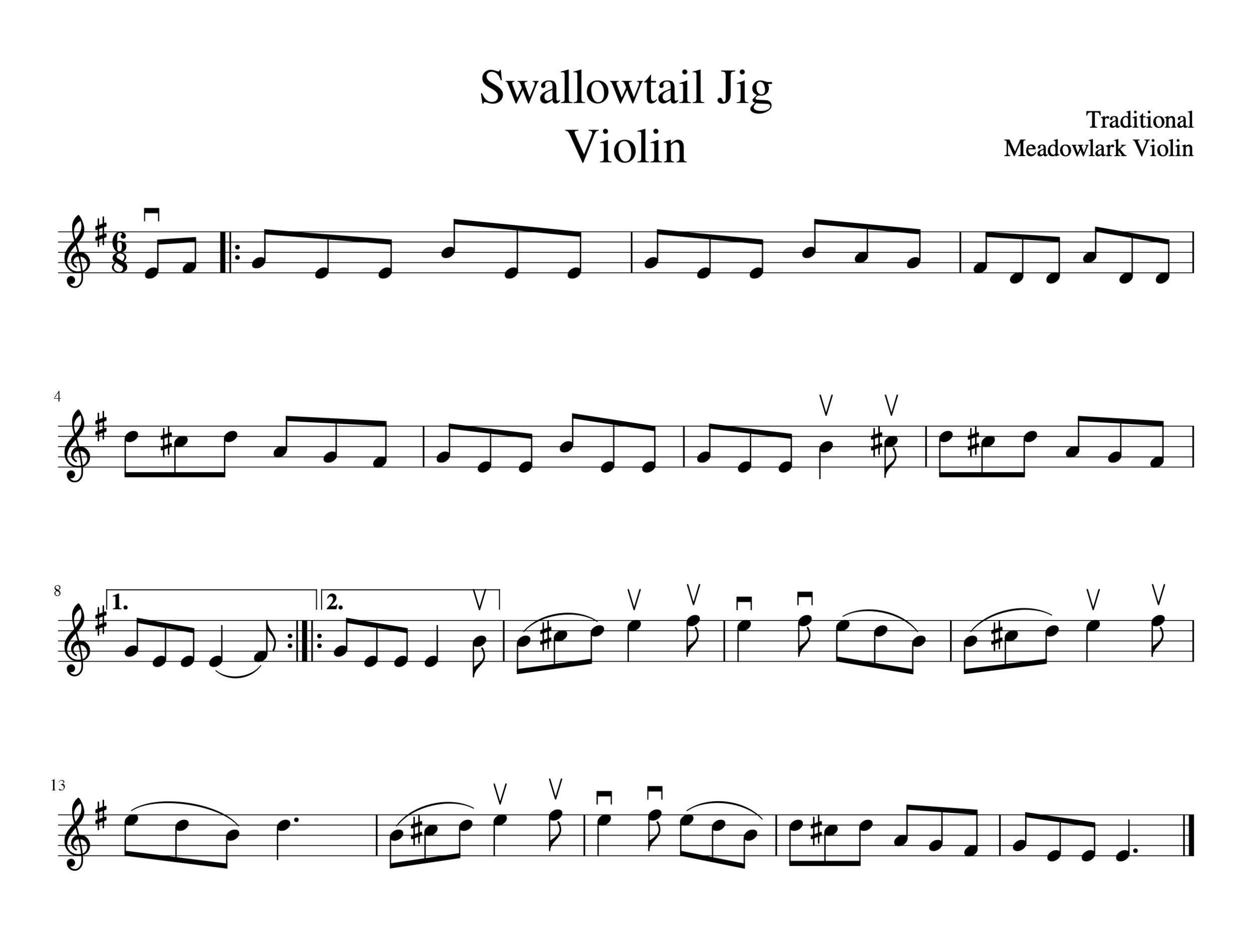
Swallowtail Jig Violin Sheet Music

Like many Irish Jigs, Swallowtail Jig is in 6/8 time, meaning there are 6 notes in a measure and the 8th note gets the beat. Quarter notes get 2 beats and dotted quarter notes get 3 beats. In the first full measure keep your first finger down on the D and A string at the same time so you can quickly play those notes.

===>Click here to download the free sheet music for Swallowtail Jig. You can also learn all the tips and tricks of Swallowtail Jig with my video lesson on Swallowtail Jig for violin. There’s also a play-along track for Swallowtail Jig on the violin and a fiddle duet for Swallowtail Jig.


Swallowtail Jig_Free_Violin_Sheet_Music_Meadowlark_Violi-1.png
 

Irish Washerwoman Violin Sheet Music

Once you’ve gotten a handle on 6/8 time, try sheet music for Irish Washerwoman. Keep fingers down as much as possible to help you play the notes quickly.

===>Click here to get the free sheet music for Irish Washerwoman + my tutorial!

P.S. If you’re tired of that cheap violin you bought on Amazon and you’re ready to REALLY enjoy playing the violin, I’m here to help you out! I’m on a mission to ban VSOs (violin-shaped-objects). Check out my ultimate guide to he best teacher-approved beginner and intermediate violins.

NOW you can practice happy :)

Overcoming the Struggle of Learning to Play Violin

People always say violin is the hardest instrument to learn. Or they say it has a steep learning curve. I disagree with both of those statements. Personally, I believe that every instrument is equally hard to master.

One of the reasons people give up on the violin is that they never realize where the real struggle is. I'm about to tell you.

Violin isn't necessarily harder than other instruments. The thing about violin is that it has a low threshold for frustration.

Think about it. You make some scratchy noises with your bow and you start questioning your whole purpose in life. You get filled with self-doubt and wonder if you're wasting your time. How do I know? ​I've been there!​

I played guitar for 3 years before I ever picked up the violin and I never recall having a soul-searching, doubt-filled, tear-brimming moment after strumming some guitar chords that didn't sound great.

Violin is different. It's easy to get frustrated. The real struggle with the violin is not learning where to place your left hand fingers or how to get a good tone. The biggest struggle with playing violin is overcoming the mental frustrations you impose on yourself.

Once you realize this, you'll understand your greatest obstacle in achieving your dreams is your own mind.

Now let’s talk about WHY people get frustrated so easily and how to fix it.

First, you need to think about the negative cycle of...not practicing!

It's important to practice the violin often, even if it's just for a few minutes. I do recommend taking off at least one day a week to refresh. Make it a goal to practice at least 5-6 days a week.

There's more to it than just not practicing. Not practicing the right way can yield the same results as not practicing at all.

When I first started playing violin, I would practice for 4 and 5 hours a day with okay results. When I finally figured out how to practice as a college student, I could get more accomplished in less time with little or no frustration.

If you would like to get more accomplished in less time, watch the video lesson here on my ultimate practice routine.​

Basically you want to do stretches, warm-ups, scales, etudes or exercises, a solo piece, something fun you do well, and also take some time to experiment.

Whoa! That sounds like a lot! I thought you just said practice every day, even if just for a few minutes? How do I fit all of this in?

Well, each one of those items doesn't have to take 15 minutes. For instance, here's how you could break it down for someone that's been playing for a few months.

  • Stretches: 1 minute

  • Warm-ups: Playing open strings (no left hand). 2 minutes

  • Scales: 3-5 minutes

  • Exercises/Etudes: 5-10 minutes

  • Solo Piece: 10-15 minutes

  • Something Fun You Do Well: 2 minutes

  • Time to Experiment: There are no rules when you experiment. Do it for 3 seconds or 3 hours

So you see, that routine could easily fit into half an hour, or maybe two twenty-minute sessions. As you progress, you can scale it up if you want to spend more time on each item.

Now I know life gets in the way. Here's what I want you to do if you don't have time to do your full routine. Only do open strings. Yep, that's it. If all you do is open strings every day, I guarantee, you'll make progress!

There's one more reason people get frustrated with the violin and quit. They think learning violin is a continual upward slope. It’s more like stairs with a combination of progress and plateaus.

You’re going to reach plateaus with certain skills. That’s expected. Don’t get frustrated. Realize you’ve reached a plateau and focus on another skill. Give yourself some time and pretty soon you’ll be making progress again.

People also don't rejoice in small victories. The road to being the musician you want to be is comprised of lots of tiny steps. Find joy in each of those steps and you will always love playing the violin.

One of my favorite quotes is: "Make the most of all that comes and the least of all the goes."

Rejoice when you do something well. And when you don't do something well, learn from it and let it go.

To sum it up, here's what you want to take away.

  1. Practice every day even if it's just open strings

  2. Develop a practice routine and stick with it as much as you can

  3. Rejoice in small victories

Those three items are the keys to making progress on the violin and squashing frustration in its tracks.

For more practicing tips, join me in my ​members-only 30 Day Practice Challenge​ and find a new way to get more enjoyment out of your practice routine every day.

Steps for Sticking with the Violin

So is violin worth it? I think so! There's a reason I stopped playing all those other instruments to focus on the violin. Sometimes the things in life that involve the most struggle also have the greatest rewards.

Those frustrations you're dealing with? I've dealt with all of them and overcame them all! Here's my tips to help you master the mental aspect of playing violin.

  • Tell someone you're playing the violin. Whether that's in person or on social media. Accountability helps you stick with something. When you start sharing with people that you play the violin you'll probably hear these two statements, "I always wanted to learn violin" or "I used to play violin..." and then you'll realize how special you are for plugging away at this tantlyzing instrument.

  • Listen. Listen. Listen. Listen to music all the time. Fiddle, classical, gypsy, whatever. Mix it up. Stay surprised. Attend live events as much as you can. Listening is the number one thing you can do to stay motivated. Need some ideas? Here's my ​ultimate playlist.​

  • Don't set unrealistic goals or expectations. That's just setting yourself up for failure. Learn to enjoy the journey of small accomplishments.

  • Play for people. I'm super introverted but playing for people is a great source of joy. Make yourself do it and you'll be happy you did!

  • Join a jam session, ​my members-only community forum​, or local orchestra. Playing with others is a great way to stay motivated. Sometimes you just have to jump in feet first and do it.

  • Make progress videos. Record yourself. You don't have to listen to it if you don't want to (although it's a great help). In a few weeks, record yourself again. Get a good collection and then see all the progress you've made.

  • ​Submit videos and get my feedback on your playing​ through my Online Studio Membership

If you're just starting to play violin, or thinking about starting, don't let this scare you away. Yes, violin is a challenge but if you have the right mindset and a good foundation of the basics, you can learn to play the music you've always wanted to play. If you are brand new, check out my ​"Getting Started"​ articles and videos.

Happy Practicing!

~Lora

How to Play Auld Lang Syne on the Violin (Easy Violin Sheet Music)

Auld Lang Syne Free Violin Sheet Music.jpg

Start practicing Auld Lang Syne on the violin to get ready for the New Year! This easy violin sheet music for Auld Lang Syne will make you the star of any New Year’s party!


How To Play Auld Lang Syne on the Violin

First of all, notice the key signature: one sharp. That means all your second fingers on the D string will be “high” or next to 3rd finger. All your 2nd fingers on the A and E strings will be “low” or next to 1st finger.

Notice how the rhythm in the first full measure is repeated throughout the song but just with different notes? That can make it a lot easier to play.

Auld Lang Syne on the violin is relatively slow, so use lots of bow for a great sound!

How to Play Auld Lang Syne on the Violin

In this video lesson on Auld Lang Syne, I’ll teach you how to play this classic song!

Auld Lang Syne Violin Sheet Music

Auld Lang Syne Violin Sheet Music

Happy Practicing and Happy New Year!

Master the Basics: Easy Violin Scales and Arpeggios for Beginners

Hello, fellow violin enthusiasts! I'm Lora from Meadowlark Violin, and today I'm excited to share with you the secrets of mastering three super easy scales and arpeggios tailored for beginners. Scales are the backbone of every violinist's practice routine, serving as the essential building blocks for honing your technique. Whether you've just started playing or have a few weeks or months of playing under your belt, these scales and arpeggios will set you on the right track.

I’ll be teaching you all of these scales by ear, no sheet music required! Learning scales and songs by ear is great for intonation, even if you already read music.

The Magic of Finger Patterns

What makes these scales super easy, you ask? Well, they all share the same finger pattern. That means learning one pattern opens the door to playing three different scales. Understanding finger patterns can simplify the learning process, and repetitive finger patterns don’t just stop with easy scales. As you progress on the violin, you’ll notice advanced scales spanning several octaves can share the exact same finger pattern as another scale in a completely different key. (Learn more about universal scales and violin finger patterns here.)

Dive into D Major

Let's kick off our exploration with the D major scale. With two sharps (F# and C#), we delve into the world of half step pairs. Half steps occur where two fingers are touching on the violin.(Learn more about half step pairs and how scales work here.) F# and G, and C# and D, form our two half step pairs for D major. As we start on the open D string, I'll guide you through the notes, creating a musical journey akin to the first two notes of "Happy Birthday."

On the D string, play the open D string followed by the first finger, second, and third finger. All of the notes will be a whole step apart except for the second and third fingers. These notes are F# and G and that’s one of our half step pairs, so those fingers will be touching. Repeat that exact pattern on the A string for a complete D major scale.

Transition to A Major

Next on our musical adventure is the A major scale. With three sharps (F#, C#, and G#), we adjust our half step pairs. Our new half step pairs are between G# and A, and C# and D. The finger pattern remains consistent, allowing a smooth transition from D major. Simply play the exact same finger pattern, but on the A and E strings. Tada! An A major scale.

Venture into G Major

Our final destination is the G major scale. Utilizing the same finger pattern, we seamlessly navigate between the G and D strings. The magic lies in the continuity of patterns – one pattern, three scales. The consistent approach makes G major as accessible as the previous ones, empowering you to expand your repertoire. Can you determine what the half step pairs are for G major based on the finger patterns? The half step pairs are B and C and F# and G.

Arpeggios Unveiled

Now that we've mastered the scales, it's time to delve into arpeggios – a sequence of individual notes forming a chord. Let’s start with the D major arpeggio, which consists of the notes D F# and A. On the D string, play the open D followed by the second finger. Then move over to the A string. Play the open A followed by the third finger. That’s a basic arpeggio pattern! The same pattern is applied to A major and G major arpeggios, simply start on the A string for an A arpeggio and start on the G string for a G arpeggio.

Conclusion: Embrace the Patterns

In conclusion, mastering the basics of violin scales and arpeggios is akin to unlocking a musical treasure chest. By discerning and embracing these patterns, you pave the way for easier and more enjoyable learning experiences. Remember, the violin might seem intricate, but patterns are your allies.

Easy Christmas Violin Duets (Violin Sheet Music)

The holidays are a perfect time to get together and play Christmas duets (or trios) with fellow violinists. I absolutely love transcribing these easy Christmas duets for two violins. Here’s a collection of some of my favorite carols arranged for two or three violins.

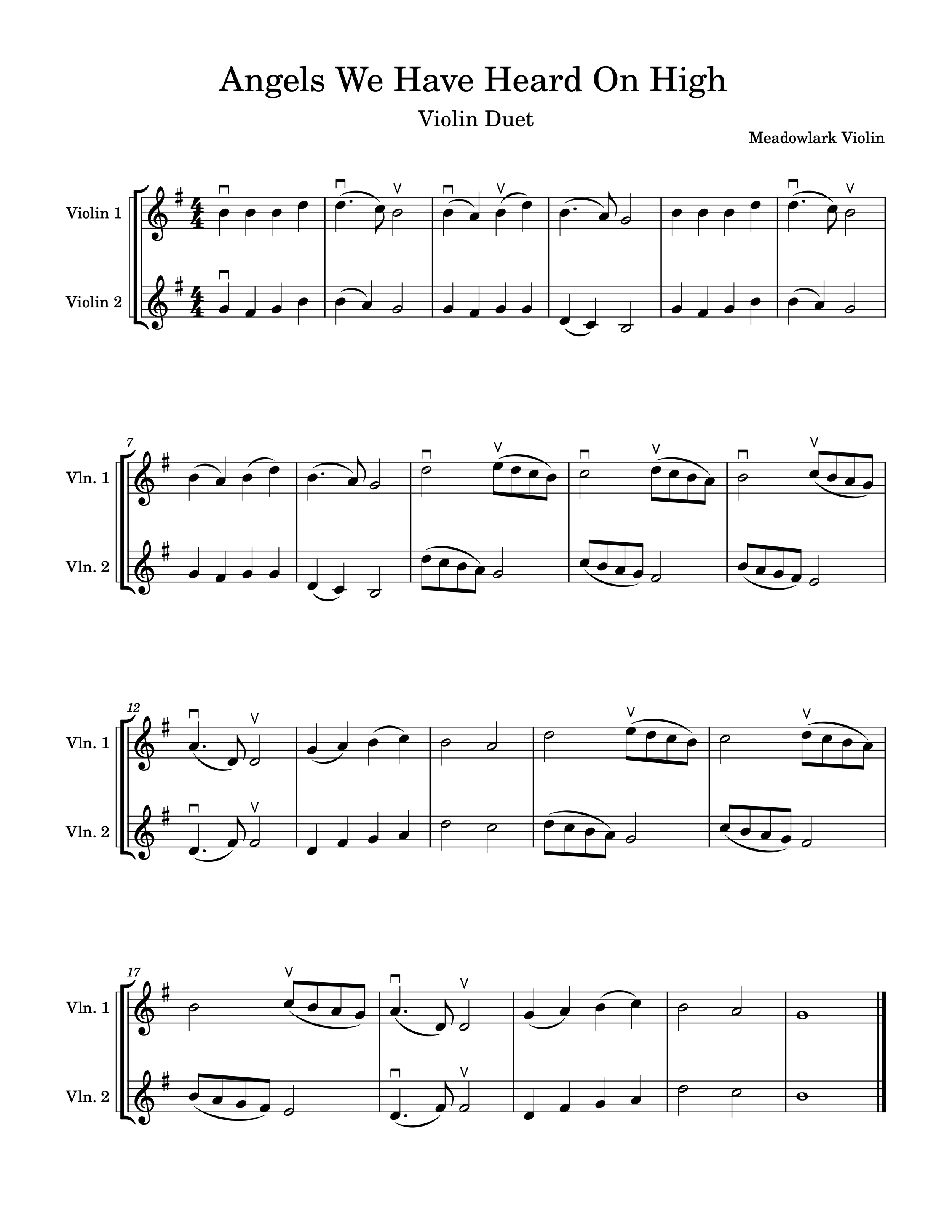
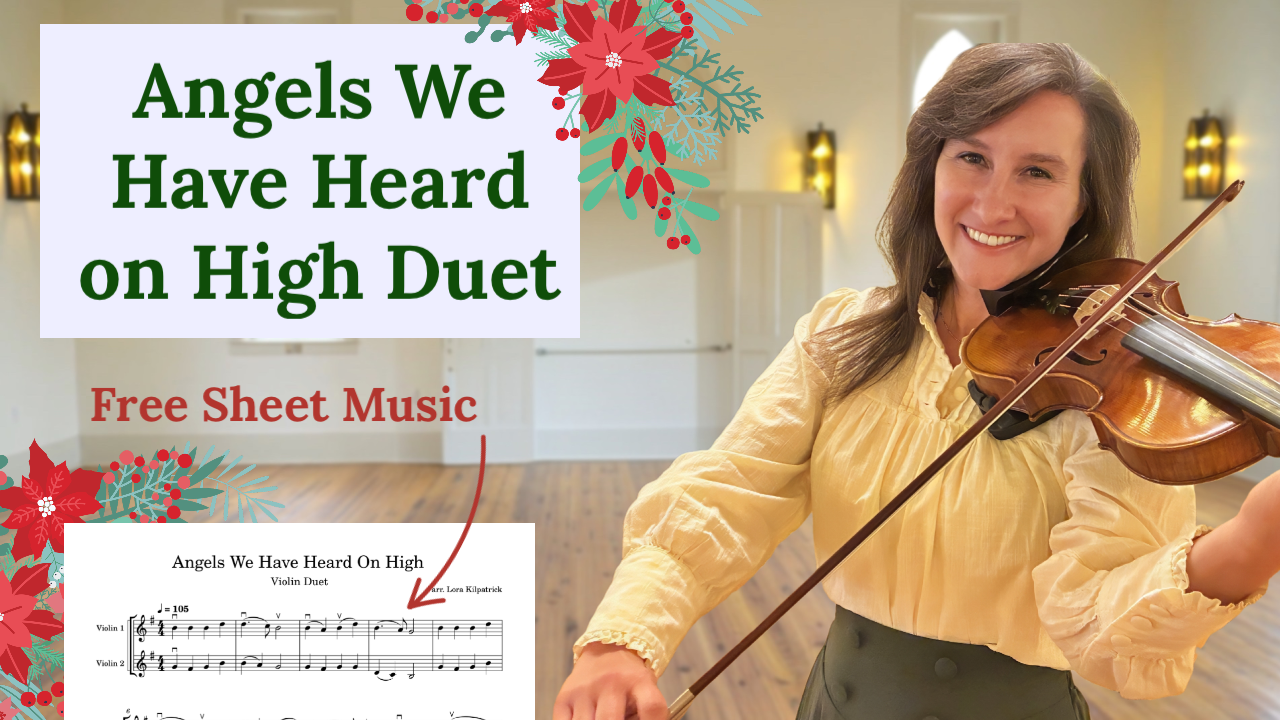
Angels We Have Heard On High Violin Trio Sheet Music

Angels We Have Heard On High is beautiful carol that is perfect for a duet or trio. In this version, those descending scales alternate between first and second violin. The third violin part features whole notes so any brand new beginner can join along!

Angels We Have Heard on High Trio for Three Violins

Angels We Have Heard on High Trio for Three Violins

Angels We Have Heard on High Violin Duet

Apparently I like transcribing this Christmas song for two violins because I found not one version, but TWO in my Sheet Music Library. I’ve transcribed hundreds of songs for violin and violin duets and trios, so I guess sometimes I can’t remember which Christmas carols I’ve already made into duets! Try both versions and see which one you like better!

The First Noel Violin Trio Sheet Music

One of my favorite Christmas carols is The First Noel. No Christmas violin duet list would be complete without it!

The First Noel Trio for Three Violins

The First Noel Trio for Three Violins

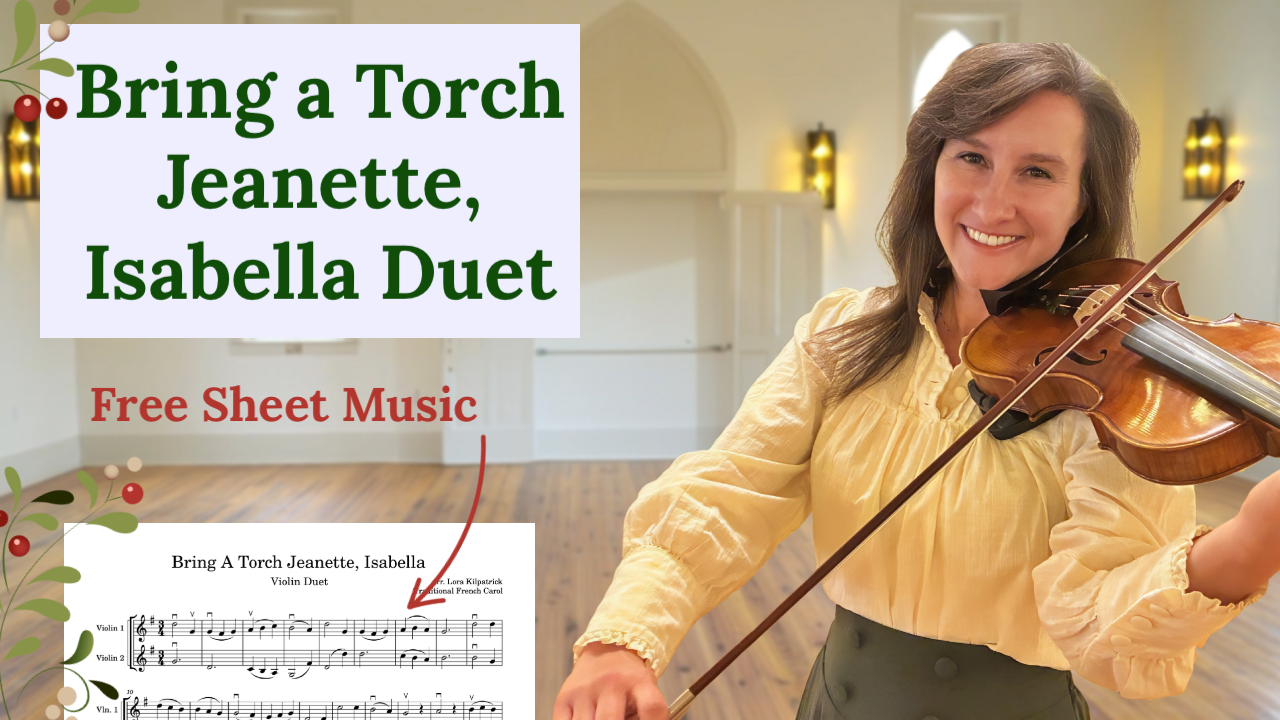
Bring a Torch Jeanette, Isabella Violin Duet

I love this beautiful French Christmas carol for violin. It’s even better for two violins!

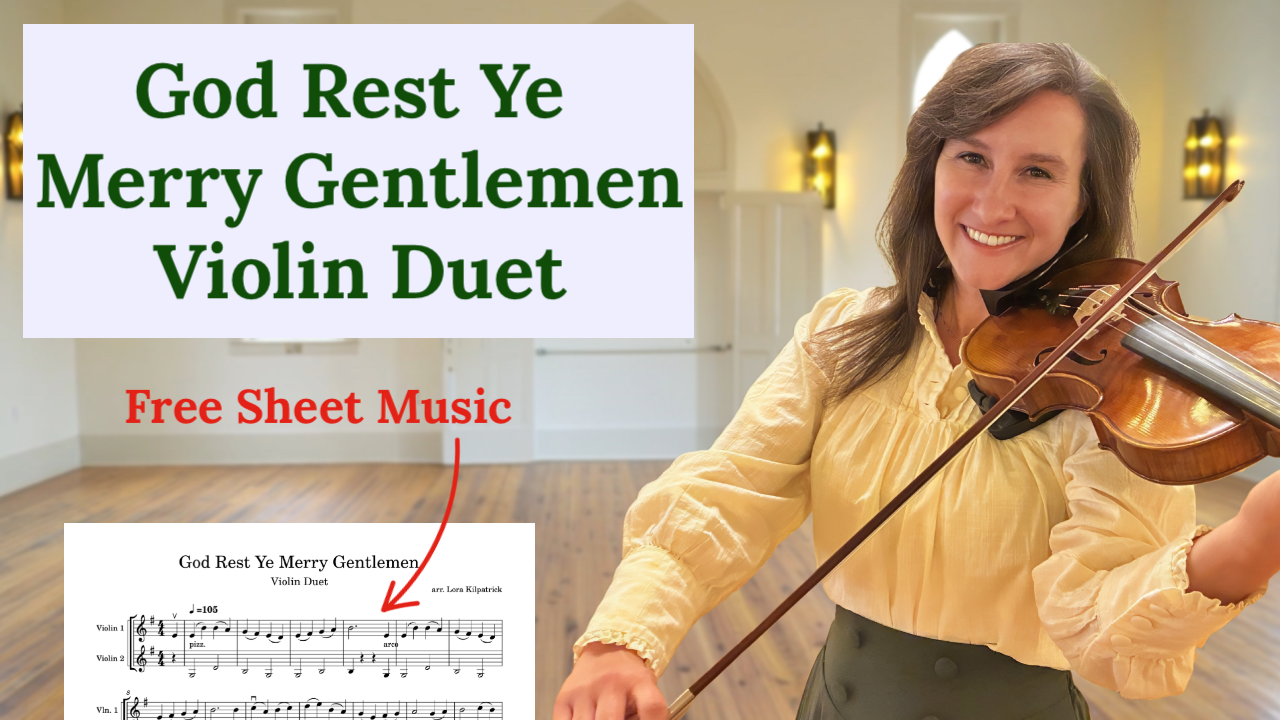
God Rest Ye Merry Gentlemen Violin Duet

I love minor Christmas carols. This one is perfect for two violins!

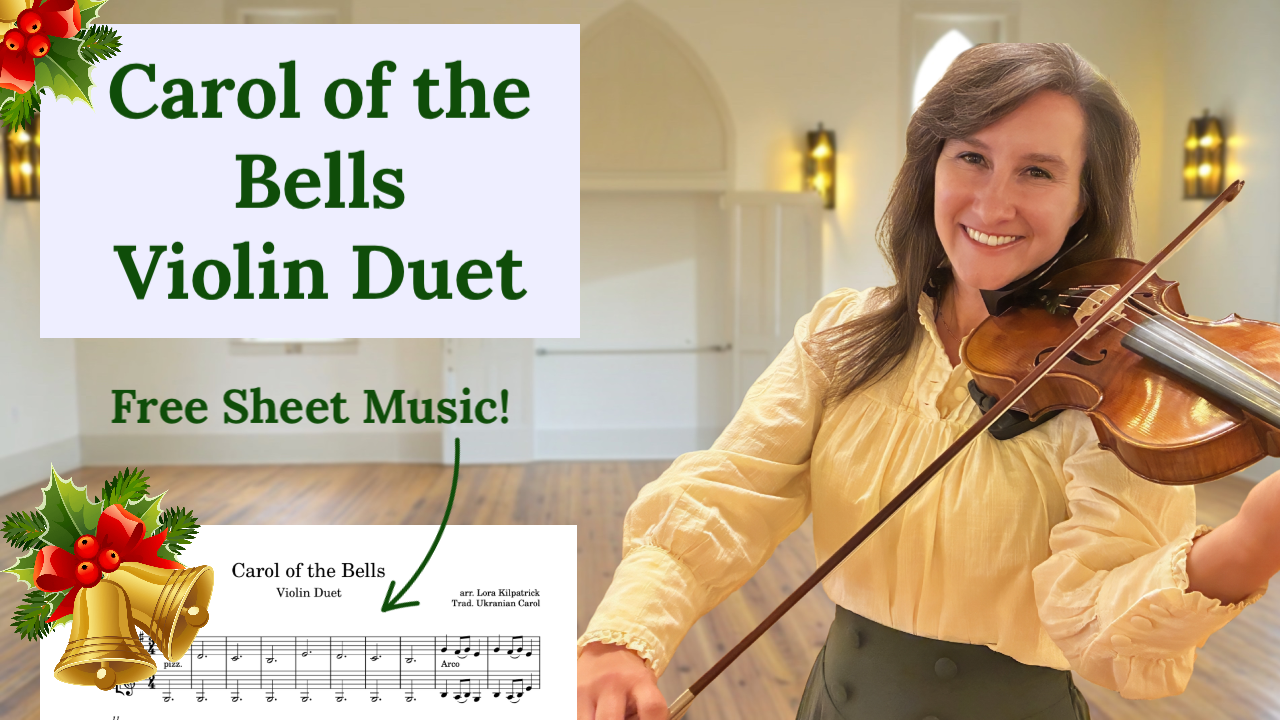
Carol of the Bells Violin Christmas Duet

What collection of Christmas duets for violin would be complete without Carol of the Bells? What are those slashes through the stems in the violin duet part you ask? Tremolo! Quickly “tremble” your bow at the tip for the right sound. I explain it all in my Music Theory for Violinists Course.

Christmas Play-Along Violin Duets

If you would like to play some Christmas duets with me, I’ve created a playlist of myself playing the melody and harmony to favorite Christmas songs for violin.

Purchase A Fiddling Christmas to play along then visit the playlist here.

Christmas Play-Along Duets Playlist

Enjoy playing these holiday favorites as a Christmas violin duet this season! If you would like more Christmas violin duets, try some of these great books.

Christmas Music Arranged for Violin Duet

Christmas Duets Volume 1

Christmas Favorites for Violin Duet

Check out these other links for the holidays.

Helpful Holiday Resources

Happy Practicing and Merry Christmas!

P.S. While I love writing out these duets, like all of the sheet music I produce on my website, they take a considerable amount of time to transcribe, edit, and upload. If you would like to download any of these easy Christmas violin duets, you can (and much more) when you sign up for my online studio. Try it out here!

Easy Christmas Violin Songs with Piano Accompaniment Tracks--Free Sheet Music!

Enjoy playing these Christmas carols on the violin with piano accompaniment. I’ve arranged these violin Christmas songs to match the piano accompaniment videos after the free sheet music. Often times, the piano will play an introduction before the main melody starts. This is show by a few measures of rests. Make sure you count!

Have fun playing your favorite violin Christmas songs with piano backing tracks!

While I love writing out these easy violin Christmas carols, like all of the sheet music I produce on my website, they take a considerable amount of time to arrange, edit, test-play, and upload. If you would like to download any of these easy Christmas violin songs, you can (and much more) when you sign up to my online studio. Try it out here!

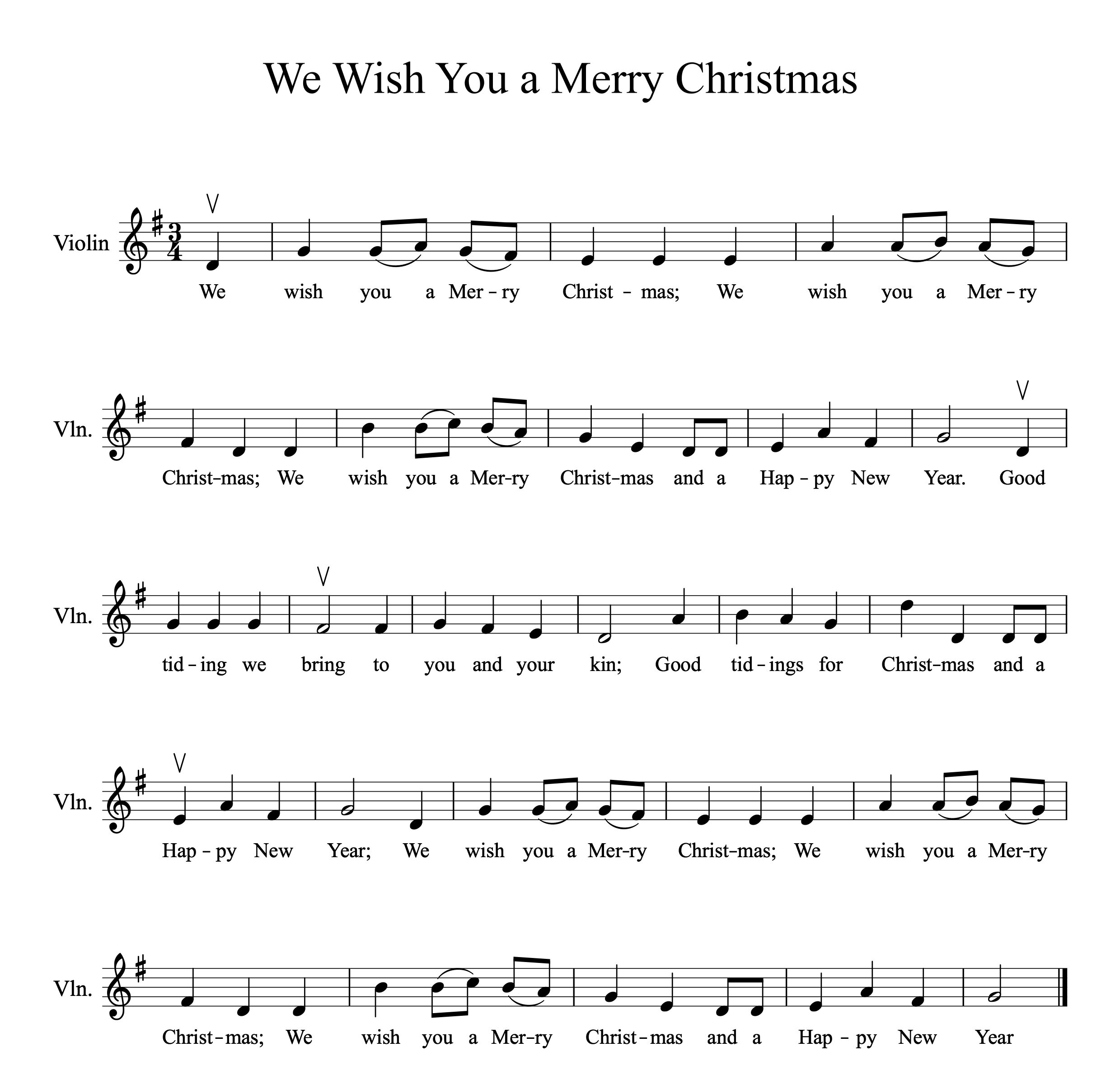
We Wish You A Merry Christmas Violin Sheet Music

This easy Christmas song can be played with the piano accompaniment video below the music. Just make sure you count those rests!

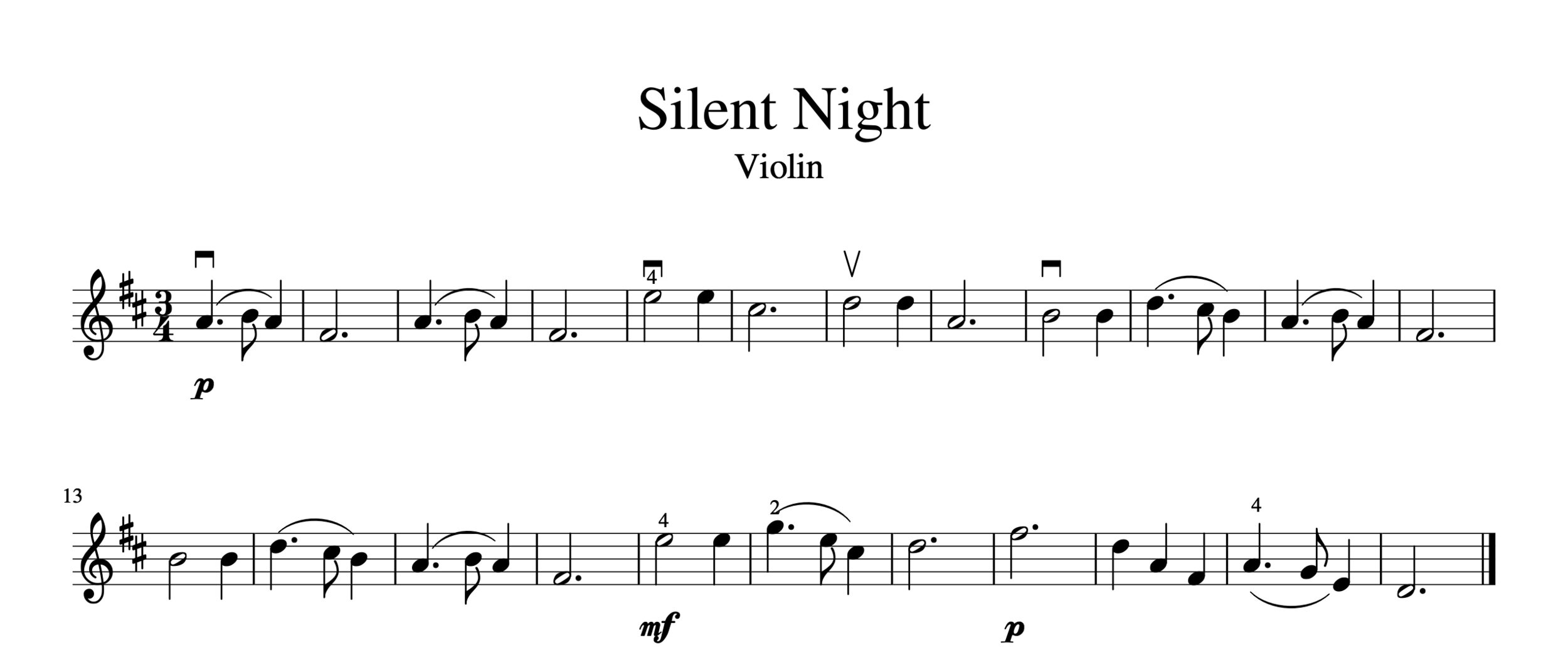
Silent Night Violin Sheet Music

This classic Christmas violin carol sounds even better with a little piano accompaniment.

Dance of the Sugar Plum Fairy Violin Sheet Music

This has to be one of my favorite Christmas songs for violin to play along with the piano. There’s a lot of rests in the middle so make sure you count. Otherwise you’ll be getting a lump of coal this Christmas!

Easy Violin Christmas Songs with TAB-No Note Reading!

Easy Violin Christmas Tab.jpg

If you are just starting to play violin, or maybe you don’t want to worry about reading notes, here’s some easy Christmas songs for the violin that any beginner can play!

How Does This Tab for Violin Work?

Musical tablature indicates fingerings, not notes. So the numbers in this Christmas tablature indicate the finger number. The letters indicate which string to play on. For instance: A: 10 D: 312321 means you would play 1st finger then open string all on the A string, then play all the other finger numbers on the D string.

All numbers are using the “normal” finger pattern in which the 2nd finger is next to three. If the finger needs to be lower or higher it will be indicated with an “L” for lower and an “H” for higher. Low 2s will be right next to 1st finger. High 3s will be right above where 3rd finger normally is.

How Does the Rhythm Work in Violin Tab?

Well…it doesn’t. That’s the one drawback to this Christmas violin tab. There’s really no way to indicate rhythm. It’s best if you know the song and can sing along. I’ve tried to space out numbers that are longer notes. Some numbers have a dash afterward to indicate a longer note. Other than that, listen to these Christmas songs to know how slow or fast to play the notes on violin!

Helpful Holiday Resources


Jingle Bells Violin Christmas Tab

*Play this easy Christmas song on any string. However, if you don’t want to play those 4th fingers, just play the next highest open string.

 Any string:222-  222-  24012-   3333  3222  21121-   4

                    222-  222-  24012-   3333  3222  4431     0


Jolly Old St. Nicholas Violin Tab

A: 2222 111  0000 2    D: 2222  11   A: 0 1012 1

A: 2222 111  0000 2    D: 2222  11   A: 0 1012 0


O Christmas Tree Violin Tab

D: 0- 333         A: 0- 111  101 L2         D: 2      A: 0      D: 3

D: 0- 333         A: 0- 111  101 L2         D: 2      A: 0      D: 3

A: 33 1 4- 33 L2 L2      L2 L2 0 3 L2 L2 11

D: 0- 333         A: 0- 111  101 L2         D: 2      A: 0      D: 3


We Three Kings Violin Christmas Tab

A: 10    D: 312321        A: 10    D: 312321  33  A: 0011  3 L2 1 010     D: 321 2

D: 3330 313     3330 313 33    A: 01 L2 1 0 1  D: 3330  313


We Wish You A Merry Christmas Violin Tab

D: 03 3432 111           A: 0 010          D: 3200           A: 1 1 L2 10    D: 31 0014 23

D: 0 3 3 3 2 23210      A: 010             D: 3     A: 3     D: 0  00 1423

D: 03 3432 111           A: 0 010          D: 3200           A: 1 1 L2 10    D: 31 0014 23


Merry Christmas and Happy Practicing!

Easy Christmas Songs for Violin--Free Sheet Musi

This collection of violin Christmas sheet music will keep you busy this holiday season! Christmas is a great time to sit around the fire, have a cup of hot chocolate and play violin Christmas songs with friends and family. I’ve complied a list of my favorite easy Christmas violin songs and carols that are great for brand new beginners or seasoned violin players looking for a good selection of sheet music for Christmas.

While I love writing out these easy violin Christmas carols, like all of the sheet music I produce on my website, they take a considerable amount of time to arrange, edit, test-play, and upload. If you would like to download any of these easy Christmas violin songs, you can (and much more) when you sign up to my online studio.Try it out here!

Enjoy playing these easy Christmas violin songs this holiday season!

Helpful Holiday Resources

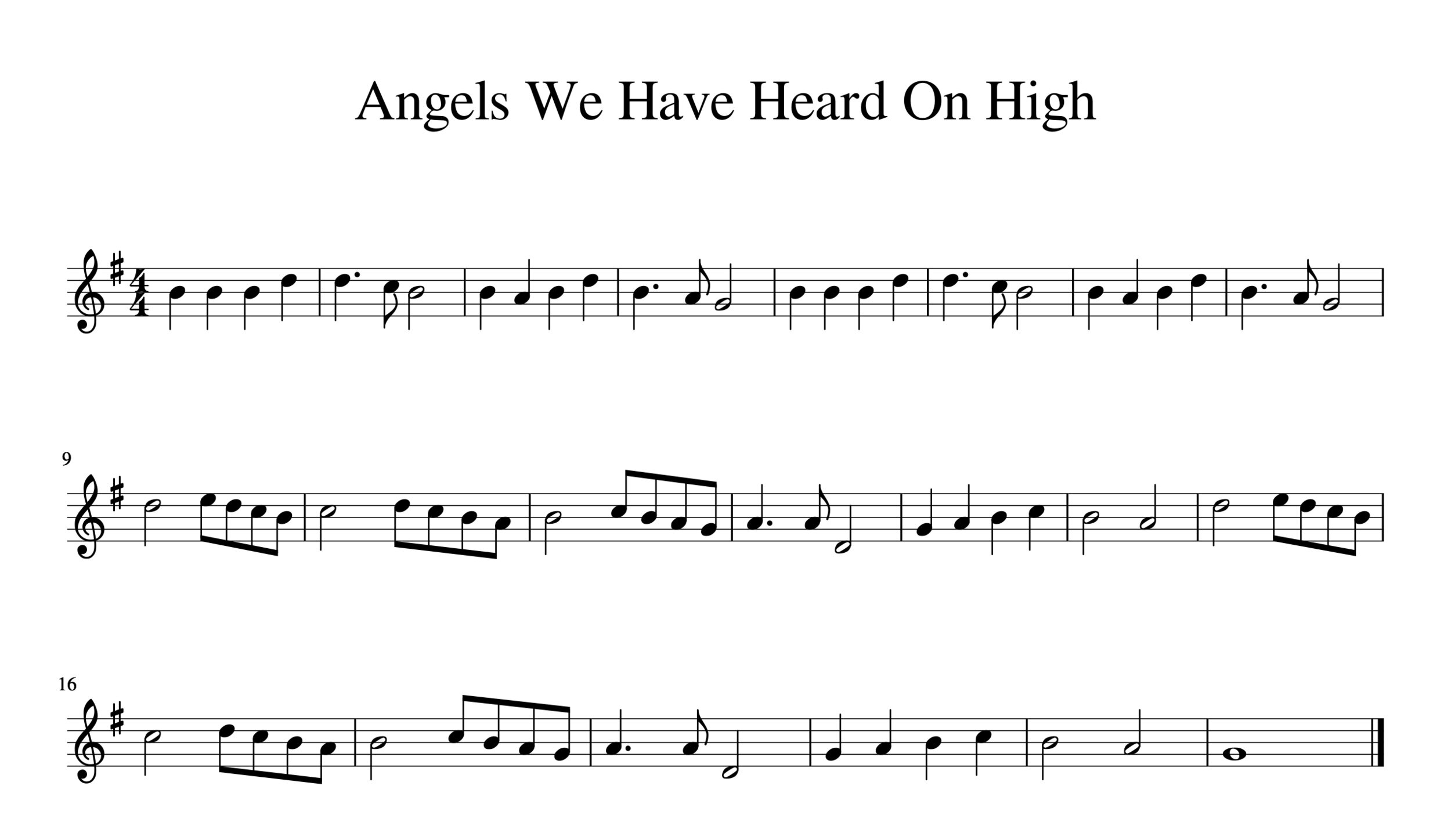
Angels We Have Heard On High Violin Sheet Music

This popular Christmas hymn can be relatively simple to play on violin since most of it is like a descending G major scales. Watch out for those low 2s on the A string!

Angels_We_Have_Heard_On_High_Free_Violin_Christmas_Sheet_Music-1.jpg

Away in a Manger Violin Sheet Music

Away_in_a_Manger_VIolin_Sheet_Music-1.jpg

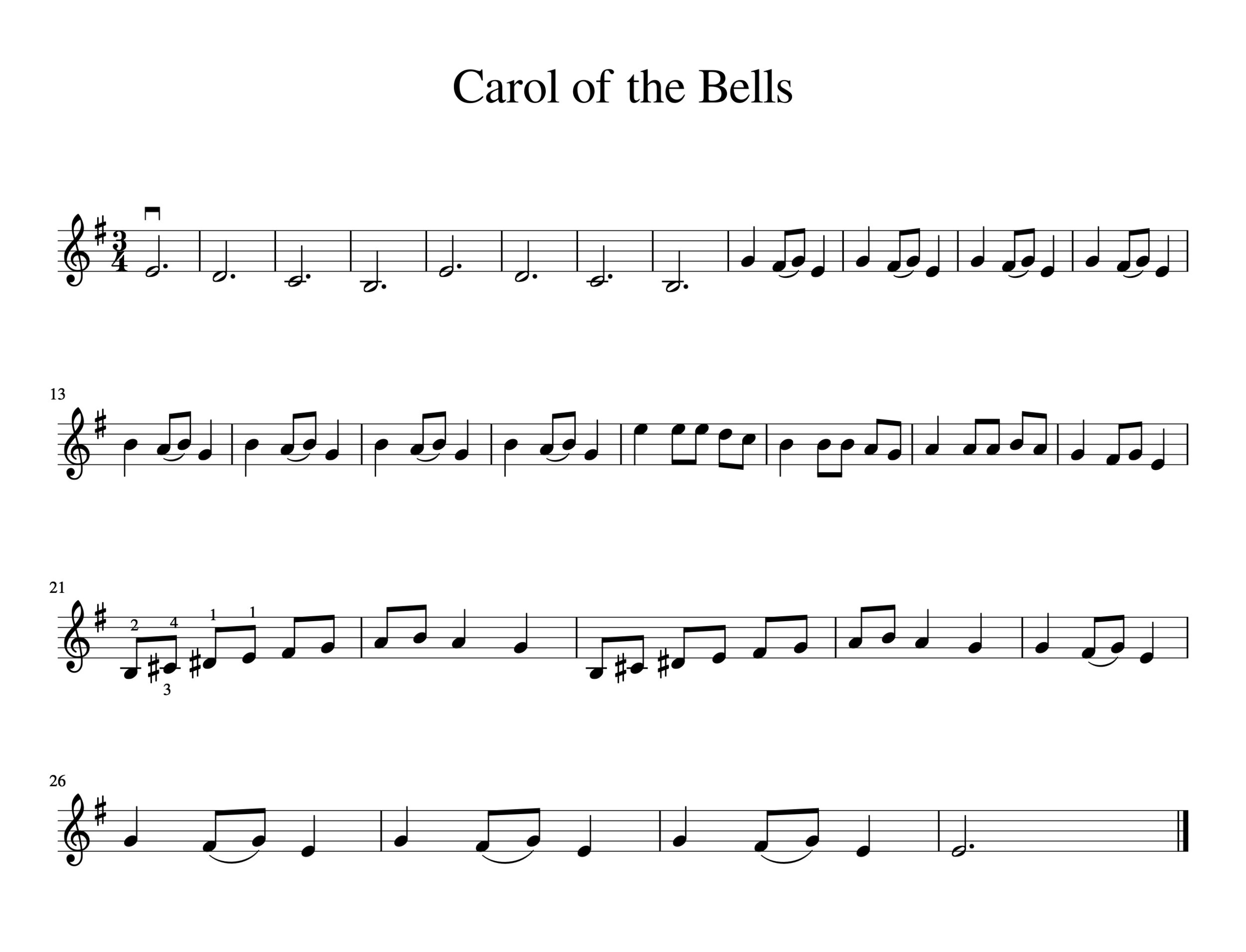
Carol of the Bells Violin Sheet Music

Carol of the Bells is a classic easy Christmas song that sounds great on the violin. Add in those slurs when you are ready. I’ve added some optional fingerings for that tricky ascending scale part. Use low 1st finger for the D sharps.

Carol_of_the_Bells_Free_Violin_Sheet_Music-1.jpg

Deck The Halls Violin Sheet Music

More low 2s on the A string and E string here for Deck the Halls on the violin.

Deck_the_halls_Violin_Free_Sheet_Music-1.jpg

The First Noel Violin Sheet Music

This is another one of my favorite easy Christmas songs for the violin. The First Noel for violin is in good ole’ D major, so normal or “high” 2nd fingers for the F sharps and C sharps.

The_First_Noel_Free_Violin_Christmas_Sheet_Music-1.jpg


Hark! The Herald Angels Sing Violin Sheet Music

Hark%21_the_Herald_Angels_Sing_Violin_Sheet_Music-1.jpg

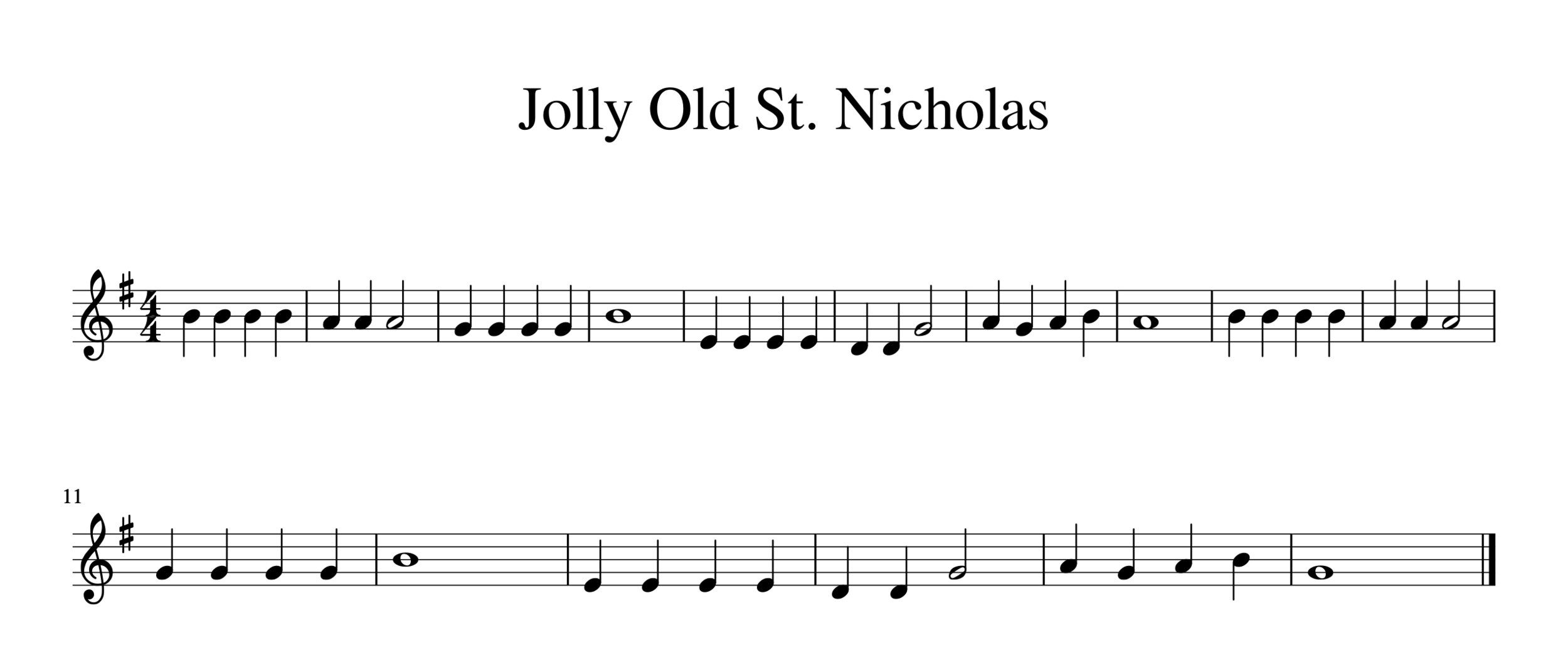
Jolly Old St. Nicolas Free Violin Sheet Music

Jolly Old St. Nicholas is a great, easy Christmas song to play on the violin if you are just starting out.

Jolly Old St. Nicholas Violin Sheet Music

Jolly Old St. Nicholas Violin Sheet Music

Joy To The World Violin Sheet Music

Joy to the World is an easy Christmas violin song since it starts out like a descending D major scale. Use lots of bow for that grand, magnificent sound!

Joy to the world violin sheet music

Joy to the world violin sheet music

O Come All Ye Faithful Violin Sheet Music

O Come All Ye Faithful is one of my favorite Christmas songs to play on the violin. This version is in G major so high F#s for the D string and low C naturals for the A string.

o come all ye faithful/ adeste fideles violin sheet music

o come all ye faithful/ adeste fideles violin sheet music

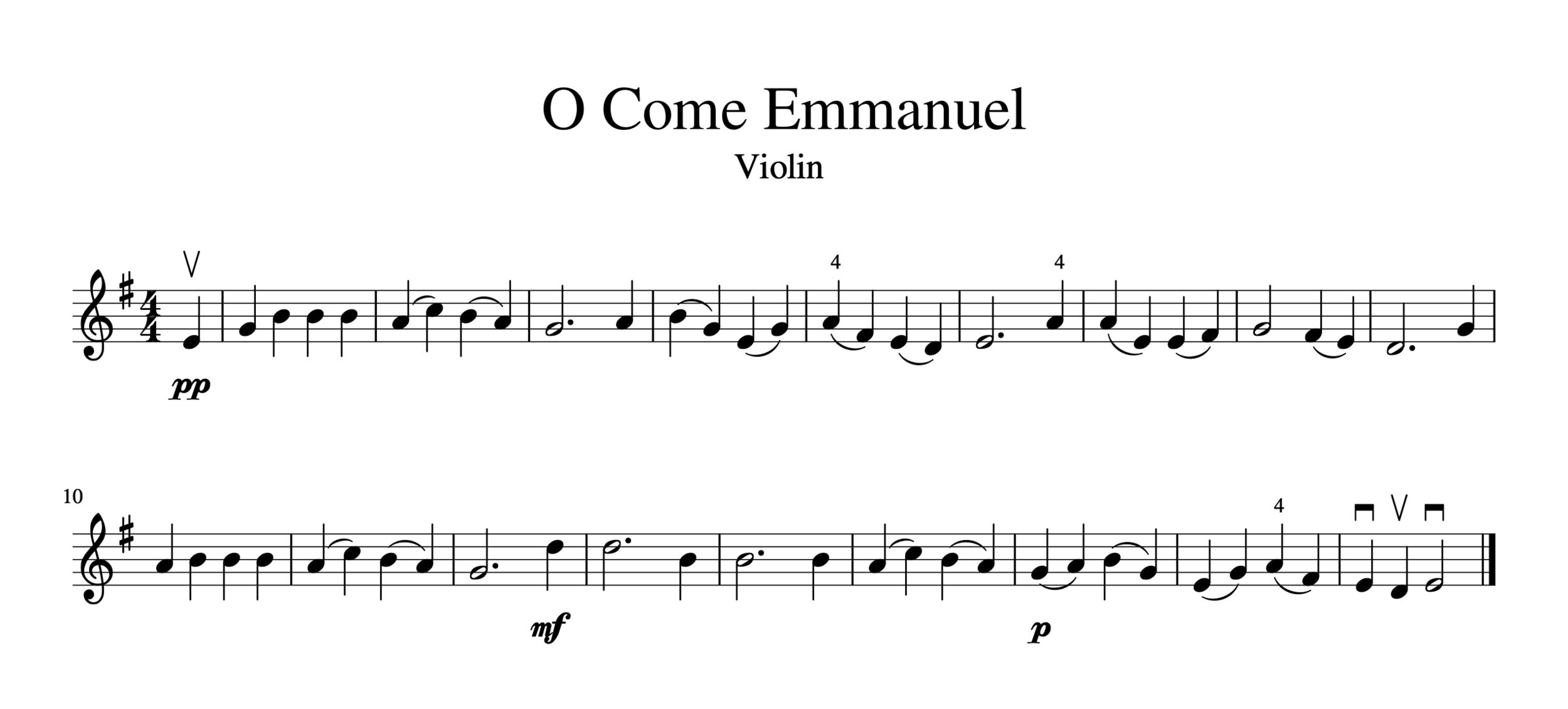
O Come Emmanuel Violin Sheet Music

o come emmanuel violin sheet music

o come emmanuel violin sheet music

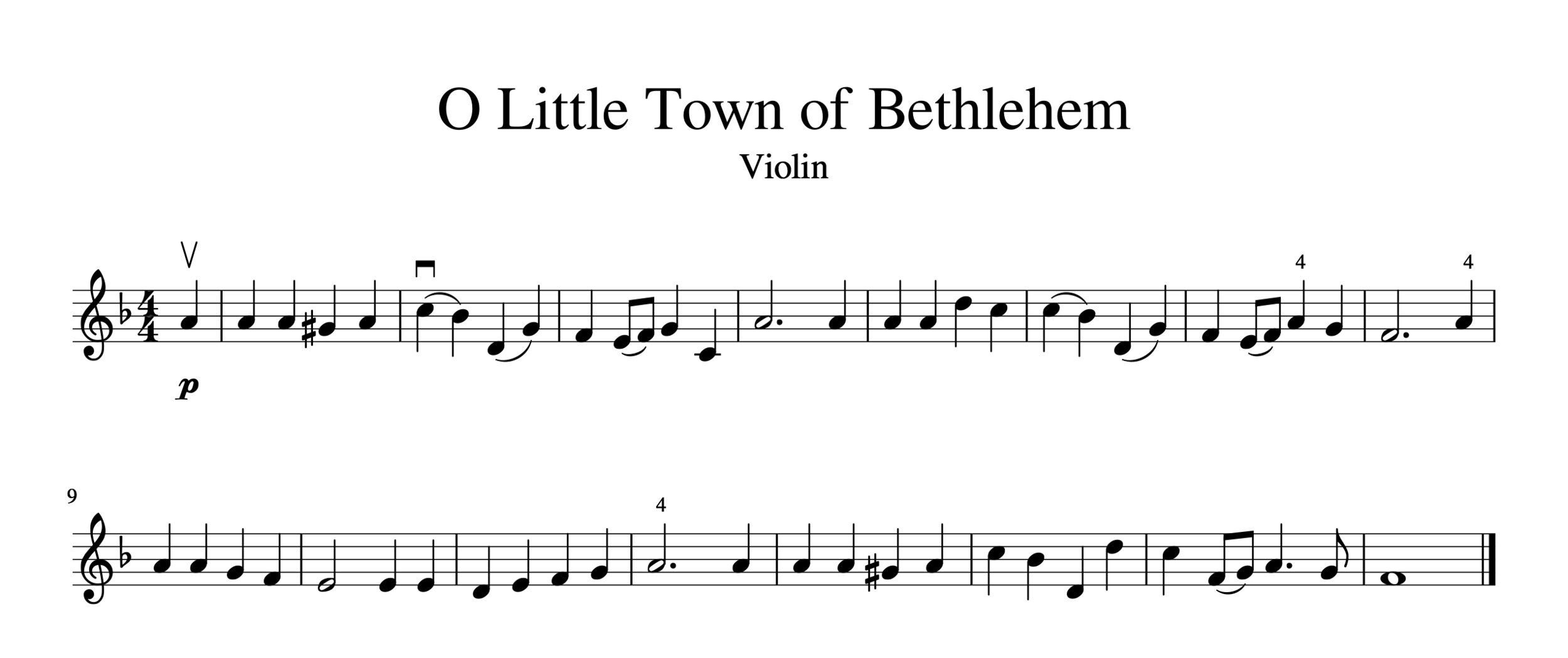
O Little Town of Bethlehem Violin Sheet Music

O_Little_Town_of_Bethlehem_Free_Violin_Sheet_Music-1.jpg

Silent Night Violin Sheet Music

Silent night violin sheet music


We Wish You A Merry Christmas Sheet Music

We_Wish_You_a_Merry_Christmas_Violin_Sheet_Music-1.jpg

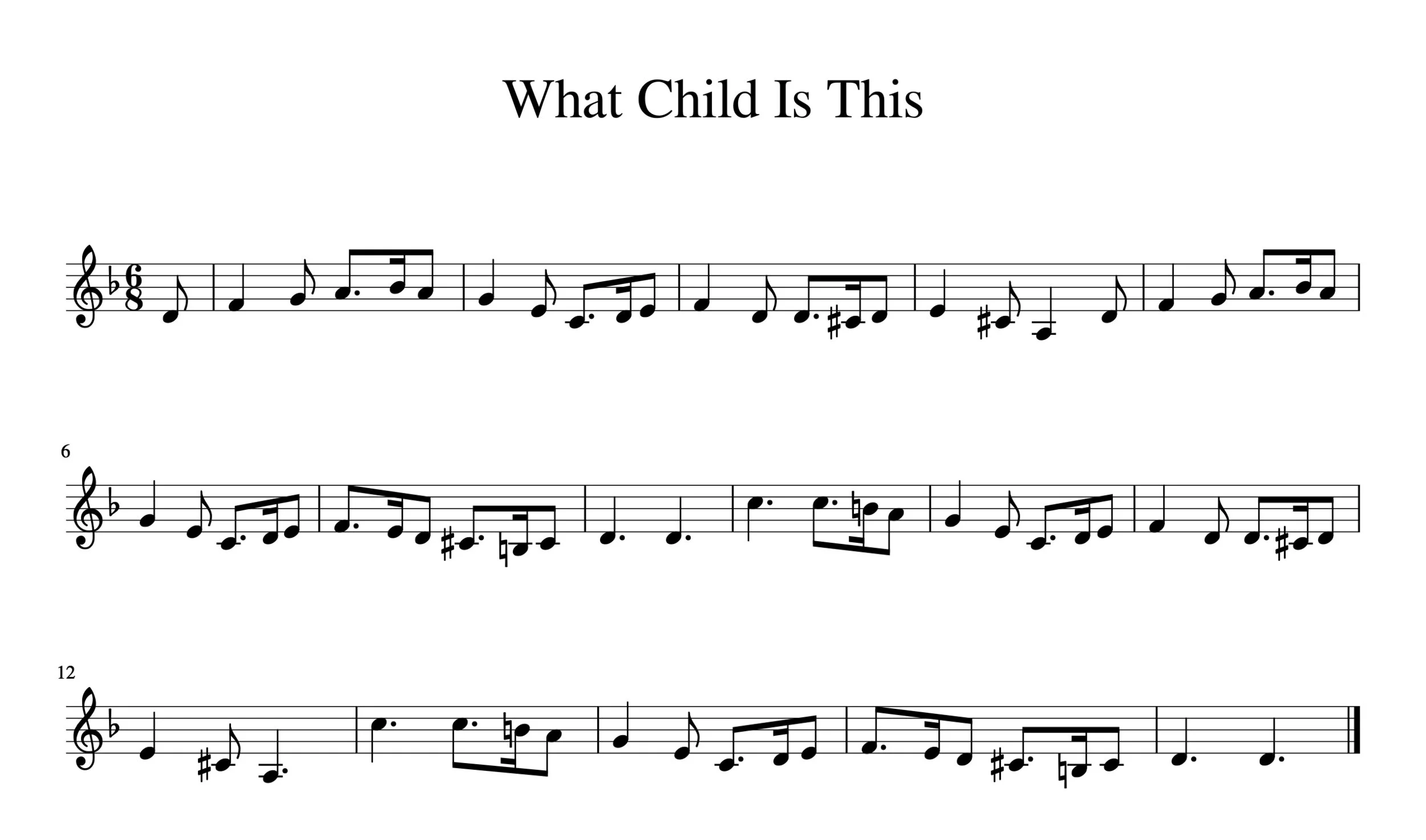
What Child Is This (Greensleeves) Violin Sheet Music

If you are ready for a little more of a challenge, try this violin sheet music for What Child Is This or Greensleeves. It has one flat: B flat which means 1st fingers on the A string will be low (right next to the nut!) But sometimes the B is natural so it will be where it always is. Those C#s on the G string mean high 3rd fingers. Have fun with this easy-ish Christmas song for the violin!

What_Child_Is_This_Free_Violin_Sheet_Music-1.jpg

I hope you enjoy these Christmas carols for the violin. While I love writing out these carols, like all of the sheet music I produce on my website, they take a considerable amount of time to notate, arrange, edit, test-play, and upload. If you would like to download any of these easy Christmas violin songs as PDFs, you can (and much more) when you sign up to my online studio. Try it out here!

If you are looking for some Christmas violin books, check out these favorites.

A Fiddling Christmas-full of classic favorites and some great fiddling Christmas jigs and reels. Every song also has harmony accompaniment so a fellow violinist can join along.

Christmas Melodies for Violin Solo-a great collection of traditional Christmas songs for violin. Many of these songs will be manageable for beginners but it also features some passages for intermediate players as well.

Enjoy these Christmas tunes for violin this holiday season. What other easy violin Christmas songs would you like sheet music for? Let me know in the comments below! Happy Practicing!

10 Reasons You’re Not Playing in Tune on the Violin

How do you play in tune on an instrument with no frets or markings? If you feel like you are never in tune on the violin, here’s 10 reasons why you might be struggling with bad violin intonation and how to play more in tune!

There’s a lot that goes into playing in tune on the violin. If you feel a little bit overwhelmed at all the reasons that might be affecting your violin intonation, make sure you stay to the end because I’ll give you one practice technique that will help you solve all of these problems.

#1 Using finger tapes or finger decals

Wait, what? Aren’t these supposed to help you play in tune? Not really, in fact it will contribute to bad intonation in the long run. Think about it, playing in tune on the violin is an auditory skill. Finger tapes are visual cues. How can a visual cue help you with an auditory skill? Finger tapes might help when you’re just starting off, but they will also force you to rely on your eyes and you’ll never build those ear training skills that you need to play really in tune on the violin.

(Watch the Pros and Cons of Using Finger Stickers on Your Violin)

So work on developing your aural skills instead of your visual skills and your intonation will improve.

#2 Incorrect left hand technique

If you’ve got a crooked wrist or maybe your thumb is pulled far back, it’s going to make it harder if not impossible for you to consistently play in tune. Crooked wrists and other left hand problems can introduce tension, which make playing in tune very difficult. Incorrect left hand technique can also force you to play with flat fingers. And flat fingers is the next reason you may struggle to play in tune.

#3 Flat fingers

Your left hand fingers need to be curved like little arches or boxes. This allows you to hit the string with accuracy. If your fingers are flat or sloping you won’t be able to be as accurate with your pitch, resulting in inconsistent or bad intonation.

#4 Not leaving fingers down

My rule is that if you put a finger down you should leave it down until you absolutely have to move it. Let’s say you play first finger and then you play 3rd finger. Are you leaving the first finger down? Or is it flying off the fingerboard when you aren’t using it?

Leaving fingers down gives you anchor points and helps you compare other notes.Those anchor points will help you build muscle memory in your left hand which is essential to playing in tune.

#5 Using tuners

If you’re relying on a flashing green screen to tell you if you’re in tune on the violin, once again you’re relying on a visual indication for an auditory skill. It might help in the short term, but it’s going to hurt your progress in the long-run because you’re not developing those vital auditory skills that you need to help you play in tune.

Instead of using tuners, use music play back programs or music writing software like MuseScore, or or get a piano or piano app, play the notes you’re having trouble with on the piano. That way you know what the note should sound like and you can match that pitch on your violin.

#6 Not practicing ear training

You need to train your ear to hear intonation problems the same way you train your eyes to read music or train your right hand to hold the bow. Unfortunately ear training is a topic we don’t talk about enough in the violin teaching world. EarMaster is a great ear training tool. I also have a complete course on ear training for violinists in my online studio. Ear training is a topic I cover a lot in my studio and show you lots of ways you can develop your ear for better violin intonation.

#7 Thinking of intonation as a one note problem

Intonation is not a one note problem. It’s a two note problem. With the exception of the first note of a song, every note follows another note. No note exists in a vacuum. You have to think about what note comes before the out of tune note. Practice those 2 notes, think about how you get to the out of tune note, how you stretch for it, or how you prepare for it.

For instance if you have a big stretch to a 4th finger and then a low 2 after the 4th finger, that big stretch to the 4th finger is going to affect the low 2nd finger. You’re going to have to stretch back for the low 2 to get it in tune. Thinking of any violin intonation problem in terms of two notes will help you play more in tune.

#8 Tension

Tension is a big reason for bad intonation on the violin.

First of all I want you to remember this rule: there is no such thing as perfect intonation. There is the illusion of perfect intonation.

As you progress on the violin, ideally your ear is progressing as well. Your ear begins to identify when a note is out of tune and your ear will tell you how how that note is out of tune: too sharp or too flat. Your left hand finger quickly adjusts to match what your ear is telling you the note should sound like. Ideally this whole process happens quick enough that your listeners have no idea that you originally played the note out of tune.

The point here is that your fingers need to be able to adjust and move with lightening quick speed and if you are tense or have a death grip on the violin, your fingers will never be able to move quick enough to play in tune.

(Watch How to Get Rid of the Death Grip)

#9 Not preparing the fingers

When you’re playing one note, you need to be thinking about the next note and your finger needs to be preparing for that next note. For instance, if I’m playing 1st finger and my next note is a 4th finger, while I”m playing the 1st finger, I need to be stretching up with my pinky, maybe moving my thumb up, and hearing in my head what that next note needs to sound like. If you’re not thinking ahead, every note will catch you off guard and you’ll always be playing catch-up.

If you’re thinking, that’s a lot to think about, you’re right. If you’re also thinking there’s no way I could ever think about all of those things while I’m playing violin, you’re wrong. That brings me to my last reason you may be struggling with intonation.

#10 You’re not practicing slow enough

You need to dedicate time for every scale, song, and passage and play it unbelievably slow. Like, unbelievably slow.

When I play that slowly, I actually have the time to think about all of the those things I talked about. I have time to prepare the note, I have time to force my hand to relax, I have time to think about intonation in terms of two notes, I have time to curve my fingers, I have time to think about leaving fingers down, and I have time to understand what my left hand is actually doing.

Playing unbelievably slow is one of the best tools we have as violinists, but unfortunately it’s one of the tools we use the least.

So take some time to play unbelievably slow every day and I think you will hear a major improvement in your violin intonation!

Left-Handed Violinist? Here's What You Need to Know About Learning Violin

If you are left hand dominant, you might be wondering if you should learn to play violin on a left-handed violin? Unless you have a few special considerations (which I’ll discuss later), I would recommend you learn violin the “normal” way, with the right hand holding the bow and the left hand holding the violin fingerboard.

Now you might have seen people playing violin with those hands swapped, with the left hand holding the bow and the right hand playing the notes.

While this might look like you can just switch violin from one shoulder to the other, this isn’t quite the case. In “traditional” violin playing, the G string is “on top” or closest to your face while the E string is “on bottom.” If you simply put your violin on the right shoulder, all the strings are in reverse order, with the G string being closer to your feet and the E string being closer to your face. This is pretty counter-intuitive and backwards and will make reading music and finding a teacher very difficult.

Instead of simply switching shoulders, you would want to get a left-handed violin if you are set on playing violin with the violin on your right shoulder. But before you make up your mind and buy a left-handed violin, keep reading…

Why You Shouldn’t Learn Violin on a Left-Handed Violin

Just because you are left-handed doesn’t necessarily mean you should learn to play on a left hand violin. Here are some reasons for and against learning violin left-handed.

  • It’s not a matter of simply placing the violin on your right shoulder instead of your left shoulder. You’ll need to specifically purchase a left hand violin. With a left-handed violin, the chin rest will be on the opposite side and the strings will be reversed so the lowest string is closer to your head (just like with a normal violin).

  • Left-handed violins are not as common. That means you will be more limited in your choices and if you want to resell your left-handed violin, you’ll have more difficulty finding a buyer.

  • You may have trouble finding a teacher to teach you left-handed.

  • If you ever want to play in an orchestra, you’ll need to learn violin the traditional way. In orchestra, everyone has their scrolls pointing the same direction. You also share stands in orchestra so if you’re playing on a left-handed violin, your violin will be going the wrong way! If you think, I don’t ever want to play in an orchestra, don’t back yourself into a corner so quickly. Community orchestras welcome amateur players of all ages and levels. Even if you just want to fiddle, you may later find you want to join an orchestra, which is one reason I suggest not learning on a left-handed violin. Just in case you do join an orchestra one day!

Why You Should Learn Violin on a Left-Handed Violin

If you have a physical deformity, disability, or missing fingers that prevent you form using your left hand to place fingers on the fingerboard, then you may want to switch hands and hold the bow with your left hand. Check out Moonic Productions if this applies to you…

If you just feel uncomfortable holding the violin the traditional way when you are just starting out, try to continue holding the violin the traditional way for a couple months before you fully decide to switch to a left-handed setup. Playing violin will feel unnatural and maybe uncomfortable for a few weeks or months no matter which hand is dominant!

Here are some common questions about learning violin left-handed.

Is Violin Harder to Play if You Are Left Handed?

No! The violin is a two-handed instrument. Both hands are doing challenging and drastically different tasks. One hand is not more important than the other. As a violin teacher, I’ve never noticed a difference in ability between left or right handed people. Right-handed people aren’t better at the bow and vice versa.

Do Violinists Play Left-Handed?

The traditional way to play violin is with the left hand holding the violin neck and the right hand holding the bow. So yes, violinists play left-handed. But right-handed violinists also play with the left hand. Thinking in terms of left or right hand dominant doesn’t really make sense when it comes to learning the violin!

Are left-handed violinists rare?

Many famous violinists are left handed. Nicola Benedetti is a left-handed violinist as was Joseph Silverstein. Many people also think Paganini was a left-handed. But all these people play or played violin the traditional way. So if you’re a left-handed violinist, you’re in good company.

Ready to start learning to play violin? Sign up for my free beginner’s course to get started!

Mahler Themes for Violin (Free Halloween Violin Sheet Music)

If you are looking for some lovely, dark and mysterious violins songs for Halloween, look no further than this deliciously tenebrous collection of themes from Mahler’s Symphony No.1, Movement Three.

If you aren’t familiar with this symphony, listen to the recording. I know you’ll love it!

All violin Halloween songs are going to be in minor keys. Minor keys always sad, scary or spooky, so of course our Halloween song for this month will be in a minor key!

There are three types of minor scales and for this song, I’ve chosen a harmonic minor scale since it matches the song best. That means we’ll have a big stretch between the B flat and the C#—so reach for it!
(If scales are confusing you, my scales course can help you out!)

The main theme of this movement is repeated over and over again as a round. A round is just a type of duet in which someone starts playing a simple melody, and then two or four measures later, another instrument starts playing the same melody and the theme just gets layered over and over again like the layers on a dark chocolate devil’s food cake.

One thing that will make this song really sparkle is vibrato. If you’re already using vibrato, I’ll talk about some great sections where you can add it in. And if you’re not learning vibrato, now’s the time to start! Take a look at my violin vibrato course here.

During the video lesson to this Halloween violin song, I’ve included two play-along tracks. One is just the solo, so feel free to play the duet part with me. Or play along with either part when I play a duet with myself in the next play-along.

Want new sheet music sent right to your inbox? Sign up for my newsletter below. (You’ll get some free goodies too!)

Mahler Symphony No. 1 Sheet Music With Warm-Up Scale

Here’s the free violin sheet music for this Halloween violin song, along with the warm-up D minor scale and arpeggio.

Download the free Mahler Symphony No. 1 Themes Sheet Music and Warm-Up Scale Here

Mahler Symphony No. 1 Themes Violin Duet Free Sheet Music

Grab a friend or play-along with me! The violin duet for makes this spooky song even better!

Download the free sheet music for Mahler Symphony No. 1 Violin Duet Part Here

Watch the Video Lesson and Play-Along tracks to this violin song for Halloween below!

3 Famous Tangos for Violin (With Sheet Music)

Tangos and violins just go together. There’s something fun and exciting about adding some Spanish flair to your playing. When it comes to tango music for violin, there’s three famous pieces that come to mind. Our first two tangos are from Bizet’s Carmen and the last tango is one that should be on everyone’s “must learn” list. Okay, let’s tango!

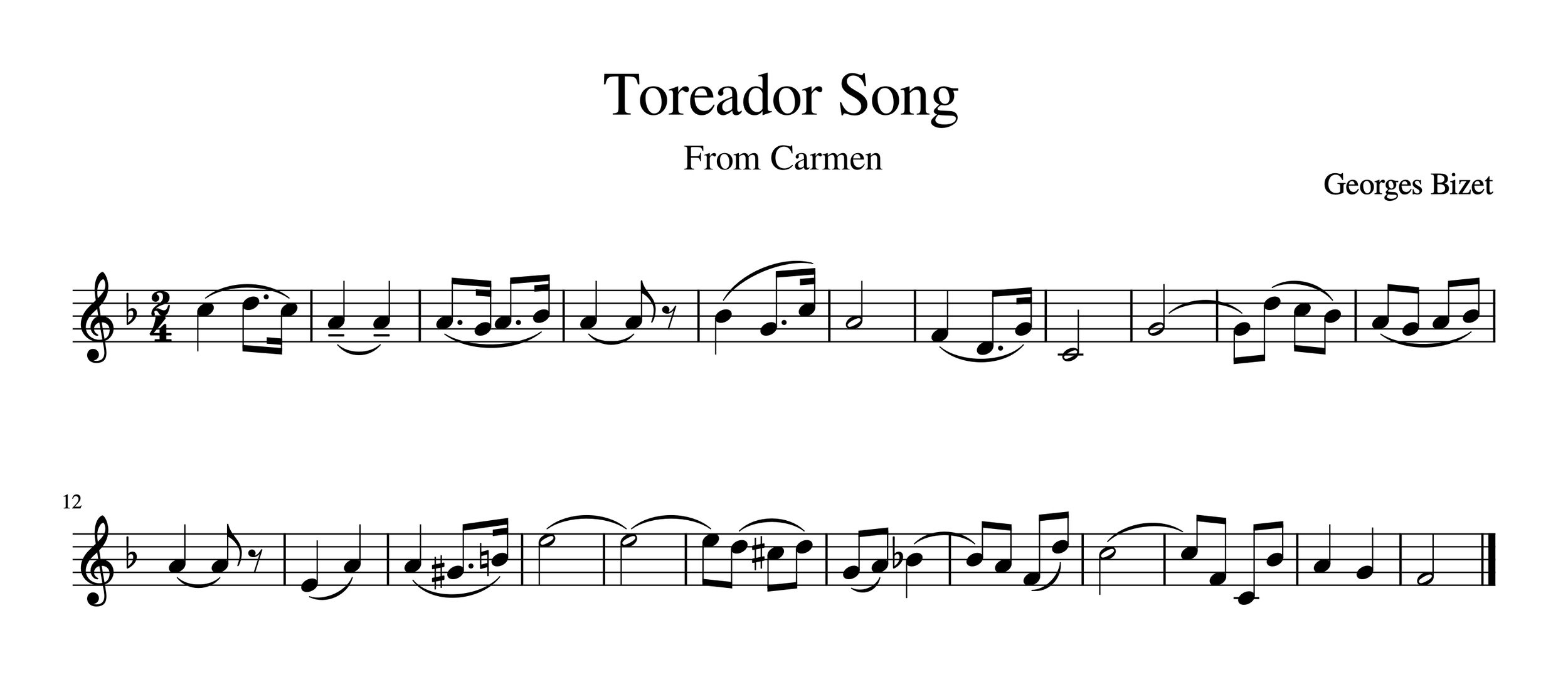
Toreador Sheet Music for Violin

Let’s start off with the Toreador Song, a famous tune from Carmen. This tango is in F major which means we have one flat, B flat. So think low first fingers on the A and E string.

(Need some help with F major finger patterns? Click here)

If you’re learning second position on the violin, the Toreador Song actually fits very well in your hand in second position, since there’s not as many string crossings.

Notice how all of our violin tangos feature two distinct sections. There’s always a sharp, accented style alternating with a smoother, more legato section. Some tangos start with the accented part, some start with the legato part. See if you pick out the various styles in each violin tango!

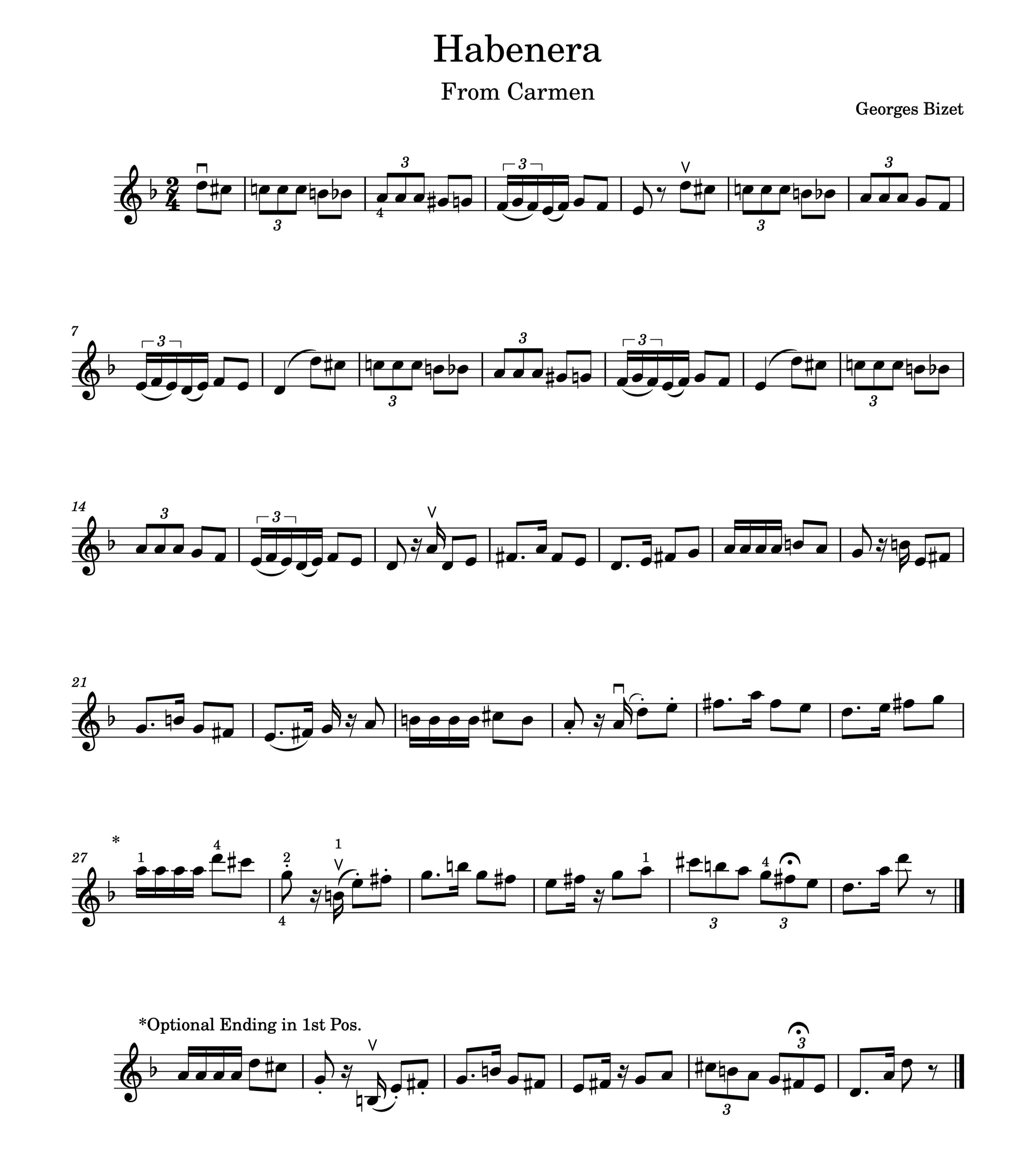
Habanera Sheet Music for Violin

Our next tango from Carmen gets even saucier! We’re once again in F major but Habanera has lots of accidentals. In the first two measures, you’re moving chromatically which means every note is a half step apart.

Triplets play an important role in this song. Here’s a little music theory: when you see a group of three 8th notes with a “3” above or below the notes, those are triplets. A triplet is simply a quarter note divided into three equal parts.

The last line does go up to third position, but if you’re not comfortable with third position not he violin, I’ve also added an optional ending that stays in first position.

Por una Cabeza Sheet Music for Violin

Last in our list of 3 famous violin tangos is perhaps the most famous of all, Por tuna Cabeza! This classic tango was featured in the tango scene from Scent of a Woman. This is one tango that you won't be able to stop playing!

For this tango, we’re in good ole G major, but don’t get too lazy, there’s lots of accidentals. This violin tango features more half step chromaticism, more challenging third position as well as a fun harmonic and a double stop at the end.

This violin tango has it all! Enjoy Por tuna Cabeza for the violin!

I hope you enjoy these violin tangos! While I love writing out these songs, like all of the sheet music I produce on my website, they take a considerable amount of time to notation, arrange, edit, test-play, and upload. If you would like to download any of these violin tangos as PDFS, you can (and much more) when you sign up to my online studio. Try it out here!

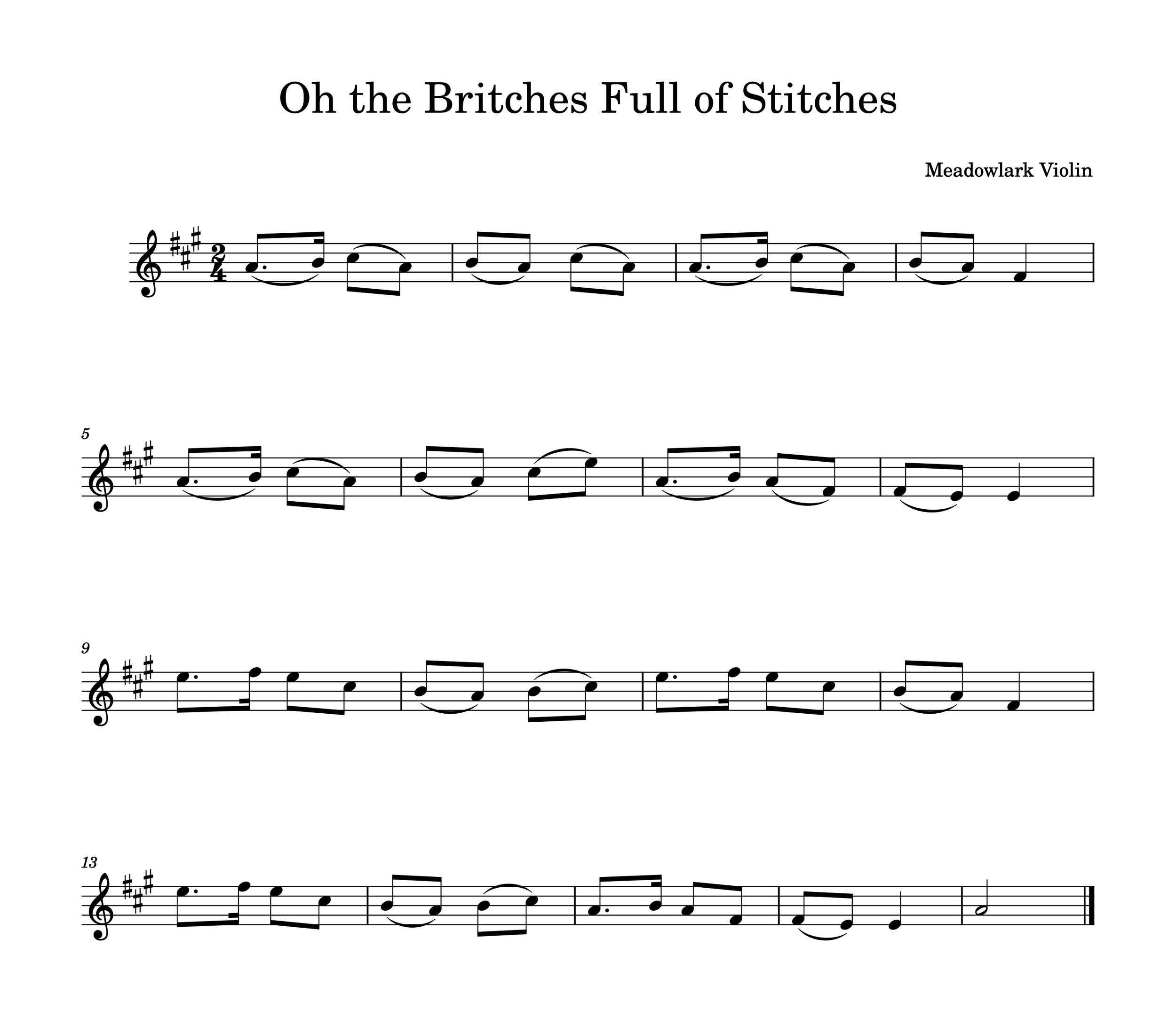
Oh The Britches Full of Stitches Easy Fiddle Sheet Music

How to Play Oh the Britches Full of Stitches on the Fiddle

This easy fiddle song is so much fun to play and surprisingly easy. It only uses the 1st and 2nd fingers!

Watch the violin lesson on how to play Oh the Britches Full of Stitches on the fiddle and scroll down to get your free sheet music.

Oh the Britches Full of Stitches is also a great easy fiddle song to start improvising and adding ornaments and embellishments. The following free tutorial will show you the basics of how to play this fiddle song. In the complete tutorial, I’ll show you how I add slides and double stops to this fun fiddle tune. I’ll also show you a great warm-up scale as well.

Interested in watching the complete tutorial as well as getting over 800 other lessons for fiddle and classical violin? Sign-up for a my online studio membership.

Want more violin tutorials sent to your inbox?

Sign up for my free newsletter below and you’ll get updates anytime I upload new song tutorials (plus get some free violin printable goodies as well!)

Sign Up for My Free Newsletter Below

Oh the Britches Free Fiddle Sheet Music

Download and print the free sheet music here.

Can I Learn Violin on an Electric Violin?

Can Beginners Learn Violin on an Electric Violin?

If you are thinking about learning the violin, you might be wondering “can I learn to play violin on an electric violin?” While you technically could learn violin on an electric violin, I would recommend against beginners starting off with an electric violin. Why? It all has to do with learning to produce a good tone.

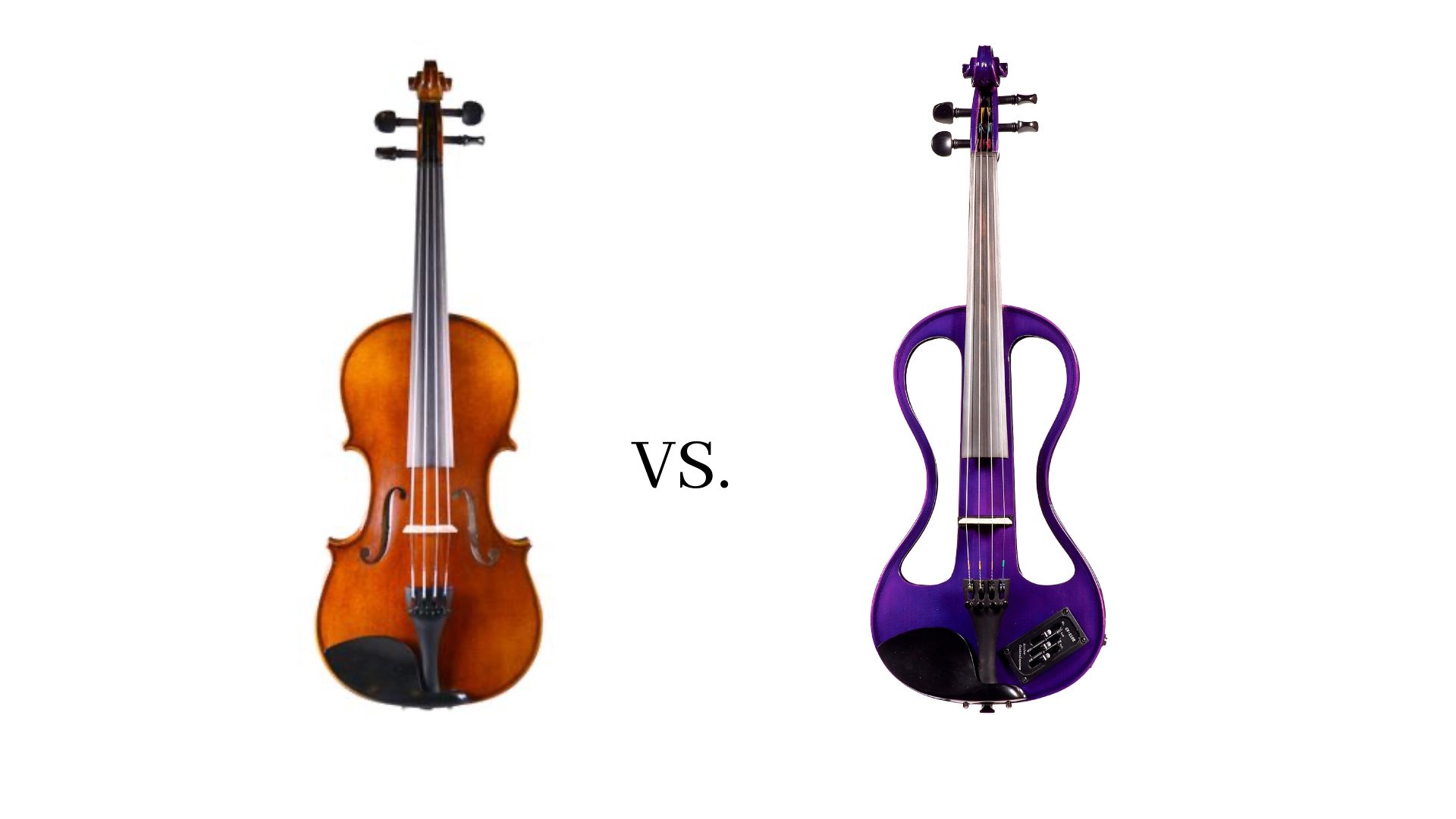
Before we get into the specifics about tone, let’s talk about the three types of violins: acoustic, acoustic/electric, and electric.

What is the Difference Between Acoustic Violins, Acoustic/Electric Violins, and Electric Violins?

Acoustic violins have wooden bodies that naturally resonate and amplify the sound. The wooden body of an acoustic violin acts as a resonance chamber. Electric violins don’t have resonance chambers. They require an amplifier in order to be heard. Acoustic/Electric violins have the traditional wooden body, but they also have pick-ups and usually volume adjusters.

Should I start with electric or acoustic violin?

If you are just starting to learn violin, you should start with an acoustic violin. Acoustic violins allow you to hear the tone you are producing and make adjustments. Electric violins require an amplifier to produce a sound. Even then, the amplified sound is not natural and will make it difficult to learn to produce a good tone.

Producing a good tone with the violin is one of the most difficult skills to master. It requires the optimum amount of weight and speed transferred through the bow to the strings. How do you know if you have the right amount of weight and speed? The natural resonance chamber of an acoustic violin will tell you! If something sounds bad, you’ll hear it and be able to adjust. The effects added when playing with an electric violin (such as amplification, distortion, reverb, etc) make it difficult to hear and learn how to produce a good tone. An electric violin without an amplifier is so quiet that you won’t be able to gauge if you are doing the right things with your bow to produce a good tone.

What are the Disadvantages of an Electric Violin?

Electric violins require amplification to be heard, so if you don’t have an amplifier, the electric violin will be very quiet, and may not produce a sound at all. That means you won’t be able to hear everything you need to hear on an electric violin, making it much harder to learn.

The effects of amplification can also distort the natural sound of the violin and hide mistakes with intonation and bowing.

Is Electric Violin Easier than Acoustic Violin?

No! It is much easier to learn to play on an acoustic violin. With an electric violin, it can be difficult if not impossible to learn to produce a good tone. If you are a beginner violinist, you should learn to play on an acoustic violin.

I’m worried about my neighbors. Should I learn to play on an electric violin?

Electric violins are quieter than acoustic violins since they don’t have resonance chambers and rely on amplifiers to produce a sound. An electric violin without an amplifier has a very quiet sound or it may not produce a sound at all. If you are worried about disturbing your neighbors while you learn to play the violin, you can get a practice mute for your acoustic violin which significantly reduces the sound. Beginner violinists should avoid electric violins until you learn the basics of tone production and intonation. The sound of an acoustic violin can be dampened with a practice mute, but you still have the option of removing the practice mute when you’re not worried about disturbing anyone.

I’m worried about being heard when playing with large groups. Should I get an acoustic/electric violin?

A good quality acoustic violin can actually produce a very loud sound once you learn the basics of tone production. If you need to be heard over other louder instruments or in large venues, you can always mic an acoustic violin.

Acoustic/Electric violins are usually more expensive than their counterpart acoustic violins. If you are a beginner, I would recommend putting that extra money towards a better acoustic violin rather than purchasing an acoustic/electric violin. You can always mic an acoustic violin if you need to be louder. If you regularly play at large venues, for large crowds, or with other amplified instruments, then buying an electric violin or an acoustic/electric violin is probably worth the extra money.

Purchasing your first violin can be overwhelming! Do you need more help choosing your first violin? Check out my top 10 violins for beginners.

Happy Practicing!

Easy Patriotic Songs for Violin Sheet Music

Are you looking for easy patriotic violin songs? Maybe some violin songs for July 4th? Look no further. I’ve collected the most popular patriotic songs and arranged them for the violin so they are easy to play. Scroll down for some easy patriotic songs on the violin!

If you want to download and print all of this music, as well as more patriotic songs for violin, you can with my Online Studio Membership, where you’ll get access to all of my courses and my Sheet Music Library (a collection of over 200 easy, intermediate, and advanced violin songs). Learn more about becoming part of my online studio here!

  1. Marines Hymns Violin Sheet Music

2. Anchors Aweigh Violin Sheet Music

Go Navy! Enjoy playing the Navy song on the violin, Anchors Aweigh!

3. The Wild Blue Yonder Violin Sheet Music

Okay, this might not be the easiest easy patriotic violin song, but I did the best I could to make it “easier.” You know how it goes, so enjoy playing the Air Force Song on the Violin!

4. The Army Goes Rolling Along

5. America the Beautiful Violin Sheet Music

6. My Country Tis of Thee Violin Sheet Music

7. Star-Spangled Banner Easy Violin Sheet Music

I don’t know if the Star Spangled Banner is every easy, but I made it as easy as I could for violin by transposing into the key of G major. Have fun playing the Star-Spangled Banner on the violin this 4th of July!

How to Play Minuet No. 1 By Bach on the Violin (Free Sheet Music)

Minuet No. 1 by J.S. Bach is a great song for violin and I’m going to show you how to play this charming classical piece on the violin Scroll down to download the free violin sheet music for Minuet No. 1 by Bach and watch the video tutorial on how to play Minuet No.1 on the violin.

Want more violin tutorials sent to your inbox?

Sign up for my free newsletter below and you’ll get updates anytime I upload new song tutorials (plus get some free violin printable goodies as well!)

Sign Up for My Free Newsletter Below

Key Signature for Bach Minuet No. 1 on the Violin

What key is Minuet No. 1 in? G major! That means one sharp, F#. Think “high two, high two, low two, low two” for your finger pattern. High 2nd finger on the G and D strings and low 2nd finger on the A and E strings.

What Time Signature is Minuet No. 1 In?

3/4 time! Remember Minuet is a type of dance, so imagine dancing to this song and you’ll get a feel for 3/4 time.

For more information on time signatures, check out my course Music Theory for Violinists: Everything You Need to Know for Note Reading, Rhythm, and Music Notation. ver 6 and a half hours of lessons to answer all of your questions on music theory!

Want In-Depth Tutorials on Every Song in Suzuki Book 1?

I’ll teach you everything you need to know to master every song in Suzuki Book 1. I teach you rhythm, song construction, phrasing and dynamics, bow preparation, as well as measure by measure tutorials, play-along tracks, and duets! Check out the full course here.

10 Easy Violin Songs for Beginners (With Sheet Music)

If you are ready to start playing violin, you will need some easy violin songs for beginners with sheet music!

I’ve complied 10 of my favorite easy violin songs for brand new beginners. These are songs that I teach all of my violin students. You’ll also find that all of these easy to play songs come with easy violin sheet music PDFS! You can view all fo the sheet music here. If you want to download and print my complete book, “Easy Songs for Violin,” you can get it for free! Just sign up for my newsletter below and I’ll send you the free easy violin sheet music PDF as well as some other freebies!

Sign up for my newsletter to get your free easy songs for violin printable sheet music.

What are the Notes and Finger Numbers for Every Note in First Position on the Violin?

First let’s start off with a picture of all the notes, their names, and their finger numbers for every string on the violin. This will help you when it comes to learning easy beginner violin songs.

The Standard Finger Pattern For Violin

Almost all of these easy violin songs will have what I call the standard finger pattern for violin. The standard finger pattern is the first finger pattern you learn, in which there’s a whole step in between 1st and 2nd finger and a half step in between 2nd and 3rd finger. That means 2nd and 3rd fingers will touch. We’ll change it up a little bit towards the end!

Okay, let’s start talking about the best violin songs for beginners! We’ll start off with some easy to recognize songs that are perfect if you are just starting to learn violin.

  1. Hot Cross Buns

I know every method book and teacher starts off Hot Cross Buns. There’s a reason! This song is super easy to play on the violin since it only uses two fingers. You can literally start playing it in less than a few minutes, even if you know nothing about the violin!

It will start on 2nd finger. Make sure you “prepare” your fingers by building up to 2nd finger. I’ll show you how. You can play Hot Cross Buns on any string, the finger numbers and pattern will be the exact same.

I suggest playing these with pizzicato (plucking the strings) if you are a brand new beginner. That way you can focus on the left hand. This is a great violin plucking song if you are just starting out.

Download this easy violin song PDF ebook here.

2. Mary Had a Little Lamb

This is another really easy violin song for beginners because it also only uses 2 fingers. You can play the entire song with just your 1st finger, 2nd finger and an open string. Try playing this easy violin song on any string, the finger patterns will be the same. Keep playing pizzicato if you are a violin beginner. This is another great violin plucking song for brand new violinists.

Download this easy violin song PDF ebook here.

3. Boil Them Cabbage Down

Now to a really fun and easy song that sounds great on the violin! Boil Them Cabbage is a wonderful easy violin folk song that is super easy to play, but has a lot of room for adding in fun things like double stops and tags (extra notes at the end). This is one of those easy violin songs that sounds impressive as you get it faster and faster. Let’s start with the sheet music!

In this song, you’re going to start using your third finger. Remember, the third finger will go right next to 2nd finger. Again, you can play this super easy fiddle song on any string, it’s the same finger pattern. I also suggest starting off playing this pizzicato so it is another violin plucking song!

Download this easy violin song PDF ebook here.

4. Go Tell Aunt Rhodie

This is another popular song to play on the violin. This great easy violin folk song is the first song in which we start playing on two different strings. If you need help with string crossings, watch this.

Download this easy violin song PDF ebook here.

5. Lightly Row

As you start playing this easy to learn violin song, I want you to try and start leaving fingers down if you can. Think about those first two measures. There’s no reason to lift off your 2nd finger in between measure one and two. Just leave the 2 down and put the 3 right next to it. As you leave fingers down, you might start to have trouble with your left hand fingers hitting other strings. Watch this video to solve those problems!

If you want a complete tutorial on this song, it’s included in my Suzuki Violin Book One Tutorials.

Download this easy violin song PDF ebook here.

6. Frere Jacques

In this fun little violin folk tune, you’ll start using eighth notes more. Eighth notes are twice as fast as quarter notes. Learn more about music theory here.

Download this easy violin song PDF ebook here.

7. Ode to Joy

Ode to Joy is one of the best easy to learn violin songs for beginners. This is when you really start getting into classical style pieces. You can start using longer bows and more weight to get a good tone. When you get comfortable using lots of bow with a good tone, this is one of those easy violin songs that sounds impressive.

I suggest using 4th finger when you can. Don’t wait to introduce this finger. Using 4th finger will help you get a straight wrist. Here’s some tips on getting that pesky pinky in tune.

Download this easy violin song PDF ebook here.

8. Can-Can

This has to be one of the funnest easy violin songs to play. Once you learn it, try getting it faster and faster and faster. It will sound really impressive and you won’t stop playing your violin!

If you want a complete tutorial on this song, this is one of the many song tutorials in my Complete Beginner’s Violin Course.

Download this easy violin song PDF ebook here.

9. French Folk Song

This sweet little violin folk song is so much fun to play on the violin, and it’s very easy to learn. This song is in 3/4 time. It might be one of the first times you’ve seen this time signature in beginner violin sheet music. It’s just three beats in a measure instead of 2 or 4, but you’ll notice songs with this time signature have a lilting, dance-like quality to them. Enjoy one of my favorite easy violin folk songs!

Download this easy violin song PDF ebook here.

10. Buffalo Gals

Next in our list of 10 best easy violin songs for beginners is one of my favorites, Buffalo Gals. This easy violin folk song has one tricky little rhythm, but if you know how it goes, it will be fun and easy to play. I love this song because it’s an easy violin song that sounds impressive.

That one tricky measure is in measure 10, where the single eighth note comes first. Just play that single eighth note very quick using a small amount of bow.

Download this easy violin song PDF ebook here.

I hope you enjoyed my top 10 best easy violin songs for beginners! When you’re ready, check out these other great violin resources for beginners