
JonPaul Carrera Violin Bow: Firm or Flexible? A Violin Teacher's Review
/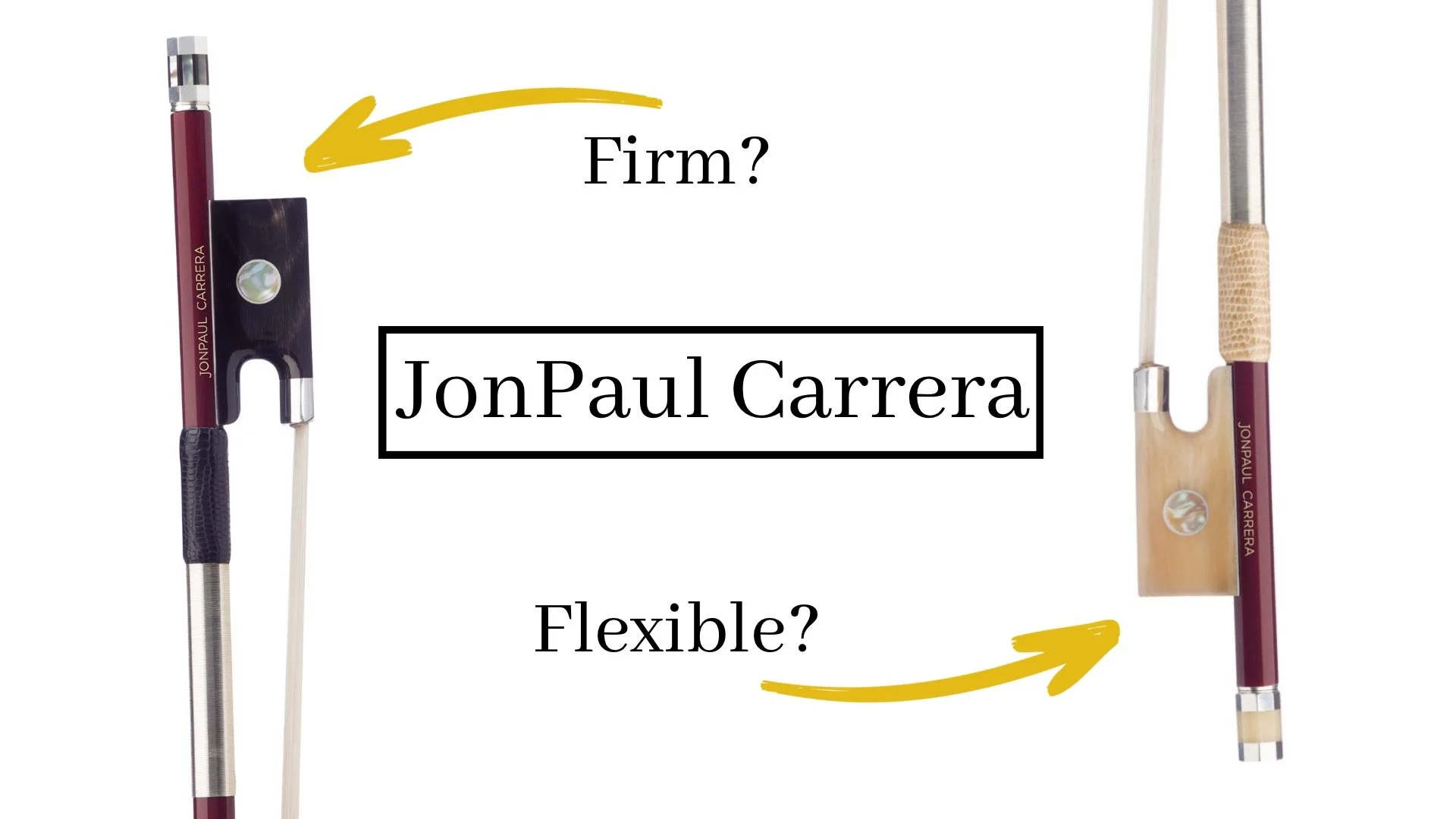
Are you considering purchasing a JonPaul Carrera bow? If so, you may be wondering what the difference is between a firm bow and a flexible bow? Are you confused with the terms like a “soft stick” vs. a “firm stick?” In this article, I’ll be explaining the differences with the JonPaul Firm Carrera and the JonPaul Flexible Carrera.
I recently had a conundrum that had me needing a new bow…asap. When I first started full-time RVing, I bought a new violin and a new bow for this journey. I’m really glad I decided on this course of action because pretty soon after RVing, I nearly destroyed my violin and bow…
I had originally bought a Fiddlerman Pro Carbon Fiber bow. Now don’t get me wrong, I love this little bow. It’s super light and agile and is a ton of fun to play. But after playing it for about 5 months, it needed a rehair…bad! The only problem, I was RVing and recording in the Rocky Mountains with no luthier within a 7 hour drive. I should have thought about this before I left my home base, but I didn’t.
The Fiddlerman Pro was the only bow I had with me, which was a problem. I think violinists should always have two bows. That way, when you send one off to get rehaired, you have a back-up.
But here I was with some recording venues already scheduled and a bow that needed rehairing so badly, I cringed when I played it. While sending my bow off to get rehaired wouldn’t fit within my timeframe, buying a new bow would!
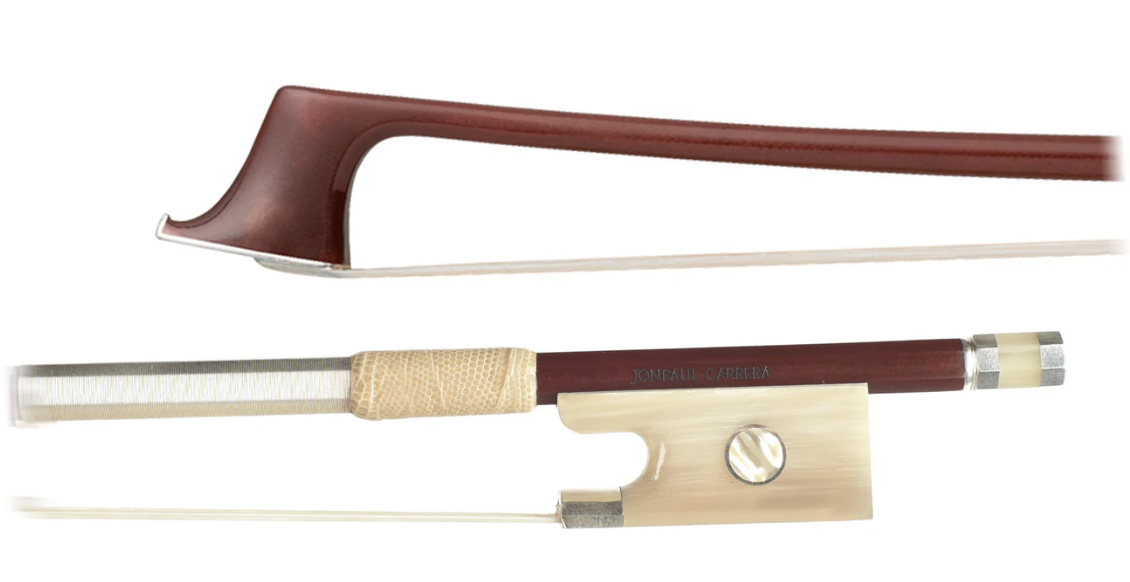
JonPaul Carrera Violin Bow
I had my eye on the JonPaul Carrera bows for while. I had been wanting to try a higher end carbon fiber violin bow and people had great things to say about the JonPaul Carreras online. I loved that they came in a firm bow option and a flexible bow option. When shopping for bows, people commonly ask me, “what’s the difference between a firm bow and a soft bow?” Or you might hear the terms supple or flexible to describe a soft bow and hard or stiff to describe a firm bow. I thought this would be a perfect opportunity to showcase the differences between a firm violin bow and a soft violin bow.
Ordering the two violin bows for trial from Fiddlershop was fairly easy. Normally, it would be super easy, but since I full-time RV, I was staying at a campground in the middle of nowhere Colorado and my shipping address did not match the address on my driver’s license. A quick call to Fiddlershop cleared everything up and within a few hours I had two JonPaul Carrera bows headed my way!
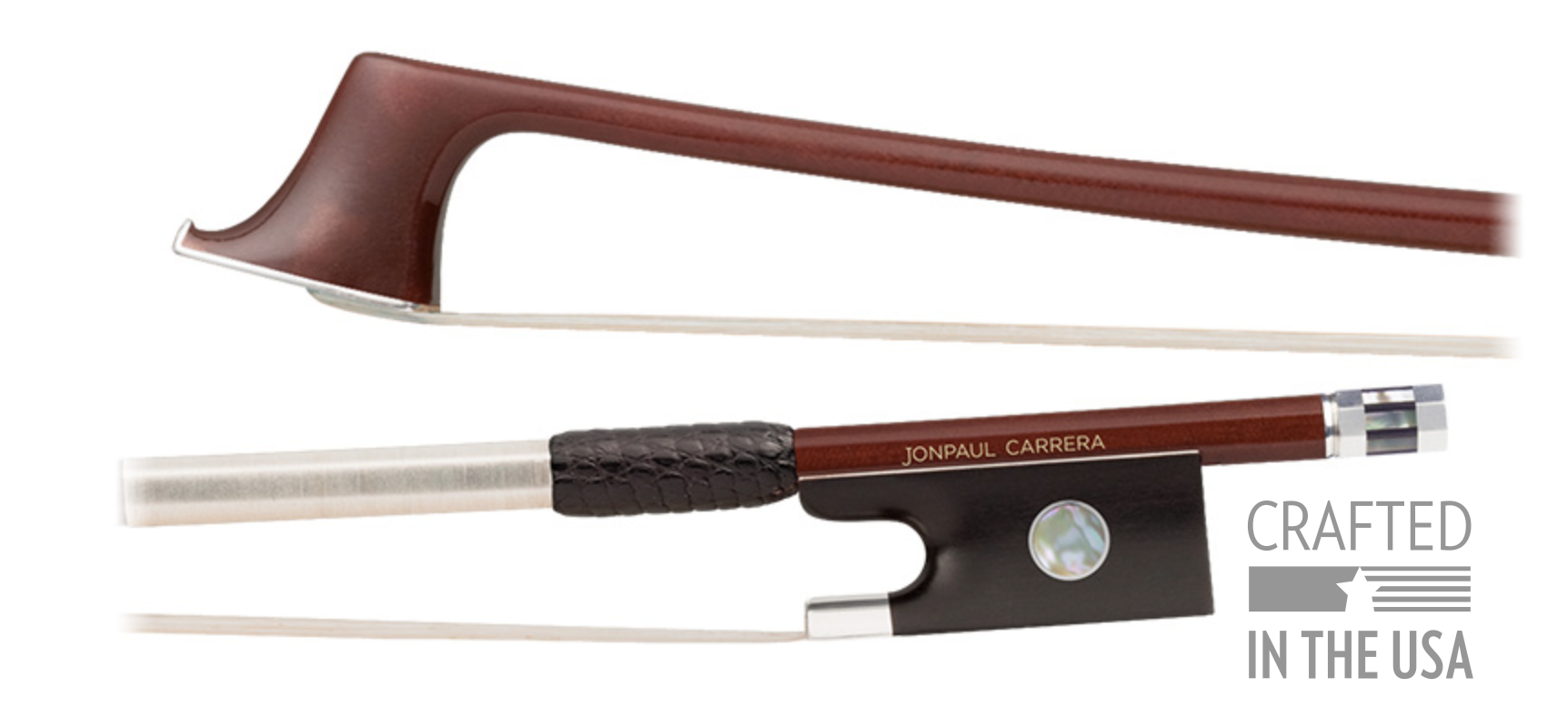
*Note: The JonPaul Carrera violin bow is an advanced/professional quality bow and it is priced as such. Keep in mind, you don't have to be advanced or professional to use this bow. I think it is stable enough for even a beginner to use. But if you are looking for more affordable bow options for beginner or intermediate students, check out my Best Violin Bows for Beginner and Intermediate Students.
Initial Thoughts on the JonPaul Carrera Bows

Appearance and Craftsmanship
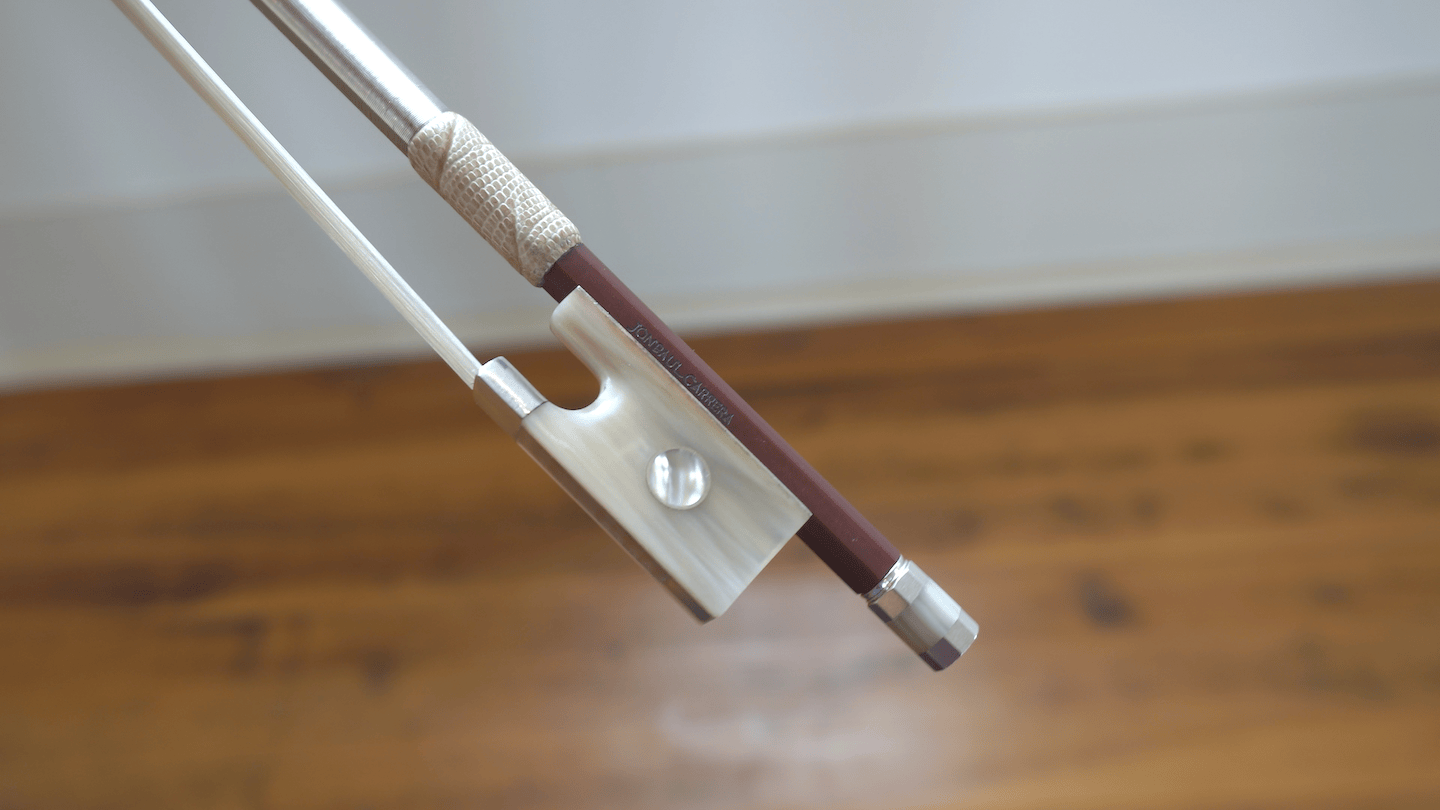
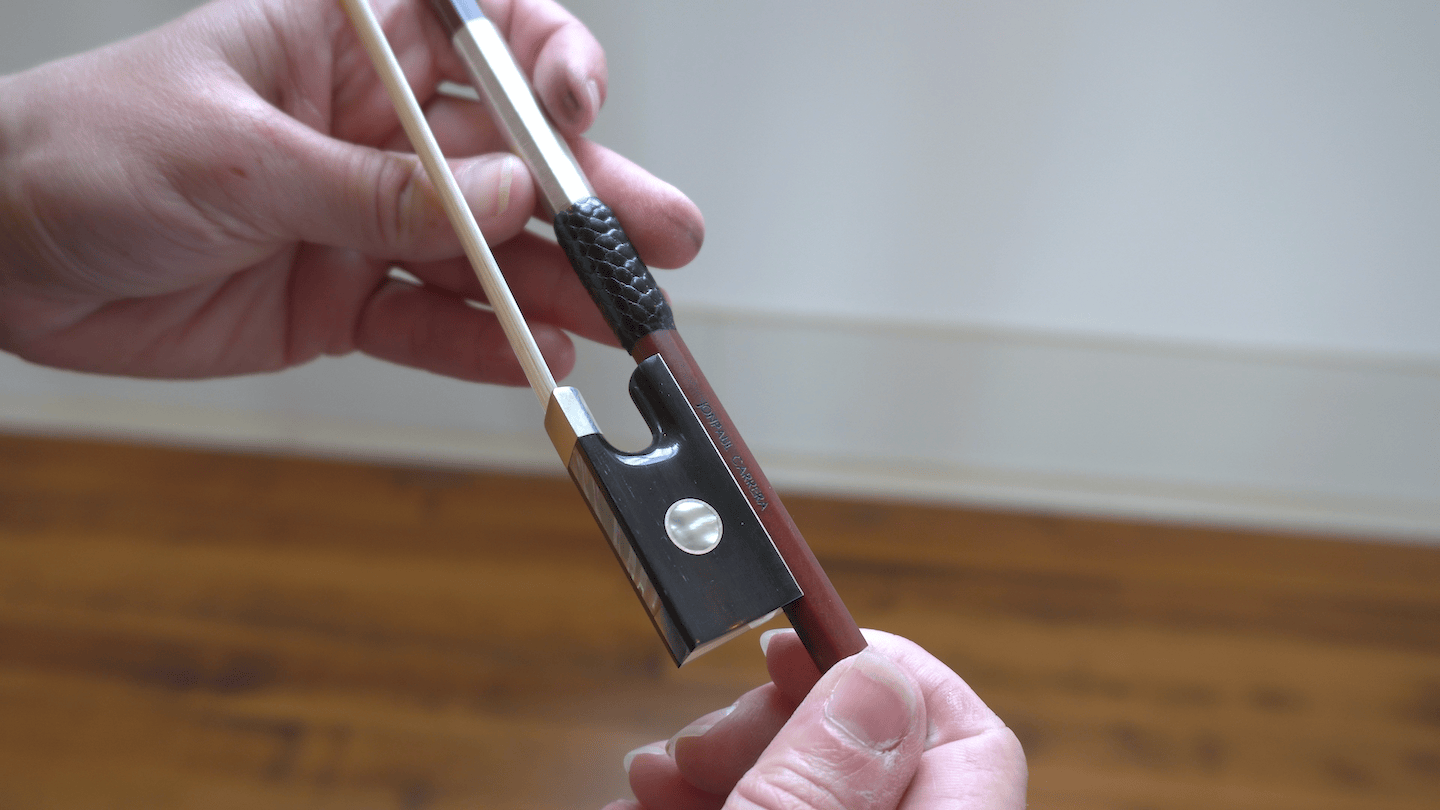
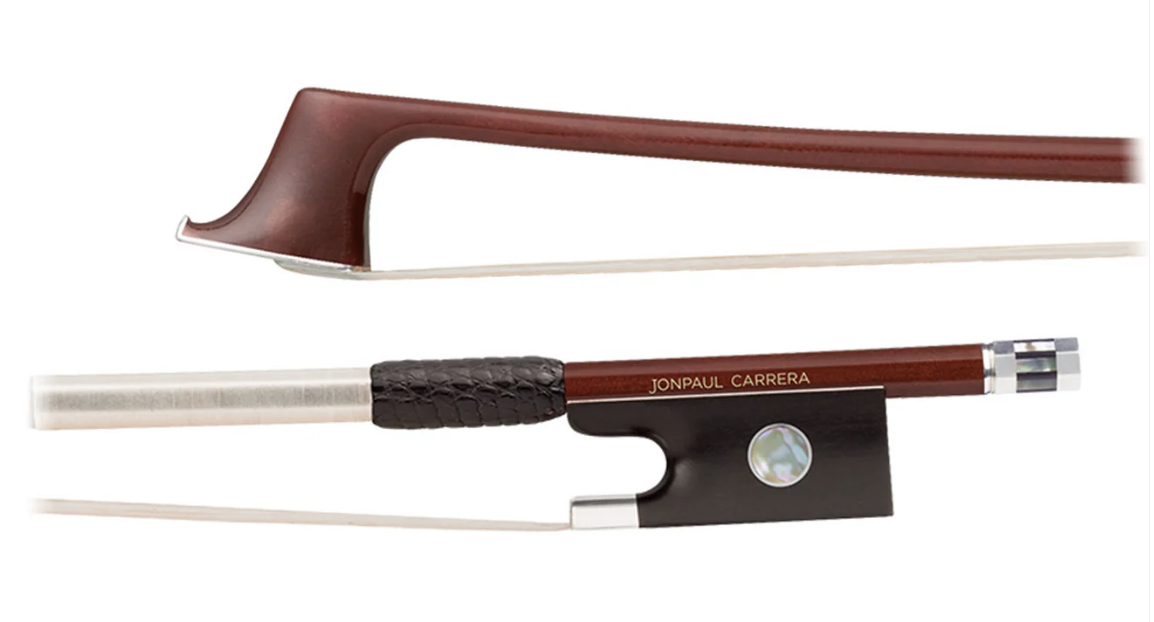
The JonPaul Carrera Bows are beautifully crafted violin bows. You can order the frog in either ebony, black horn, or white horn. I decided to try the firm violin bow in black horn and the flexible bow in white horn, but you can order any bow with any frog combination. The white horn frog was beautiful, but as many people note, it was darker than what you see in the online pictures. That wasn’t a big deal for me as it was still very lovely.
The black horn honestly doesn’t look very different from ebony to me. It has some striations in the material that actually make me think there’s some rosin dust on there I need to wipe off. So if I were to order these again, I’d probably either go with ebony or white horn.
The stick part of the violin bow is brown with a slight sheen to it. While the stick doesn’t necessarily look like wood close up, you can’t tell it’s not wood from a few feet away.
What’s the difference between a firm and flexible violin bow?
Before I tell you my initial thoughts on the JonPaul Carrera bows, let me give you a basic explanation on the differences between a firm and soft violin bow.
Take whatever bow you are using right now. Place the bow on the violin in the upper half of the bow and try to compress the stick down to the hair. With a flexible bow, it’s fairly easy to compress the stick down to the hair. If you were to take a firm bow and tighten the hair the exact same amount, and try to compress it down to the string, it will be much more stiff and resistant to flexing. That amount of flex, or resistance, is not necessarily a bad thing. It can actually make some bow techniques much easier as you’re going to find out.
The designations firm and flexible can vary across different bows and different makers. In the past, I’ve tried some bows that were described as firm, but they felt pretty flexible to me. But for the JonPaul Carreras, these designations definitely hold true. The firm bow is very firm and the flexible bow is very soft and supple.
Sound and Response
I’m not going to lie, when I first tried the firm bow, I was a little put off. It felt really, really stiff and the flexible bow felt much more like what I was used to. When you’re trying out bows, one thing you have to be aware of is that the amount of ideal hair tension will be different for different bows. I started experimenting and realized the firm bow needed much less hair tension, and when I tried that, I started to understand all the hype about the JonPaul Carrera bows.
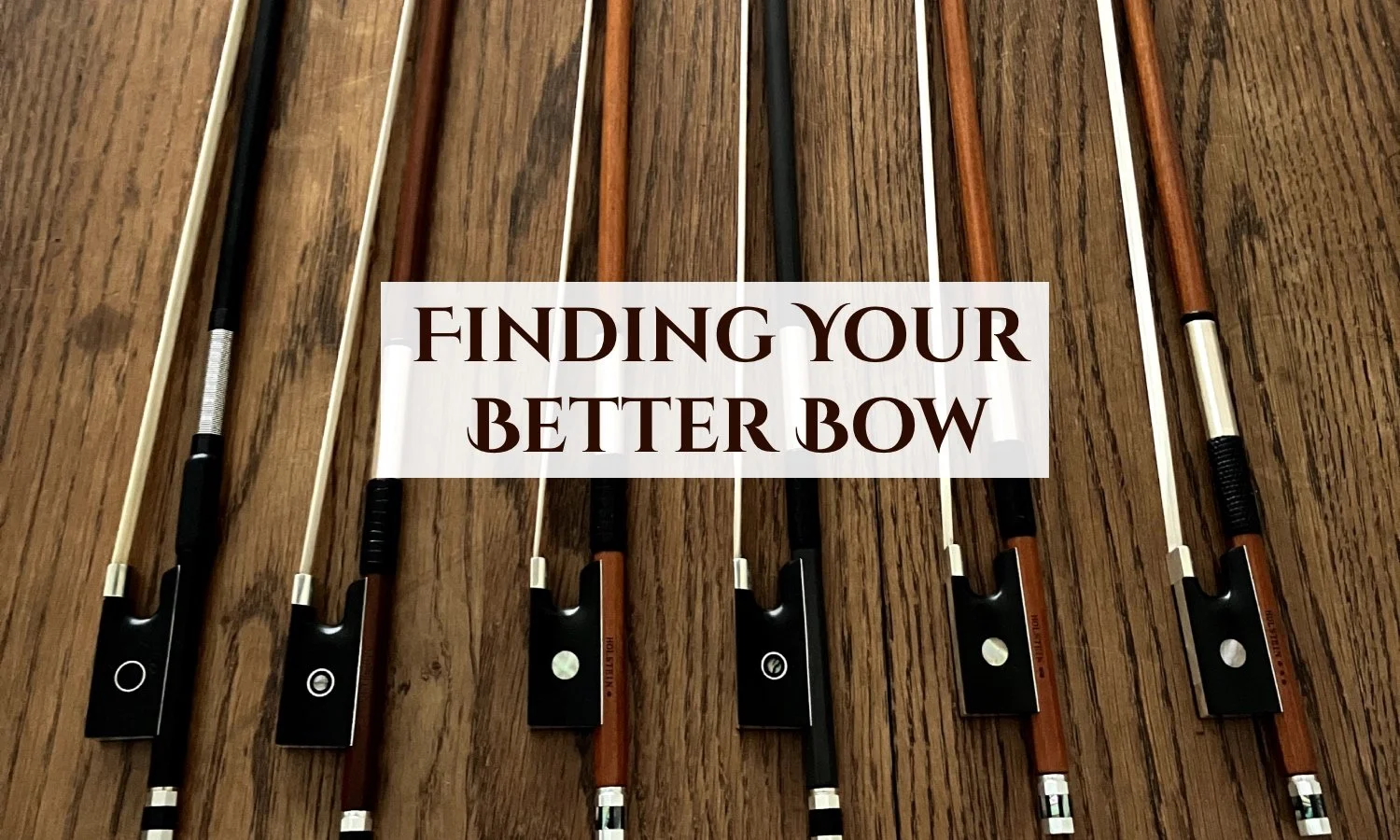
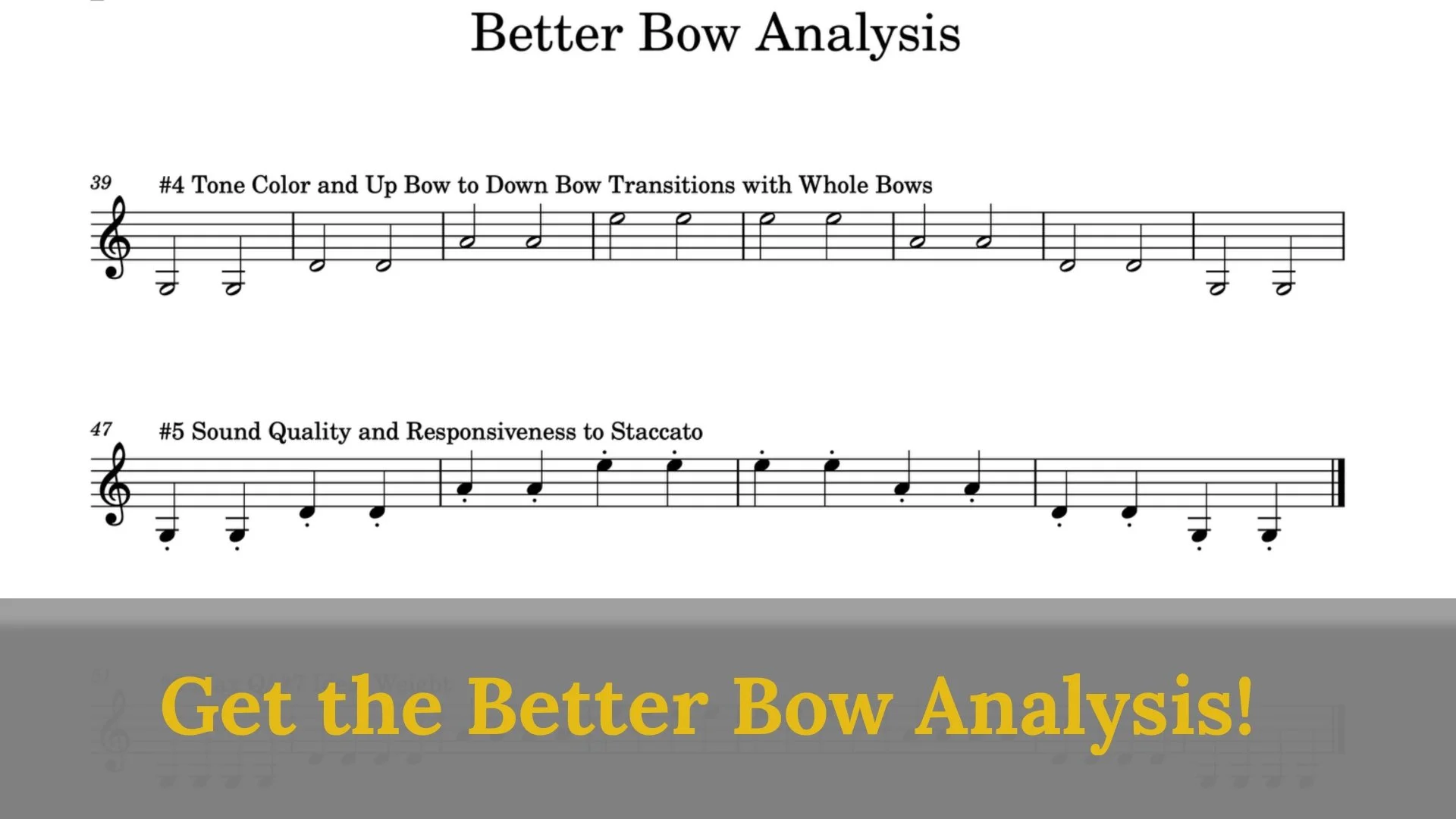
At first, I stared at each of these bows and for a moment I thought, “what do I play next?” When you have violins or bows on trial, it can be hard to know how to compare them. But then I remembered I made a complete course on trying out bows! My Better Bow Analysis has multiple exercises to help you analyze different bows.
After spending just a few minutes playing through the exercises in my Better Bow Analysis, I had a pretty clear understanding of the strengths and weaknesses of each bow.
Let’s go through the differences between the JonPaul Carrera firm and flexible bows.
Articulation
When it came to articulation the firm bow definitely won out. It was very crisp with staccato and when I was playing faster passages every note was very clear. And I could hear that distinction and I could also feel the crisp response in my hand.
When it came to bow strokes like spiccato, I got the firm to bounce more easily, BUT the flexible had a softer, rounder-sounding bounce. The firm won out on brush spiccato because it was a little firmer and stiffer and got the string to speak better. The flexible bow won the up-bow staccato because it had a little bit more of a bounce in the stroke. And when it came to double stops, the firm Carrera bow definitely pulled a very clear, rich sound on both strings and I could really tell a difference on double stops in the higher positions where it’s often tricky for the bow to get both strings to speak, but it was very easy and clear with the JonPaul firm bow.
Smoothness
Next is smoothness, as you might expect, the flexible bow won out here. I was always a little bit surprised at how easy it was to do string crossings with the flexible bow. It’s called supple for a reason!
Max Q
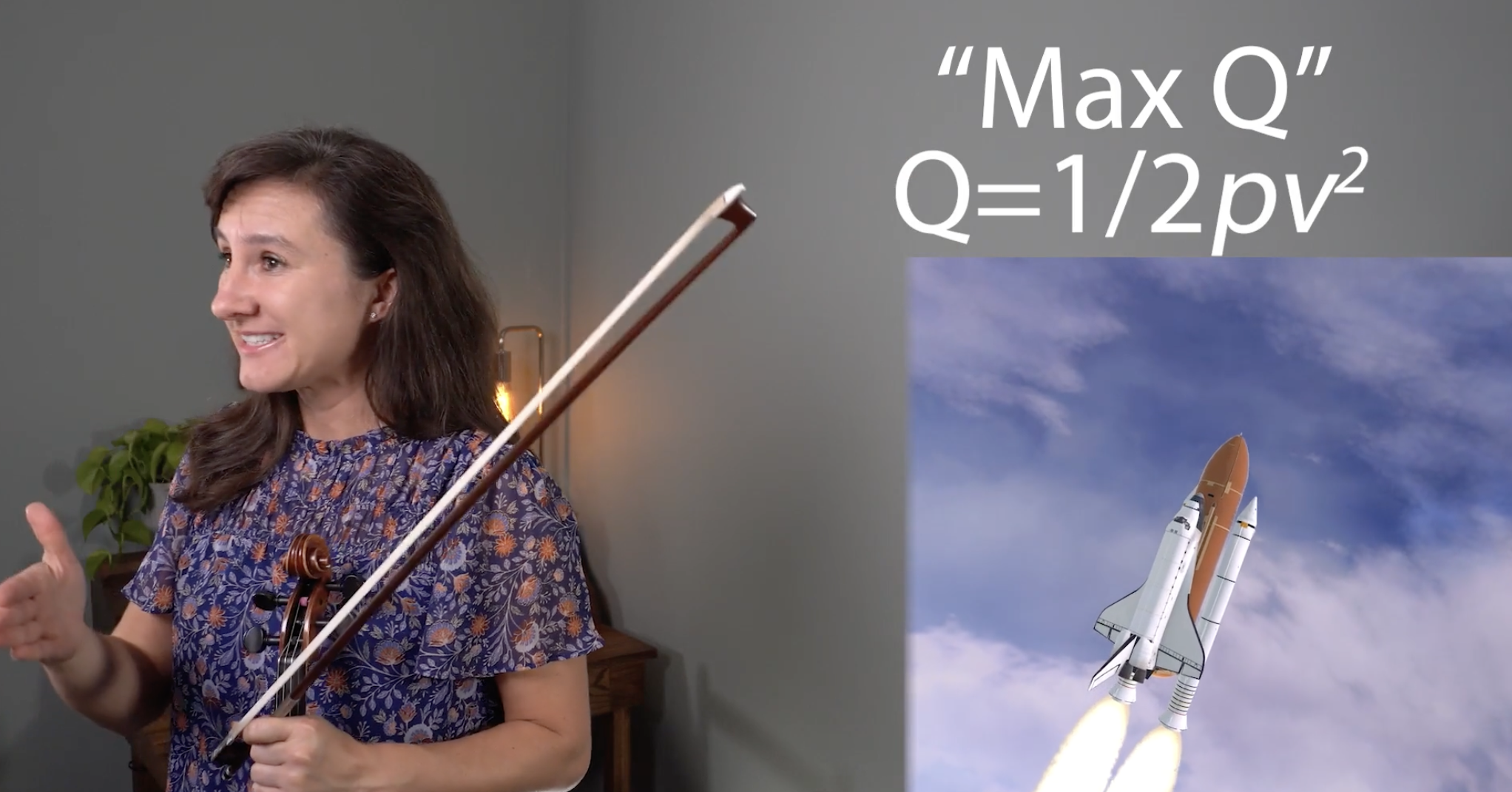
Next up is Max Q, now this is a Meadowlarkism borrowed from aerodynamics and you’ll learn all about it in my Finding Your Better Bow course, but basically Max Q is how much force and pressure the bow can take. There was a unique difference here because the flexible Carrera bow didn’t sound badly at Max Q. Even though it was maxing out, it still had softness to the sound. But I actually couldn’t max out the firm bow. No matter how much weight I put into the stick, it still produced a good tone! And that’s pretty impressive! So the firm Carrera bow definitely wins the round for best Max Q!
Firm vs. Flexible Violin Bows: Dynamics
What about playing piano? The JonPaul firm bow produced a much more focused tone during the piano sections. It could handle playing piano very well. However the flexible bow allowed me to get even softer and the piano sound always had more color and more richness. It always reminded me of a palette of pastel colors. Whereas the firm produced a very controlled, clear piano sound. Neither bow is a loser here, but I’m going to give a point to the flexible bow just because it allowed me more options for playing piano.
How did each bow handle forte sections or playing closer to the bridge? The flexible Carrera bow responded really well but I had to be careful not to max it out. The firm bow however, was so crystal clear on strong forte sections. It felt so easy and so enjoyable to play once I got the feel for it. I felt myself pushing the limits more than I ever have before. For me this was a definite point for the firm Carrera bow. This was really where I felt the bow out performed any other bow I’ve ever played, including my pernambuco bows. It handled that contact point close to the bridge so well and the forte sections were so easy and enjoyable to play. But I could also see how someone else might think it sounded a little too focused and sharp-sounding and you might think the flexible bow had a rounder, fuller sound at the forte sections. For me however, I loved this feature of the firm bow.
Extreme Ranges
What about the extreme ranges on the E and the G strings? The firm violin bow drew out a very focused sound on the E string and the flexible bow was much rounder and maybe not quite so harsh on the E string. I liked each characteristic for different pieces and different sections so I’ll give them each a point here. For the G string, the firm Carrera definitely drew out a stronger tone and it gave me more immediate response. So i’ll give the firm violin bow a point there.
How does the tone of firm and flexible bows compare?
What about overall tone? The flexible bow had resonance and warmth, and the firm bow had a more focused, concentrated tone. Again, this one could totally go either way, depending on your preferences and your style of music. Personally for me, I loved the clarity of the firm Carrera bow, so it gets a point here.
How do firm and flexible bows feel different?
Last up, overall feel. This is tricky because at first, I would have given a point to the flexible bow for overall feel. Because it’s more flexible, you can really feel what’s going on between the bow, the hair, and the string. I think if you’re coming from more of a beginner or intermediate bow, the flexible bow will probably feel more familiar to you. You really feel like you can create a connection with the bow and the violin right away. The firm bow on the other hand, feels a little bit reserved and stiff in your hand at first, which is of course what you would expect from a firm violin bow. The flexible Carrera bow just melts into your hand and the firm bow takes a little bit of time to understand exactly how to get what you want out of it. It requires a very light touch and I think that’s something that you have to get used to.
When I first tried both of these bows, I did not like how the firm felt at all. It felt unresponsive and way too stiff. However, when I tried experimenting with the bow hair tension, I found that the firm bow didn’t need very much tension at all and when I realized that, I started to understand what the firm bow was capable of. So the lesson there is, don’t eliminate a bow just because it feels different than what you’re used to. You really need to spend some time with each bow to understand its nuances. Once I better understood how to use the firm bow, I actually preferred the feel of the firm bow over the flexible bow.
Overall Thoughts on JonPaul Carrera Bows
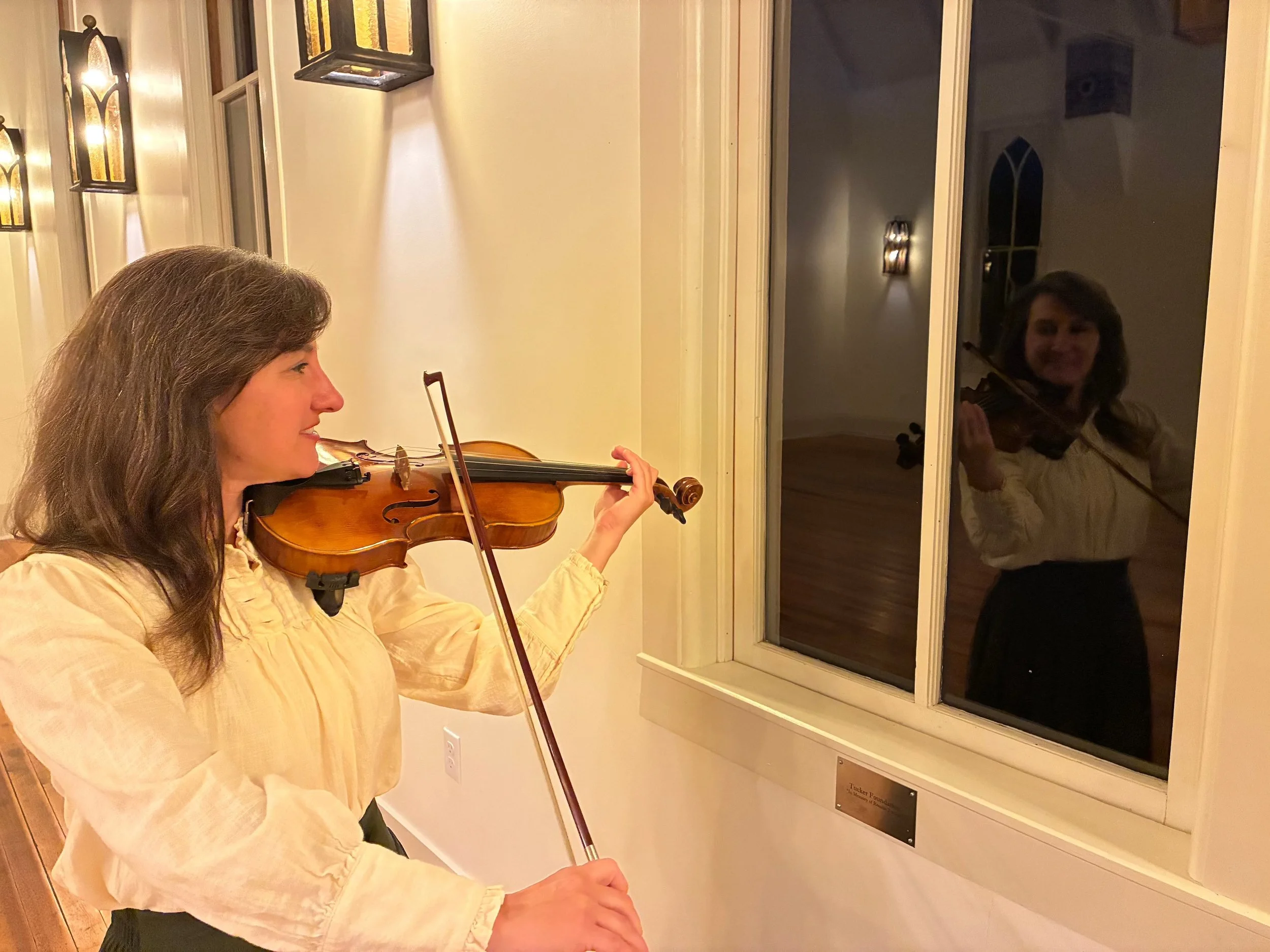
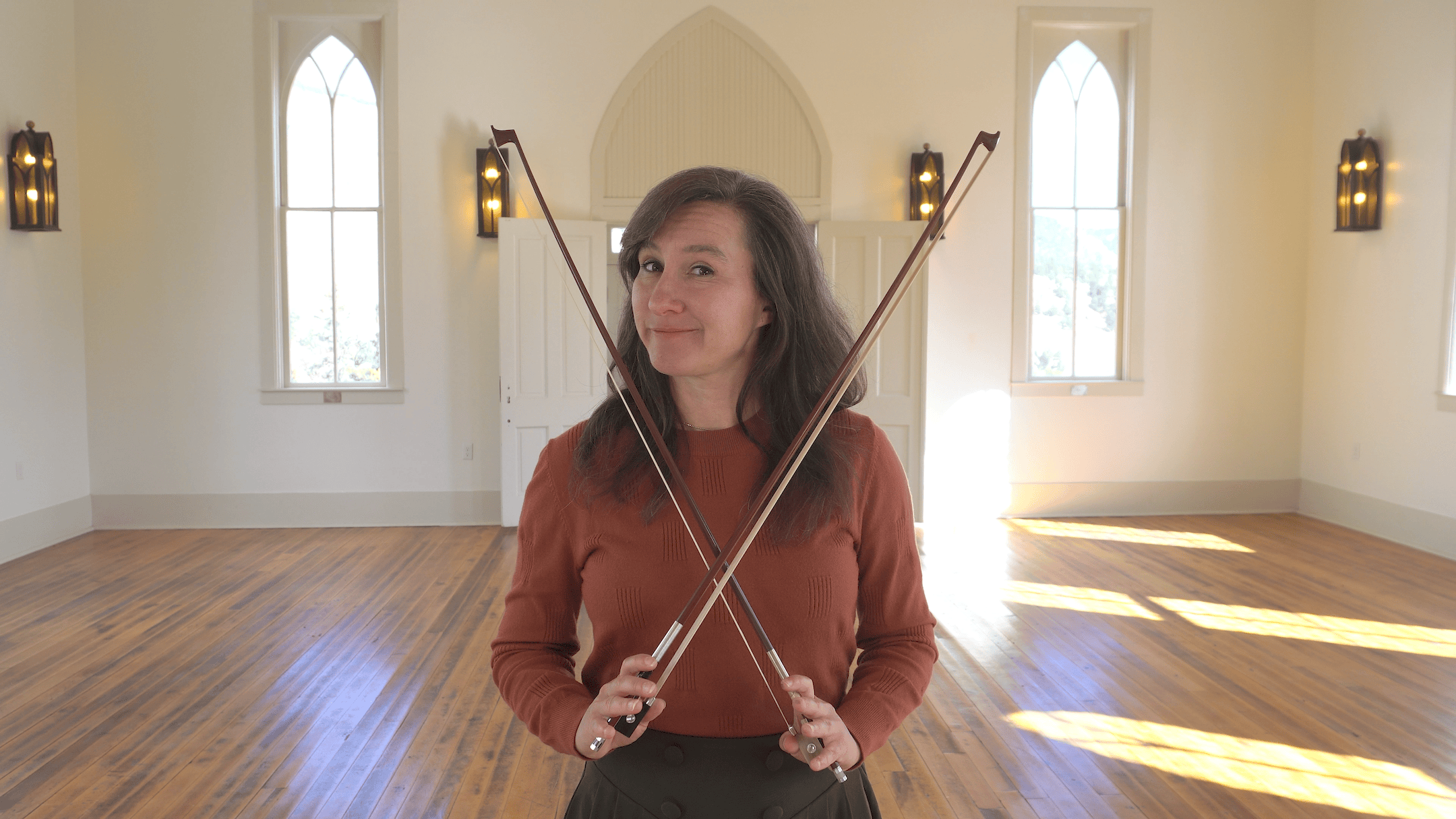
So let’s review how these violin bows stacked up.
Technically when it comes to points, the firm violin bow won. But this could totally go the other direction depending on on your preferences, which is why I definitely recommend doing an in-home trial anytime you’re comparing bows over about the $300 price range. They are all going to feel and sound much differently to each individual player.
Overall, if you’re wondering what the differences are between a firm and a flexible bow, the firm bow will probably have better articulation, and it will be easier to get good, crisp beginnings and endings to your notes. Firm bows will probably sound cleaner during fast passages or with double stops. A flexible violin bow will feel like it has more give in it and will tend to feel and sound smoother and it might perform better for those really really soft, piano sections.
Which JonPaul Carrera bow did I pick?
I loved how I could craft beautiful piano sections with the flexible bow, but overall the firm JonPaul Carrera bow won me over. I loved its clarity, strength, and articulation. The firm bow still produced a lovely, clear tone with piano sections, but its power during mezzo forte or forte sections is where this bow really shines.
If you’re interested in trying out these bows for yourself, give Fiddlershop a call! You can check out their in-home trial process here.
How do carbon fiber bows compare to pernambuco bows?
This is always hard to say since there are varying levels of both carbon fiber and pernambuco. You can’t really compare a $2000 pernambuco bow to a $1000 carbon fiber bow. You really need to compare across similar price ranges. Fortunately, my German pernambuco bow runs about the same price as the JonPaul Carrera bows. So which one would I pick? While I haven’t done a side-by-side comparison, I think the JonPaul carbon fiber Carrera outplays my pernambuco bow of the same price.
Am I through testing bows?
I’ve been playing my JonPaul Carrera firm bow for a few months now and I’m still as in love with it as I was when I first tried it out.
But can I find a bow that has the power of the firm bow combined with the nuance of the flexible bow? And if it’s out there, how much will it cost?
Stay tuned to find out more!




![10 Best Violins for Beginners: A Violin Teacher’s Ultimate Guide [2026]](https://images.squarespace-cdn.com/content/v1/554545e3e4b0325625f33fa6/1600433065588-JQV56M1W9LNI833AVGEE/10+best+violins+for+beginners+2020.jpg)