
How Much Should You Spend on a Violin? What Does More Money Actually Get You?
/How Much Should You Spend on a Violin? What Does More Money Actually Get You?
The most expensive violin ever sold went for an astonishing $23 million. On the other end of the spectrum, the least expensive violin I would recommend spending money on is around $300.
That's quite a range!
So, how much should you actually spend on a violin? Does spending more money really get you a better instrument? And, perhaps more importantly, what exactly are you getting when you move up to a higher price range?
Let's take a closer look.
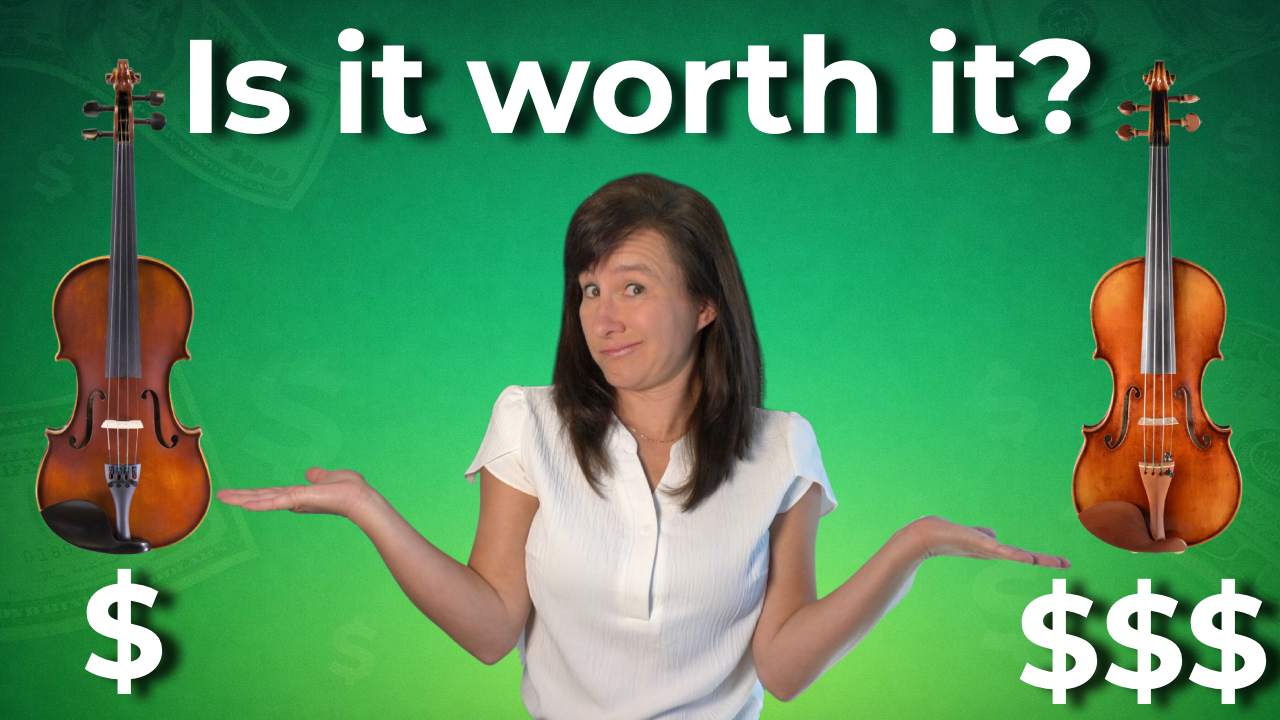
Is a More Expensive Violin Actually Better?
When I first started taking violin lessons, my mother asked my teacher a question:
"Does spending more money actually get you a better violin?"
Instead of answering her question, he laughed. Actually, he scoffed at her and made her feel rather silly for asking.
We didn't continue taking lessons with him much longer, but even though I had only been playing for a few months, I remember thinking that when I became a violin teacher, I would never laugh at someone's question. Especially when it came to something as overwhelming and confusing as purchasing a violin.
After all, you don't know what you don't know!
Now that I'm a teacher, I can tell you that my mother's question was a perfectly valid one.
We're all familiar with designer clothing. You can buy a T-shirt at Walmart or spend five times as much on a designer brand. But does the more expensive shirt actually have better quality?
Is it the same with violins?
The answer is: It depends.
When you're looking at unique, custom, or advanced violins, a more expensive instrument isn't necessarily going to sound better than a less expensive one. The country where a violin was made and its age can also influence its price, even though a newer violin at the same price might sound better.
But when we're talking about beginner and intermediate violins, there's a general rule I give my students:
When you purchase from a reputable violin shop that specializes in stringed instruments, you can generally expect to get a better violin as you spend more money.
But what makes one violin better than another? And how much do you really need to spend?
First, What Is a VSO?

No bridge=VSO
Before we talk about price ranges, there's one term you need to know: VSO.
VSO stands for "Violin Shaped Object."
You can find violins for less than $300, but many of these inexpensive instruments are really just violin-shaped objects. They might look like violins, but that's where the similarities end!
One way to spot a potential VSO is to look at the store selling it. If the retailer sells everything from clothing to kitchen mixers, there's a greater chance that the violin you're looking at isn't a properly made, playable instrument.
That doesn't mean you can't find good violins online. There are reputable violin shops that sell through websites like Amazon. But you need to know that you're purchasing from a legitimate stringed-instrument specialist.
My recommendation? Buy from a dedicated music shop, preferably one that specializes in bowed stringed instruments.
Beginner, Intermediate, and Advanced Violins: What's the Difference?
You'll notice that violin shops often categorize their instruments as beginner, intermediate, and advanced.
This doesn't mean you have to be an advanced player to play an advanced violin!
A beginner can absolutely play an advanced instrument. In fact, a better violin can make learning easier because it responds more readily to what you're doing.
On the other hand, as you advance, you'll eventually need an instrument capable of responding to and delivering the more sophisticated techniques you're learning.
So, what improvements should you expect as you move up in price?
Here are eight things I look at when comparing violins.

1. Better Appearance and Higher-Quality Materials
One of the most obvious differences you'll notice as you spend more money is appearance.
More expensive violins often have:
Higher-quality wood with beautiful grain patterns and flaming on the back.
More attractive and professional-looking varnishes.
Better overall craftsmanship and finishing.
Some of these differences are cosmetic, but the quality of the wood and varnish can also influence the instrument's sound.
As you move up in price, you'll generally see improvements in both appearance and materials.
2. Better Accessories

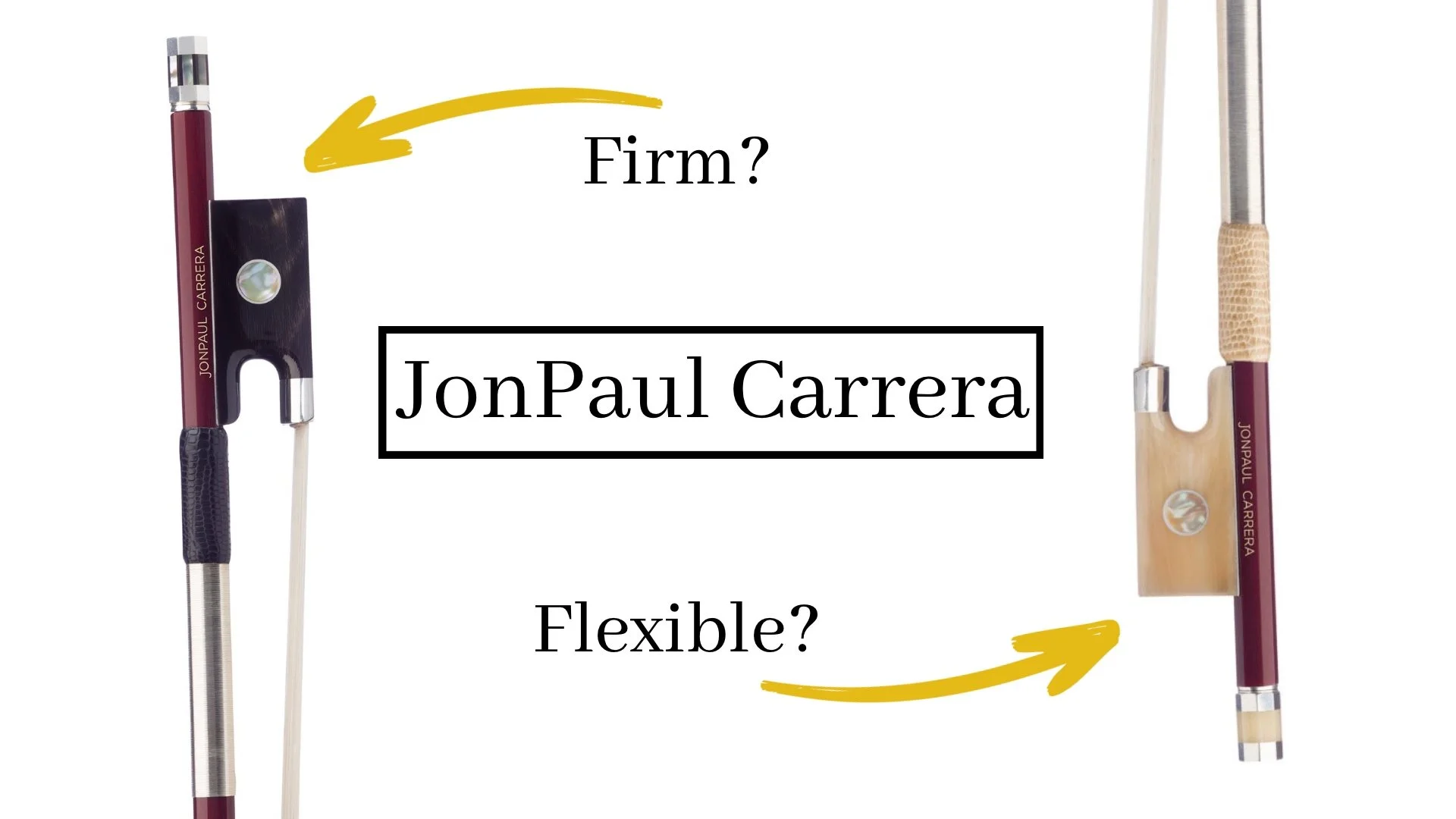
A better violin usually means better accessories, like the bow
Many violins are sold as outfits, which means they come with a case and bow.
As you spend more, you'll often get better accessories, too.
That might include:
A better-quality bow.
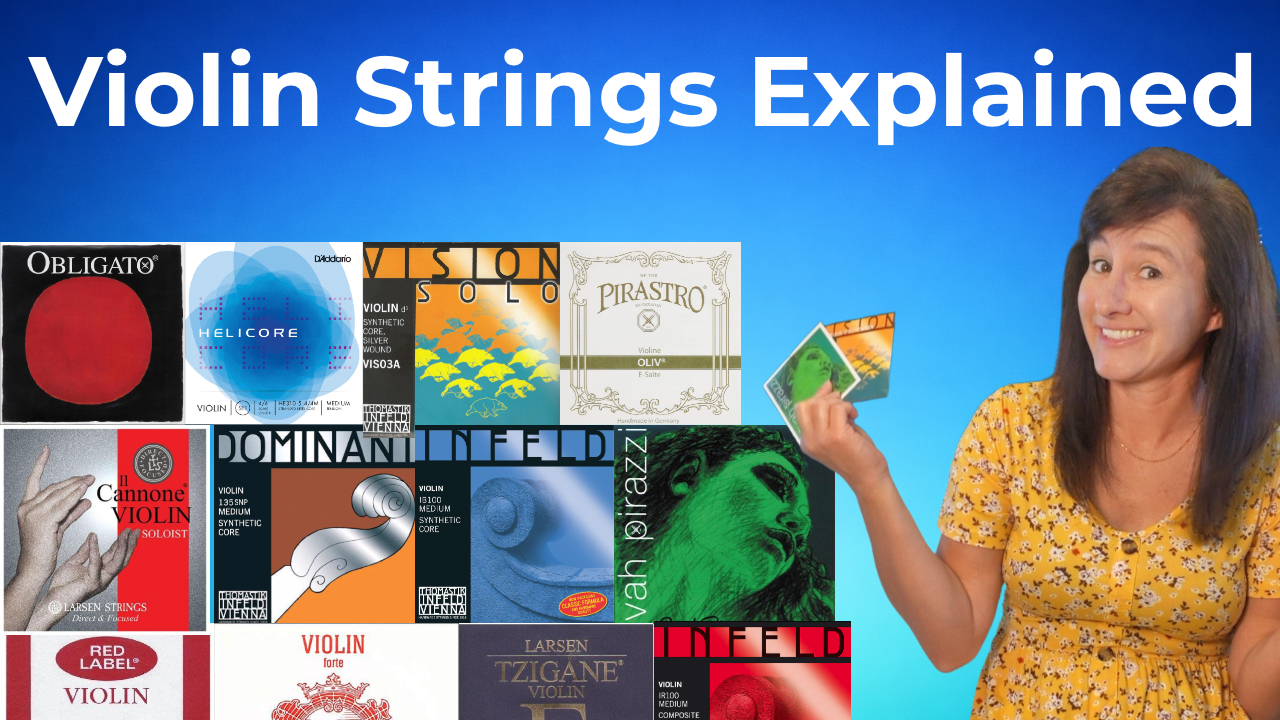
Better strings.
A more comfortable or higher-quality shoulder rest.
A nicer case.
Keep in mind that the accessories can make a difference in how your violin plays. A better bow, for example, can help you produce a more controlled and consistent sound.
When comparing violin outfits, don't just look at the violin itself. Pay attention to what's included!
3. More Response
Now we're getting into the things that really matter when it comes to spending more money.
One of the first improvements I notice in a better violin is its response.
This is a term violinists throw around all the time, but what does it actually mean?
Response is how quickly an instrument reacts to your input and how much effort you need to put in to get the sound you want.
Think of it like comparing a sports car to a big truck. A sports car responds quickly to a small input, while a truck might require a little more effort.
You could also compare it to riding a well-trained horse. If you want to go faster, you give a small signal and the horse responds immediately. A less-trained horse might require a much bigger kick!
It's the same with violins.
A responsive violin produces a clear, crisp sound with very little effort. When you want to play louder or softer, the instrument responds. It also picks up on subtle changes in your bowing, allowing you to create much more nuance in your sound.
If your violin constantly feels sluggish, slow, or heavy, response might be part of the problem.
A more responsive instrument can make a world of difference.
4. The Ability to Handle More Bow Weight
This is one of my favorite improvements in a better violin.
I'm always telling my students to add more weight to the bow. So many beginners play with a light, wispy sound because they're afraid to dig into the string.
But here's the problem: Some beginner violins simply can't handle much bow weight.
You start adding pressure, and instead of producing a richer sound, the violin starts sounding harsh, scratchy, or unpleasant.
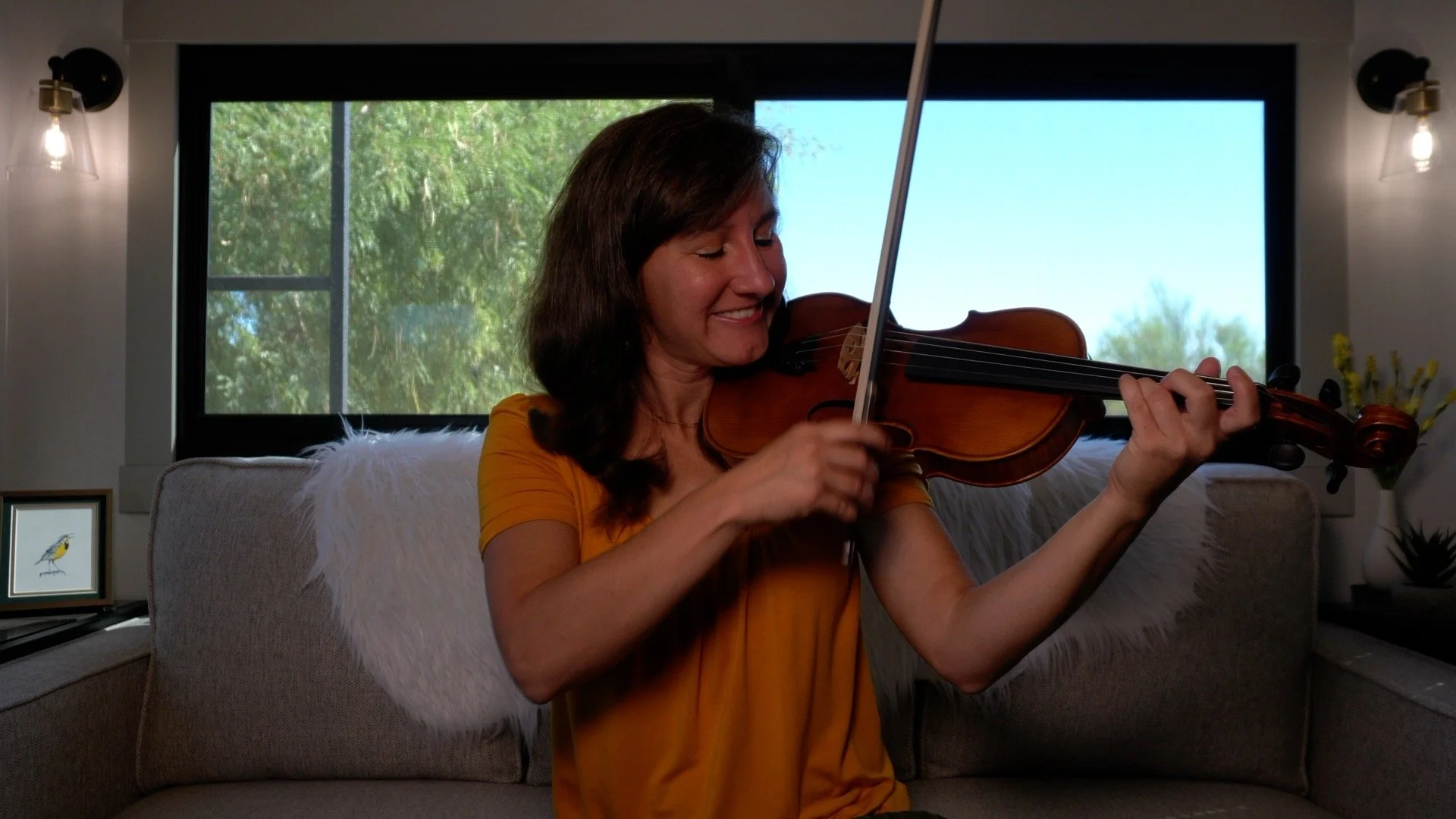
A better violin (and a better bow) can handle more weight while maintaining a beautiful tone.
That means you can draw a fuller, richer sound from the instrument without it falling apart.
And that's exactly what we want!
5. More Resonance
Resonance is that beautiful ringing quality you hear in a violin's sound.
How long does a note continue to ring after you've played it? And what is the quality of that ringing sound?
I often talk to my students about what I call "ringtones" on the violin. When you play a perfectly in-tune third finger, you should hear a lovely ringing quality.
Some students don't really understand what I'm talking about until they upgrade their violin or strings. Suddenly, those notes ring more clearly, and they understand exactly what I've been describing!
A more resonant violin has a beautiful richness and ringing quality that makes playing much more enjoyable.
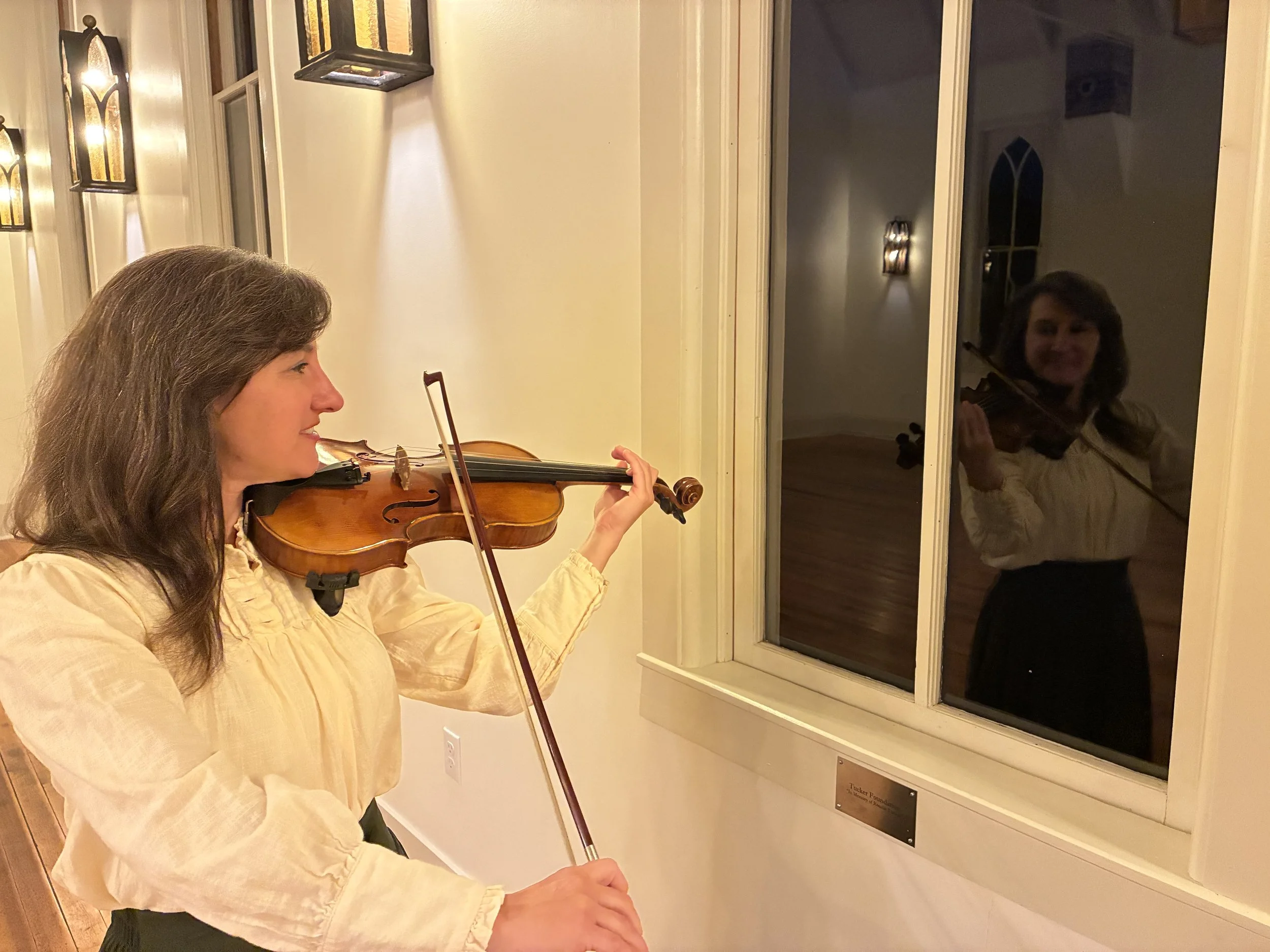
More projection for larger spaces
6. More Projection and Power
A better violin will often give you more volume, power, and projection without requiring as much effort.
This becomes especially important if you're playing in larger spaces, performing with an orchestra, or playing in a church.
You want an instrument that can produce a strong, full sound that carries across the room.
With a less powerful violin, you may find yourself working much harder to produce the volume you need.
A more advanced instrument can give you that extra power while maintaining a beautiful tone.
7. A More Complex Tone
This is where things get really interesting!
When I explain tone complexity, I like to use the analogy of roses.
Think about three kinds of roses:
Fake roses.
Store-bought roses.
Homegrown roses.
Fake roses are fake roses. They might look nice, but they don't have the beauty or fragrance of real flowers.
Store-bought roses are beautiful, but they're often somewhat one-dimensional. One rose looks and smells much like the next.
Homegrown roses, on the other hand, can be wonderfully different. Their petals form unique shapes, their colors have different shades and variations, and their fragrances are richer and more distinctive.
That's what we're talking about when we describe a violin as having a complex tone.
It's the richness of the overtones and the different qualities you can hear within the sound.
A VSO is a little like a fake rose. It might look like a violin, but the sound just isn't there.
A good beginner violin will have a solid, perfectly acceptable tone. But compared to a more expensive instrument, that sound may be a little more one-dimensional.
As you move into higher price ranges, you'll start to hear more variety and complexity.
I think you can begin to hear noticeable improvements around the $700–$800 range. When you get to around $1,500 and above, you'll find even more unique tonal qualities.
Some violins are particularly warm, others are sweet, and some have combinations of qualities that make them really special.
This is also where personal preference becomes important. You aren't necessarily looking for the most expensive sound. You're looking for a sound you love!
8. Better Sound Across a Wider Range
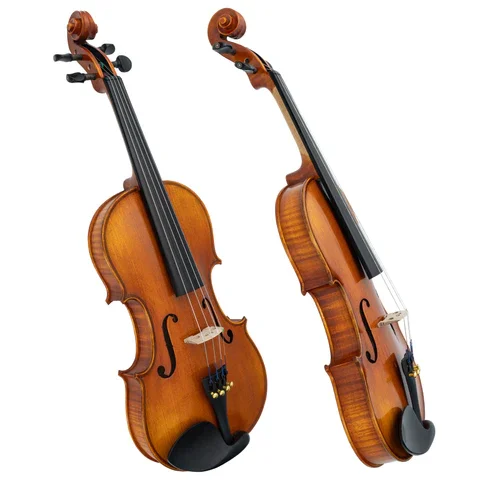
Another improvement you'll often notice in a more advanced violin is how consistently it performs across its range.
It's one thing for a violin to sound good on a few comfortable notes. It's another thing for it to maintain a beautiful tone when you're playing high notes, using different bowing techniques, or exploring more demanding passages.
A better instrument gives you more flexibility and allows you to explore a wider range of musical expression.
And as your playing develops, that flexibility becomes increasingly important.
So, How Much Should You Actually Spend?
We've talked about all the wonderful things you can get when you spend more money on a violin. But considering you can spend anywhere from $300 to $23 million, what's actually good enough?
First, I would say that a $100 violin is not good enough.
If you can't afford to spend a few hundred dollars on a decent instrument, you're probably better off renting.
Beyond that, I think there are two particularly good options for someone just starting out.
Option 1: A Quality Beginner Violin
I recently compared two violins from Kennedy Violins: the Antonio Giuliani Etude and the Louis Carpini G2.
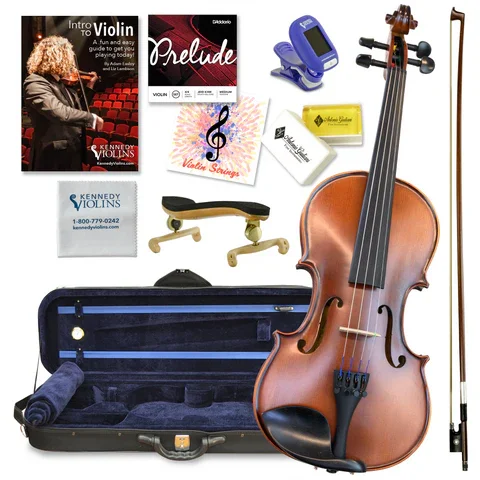
The Antonio Giuliani is a great beginner violin. It's not the absolute cheapest beginner instrument, but I think it represents a really nice sweet spot for someone who wants a little more quality and sound without spending too much.
I especially like this price range for adult beginners.
It gives you a good instrument to learn the fundamentals, develop your technique, and enjoy playing for several years.
===>Get my full review of the Antonio Giuliani here!
Option 2: An Instrument You Can Grow Into
The Louis Carpini G2 takes things up another level.
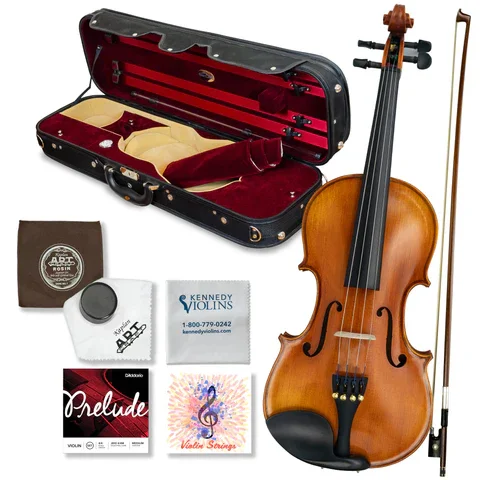
What I particularly love about this violin is its responsiveness, resonance, and complex tone.
When I draw the bow, the sound is there immediately. I notice this especially when playing pieces like the Boccherini Minuet, where light, delicate playing and subtle nuances make a big difference.
The Carpini responds beautifully to those small inputs.
If you want to invest in an instrument that can carry you through intermediate and advanced playing, this is a great option.
You can absolutely start with a more advanced violin. You don't have to wait until you've reached a certain skill level to enjoy playing a better instrument!
===>Get my full review on the Louis Carpini here!
Think About Your Upgrade Strategy
Here's something else I want you to consider when deciding how much to spend: Your first violin doesn't necessarily have to be your forever violin.
If you're making regular progress, there's a good chance you'll eventually want to upgrade.
A violin like the Antonio Giuliani could easily last you several years, depending on how quickly you're progressing and what you're doing with the instrument.
And when I say several years, I don't mean that the violin will stop working after that! If you take good care of it, it can last a lifetime.
You can start with a quality beginner instrument, learn the basics, and then upgrade to your forever violin when you're ready.
Many violin shops, including Kennedy Violins, offer trade-in and upgrade programs.
Or you can keep your original violin! It might become your backup instrument, your travel violin, or even a violin you use for alternate tunings.
On the other hand, if you know you want to play in orchestras, perform at church, or develop more advanced techniques, you might want to invest in a higher-quality violin from the beginning.
An instrument like the Louis Carpini G2 can take you much further without needing to upgrade as quickly.
There's no single right answer. It really depends on your goals, your budget, and how much you want to invest in your playing.
Final Thoughts: Don't Be Afraid to Ask Questions!
There are so many violin options available today that purchasing an instrument can feel incredibly overwhelming.
Hopefully, this gives you a better idea of what you're getting when you spend more money on a violin.
Remember, though, that the most expensive violin isn't automatically the best violin for you.
A good instrument should make playing easier, help you develop your technique, and give you a sound that makes you want to pick up your violin every day.
And please, never be afraid to ask questions!
There is no such thing as a silly question when you're trying to make an important purchase. We've all been beginners, and good teachers and reputable violin shops are happy to help you find the right instrument.
Happy Practicing!